

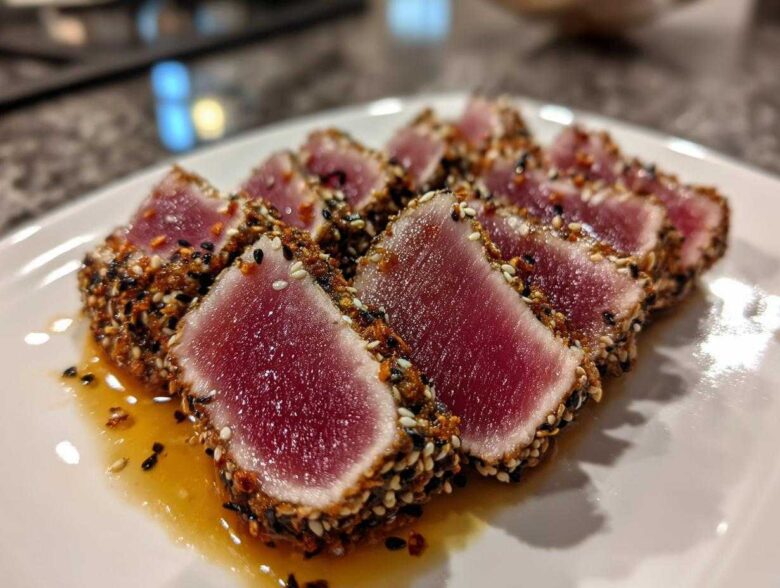
I’m going to let you in on a secret: ditch the takeout menu because making restaurant-quality Japanese appetizers at home is shockingly easy, especially when it comes to perfect tuna tataki. Forget everything you think you know about cooking fish; this technique is about speed and precision. The absolute best part about this dish is getting that wonderful sesame crust hugging the outside while the inside remains cool and totally rare. Trust me, mastering that quick sear takes practice, but once you nail the timing, you’ll be whipping up beautiful **sesame crusted tuna** plates for every gathering. It’s fast, it’s elegant, and honestly, it tastes way better than the version they serve downtown!
Why This Sesame Crusted Tuna Tataki Recipe Works (E-E-A-T)
I know what you’re thinking: raw fish at home? Don’t panic! This recipe is all about building trust in a very hot pan. The secret weapon here isn’t just the flavor; it’s the technique that keeps everything safe and perfectly textured. We rely on three non-negotiable steps for success:
- We use the highest quality fish possible—no exceptions here.
- The sear has to be blazing hot, almost smoking, for that instant crust.
- We chill the fish right after searing to lock in the raw center before slicing.
Following these rules means you get guaranteed success every time you try this **quick seared tuna**. It really separates a restaurant-quality dish from something that turns out grey in the middle!
Achieving the Perfect Sesame Crusted Tuna Tataki
Using both white and black sesame seeds isn’t just for looks, though those dark flecks look amazing against the pink fish! The sesame seeds toast instantly on the high heat, giving you this incredible, slightly nutty, crunchy coating. We need that barrier to protect the tender tuna inside.
Seriously, the quality of your main ingredient matters most here. If you’re scared about buying good fish, ask your fishmonger specifically for ‘sashimi grade’ or ‘sushi grade’—that tells them you need the highest standard for raw consumption. If it looks dull, walk away! We are aiming for rich, deep red color.
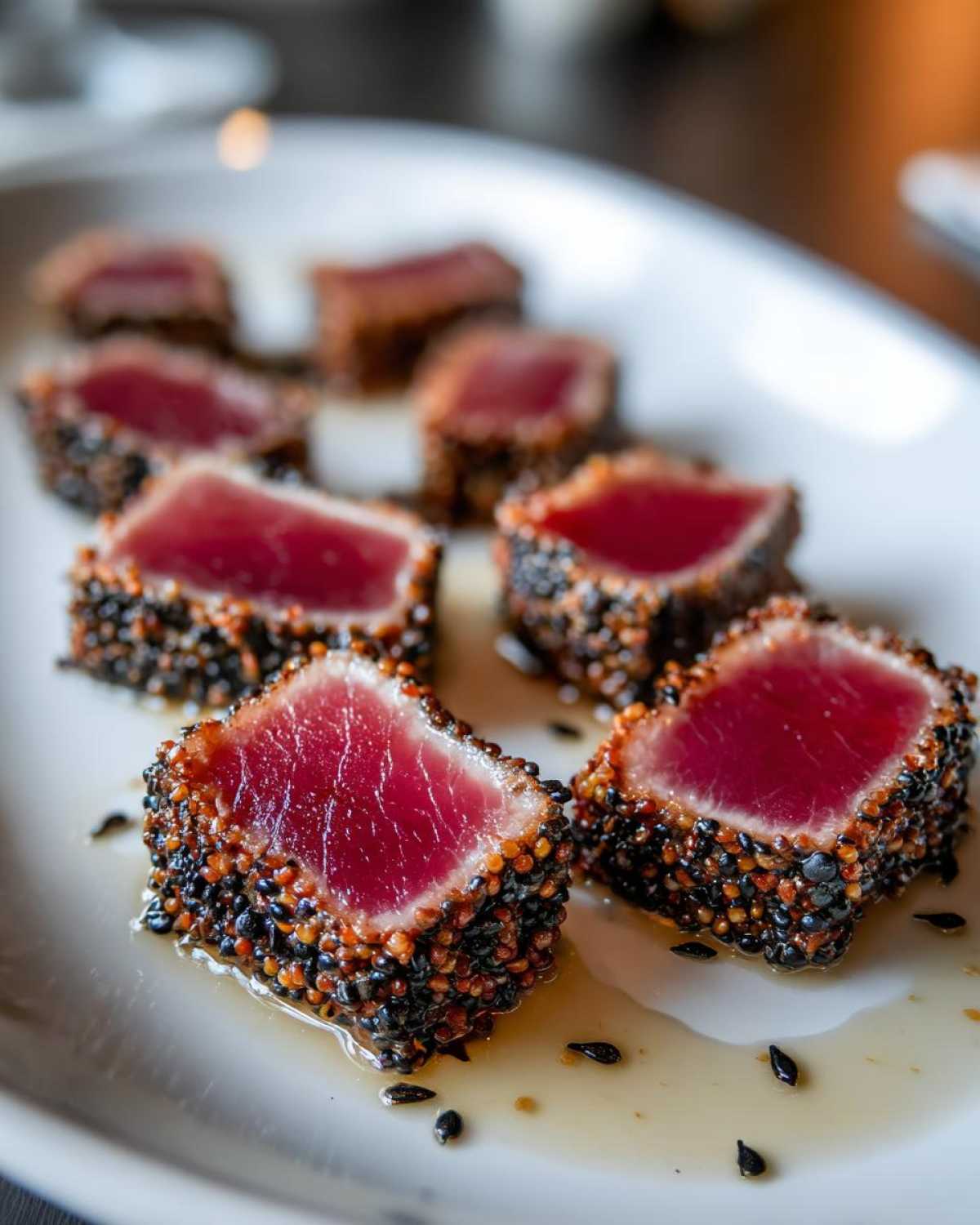
Ingredients for Perfect Tuna Tataki and Ponzu Tuna Sauce
Okay, let’s talk about what you need to gather up. For this dish, having everything measured out before the pan gets hot is key because things move fast once you start searing! Don’t skimp on the tuna, of course, as that’s the star of the show here.
Here are the exact items I always use for my **seared tuna tataki** and that zesty dressing:
- 1 pound sashimi grade tuna loin
- 1/4 cup white sesame seeds
- 1/4 cup black sesame seeds
- 1 tablespoon vegetable oil (just a little bit for the coating!)
And for that bright, tangy ponzu tuna sauce we whip up quickly:
- 1/4 cup soy sauce (use low sodium if you want!)
- 2 tablespoons fresh lemon juice
- 1 tablespoon rice vinegar
- 1 teaspoon grated fresh ginger (make sure it’s fresh!)
- 1 teaspoon sugar
Whisking those sauce components together while the tuna rests in the fridge is a perfect way to use those ten minutes!
Essential Ingredient Notes for Safe Sashimi Grade Tuna Tataki
Okay, this part is perhaps the most important because we are messing with raw fish! You absolutely must, I repeat, *must* source **sashimi grade tuna**. Don’t think you can get away with buying a regular tuna steak from the back of the grocery cooler; that’s a recipe for disaster, not a great Japanese appetizer. Only buy fish specifically intended to be eaten raw. This guarantees it has been handled safely and flash-frozen appropriately—that’s the traceability we need.
For the searing process, I use plain old vegetable oil. We need oil that has a high smoke point because that pan has to be ridiculously hot, right? Don’t use olive oil here; it will burn before the tuna even touches it. A little touch of that neutral oil is all we need on the fish before hitting the seeds.
Ponzu Tuna Sauce Substitutions
If you’re missing one component for the ponzu, don’t stress completely, but try to keep the balance! If you don’t have fresh lemon juice, lime juice works in a pinch, but it’ll change the flavor profile slightly away from traditional ponzu. For the sugar, you can swap it for a tiny drizzle of honey, but use about half the amount since honey is sweeter. The goal is always that bright, salty, acidic punch to cut through the richness of that tuna!
Step-by-Step Instructions for Quick Seared Tuna Tataki
This is where the magic happens, and speed is your best friend! I always set up my chilling plate and my sauce bowl first because once the heat is on, you can’t dawdle. Remember, the goal here is quick seared tuna, meaning we want barely cooked edges. If you overcook this, it just becomes dry, sad tuna steak instead of vibrant tataki.
Once searing is done, you must immediately move that crusty fish to the fridge for ten minutes—seriously, don’t skip that rest! It stops the residual heat from cooking the center further and lets the fish firm up so it doesn’t fall apart when you slice it thin later.
Preparing the Sesame Crust for Your Tuna Tataki
First up, grab your beautiful tuna loin and pat it absolutely dry with paper towels. Moisture is the enemy of a good sear, so get it as dry as you can! Then, brush the entire loin lightly with that vegetable oil. Don’t drown it, just a light slick coat so the seeds have something to stick to.
In a shallow dish, I mix my white and black sesame seeds together—wow, they look pretty together! Now, press that oiled tuna into the seeds, rolling it around until every single side, all four long sides, are completely covered in a thick, even layer. Press firmly so the crust adheres well!
Mastering the High-Heat Sear on Sesame Crusted Tuna
You need your non-stick skillet ripping hot. I mean it; get it screaming hot before the oil even goes in. We’re talking max heat setting for about two minutes until you see the tiniest wisp of smoke. Add your tablespoon of oil, swirl it around, and drop that sesame crusted tuna in right away.
Here’s the trick: sear each side for just 30 to 45 seconds. Use tongs to turn it carefully onto the next side. You are looking for a dark, nutty crust, but the middle should still be completely raw when you peek. Once all four sides are crusted, yank it off the heat immediately and rush it to that waiting cold plate!
Tips for Perfect Slicing and Plating Your Tuna Tataki
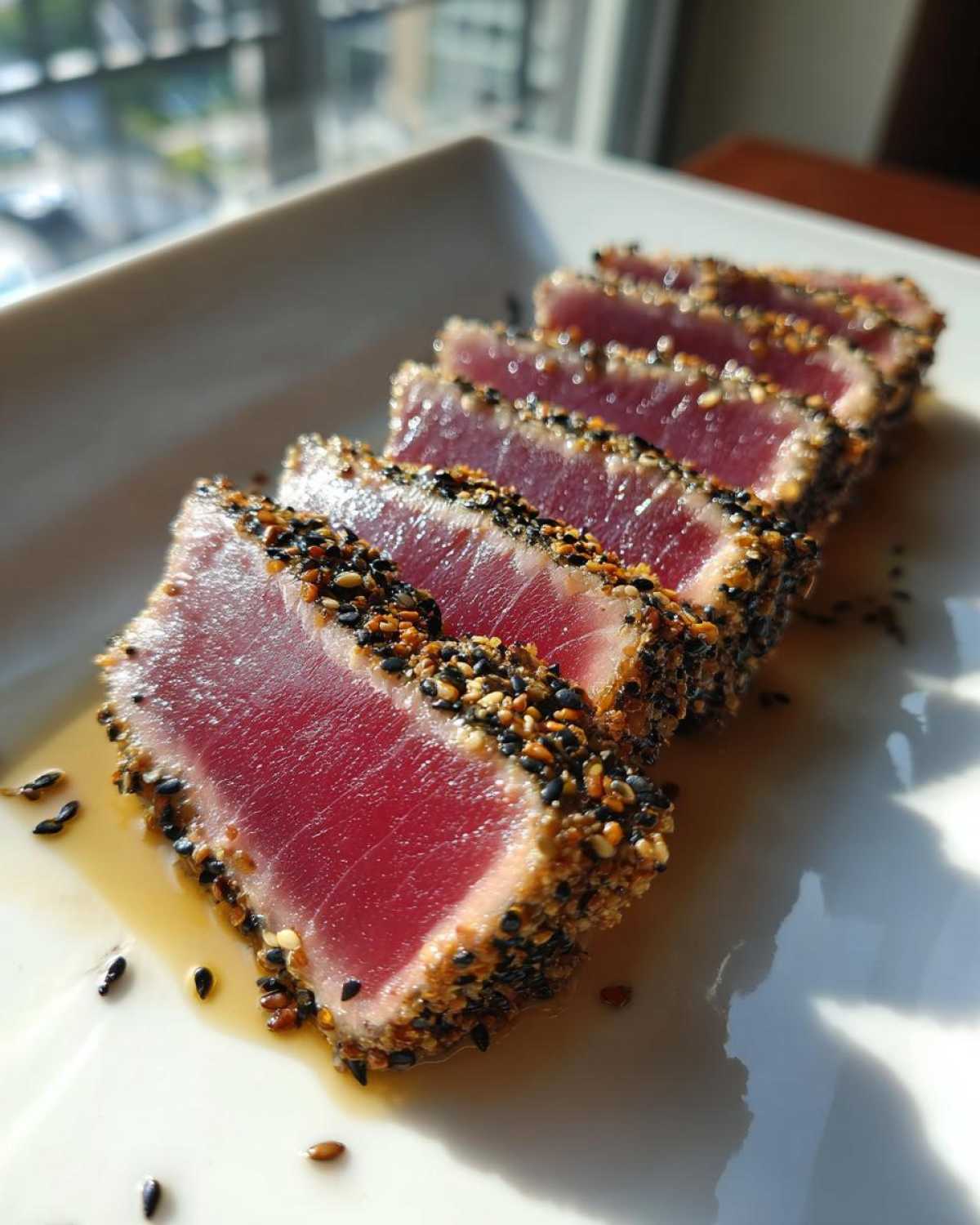
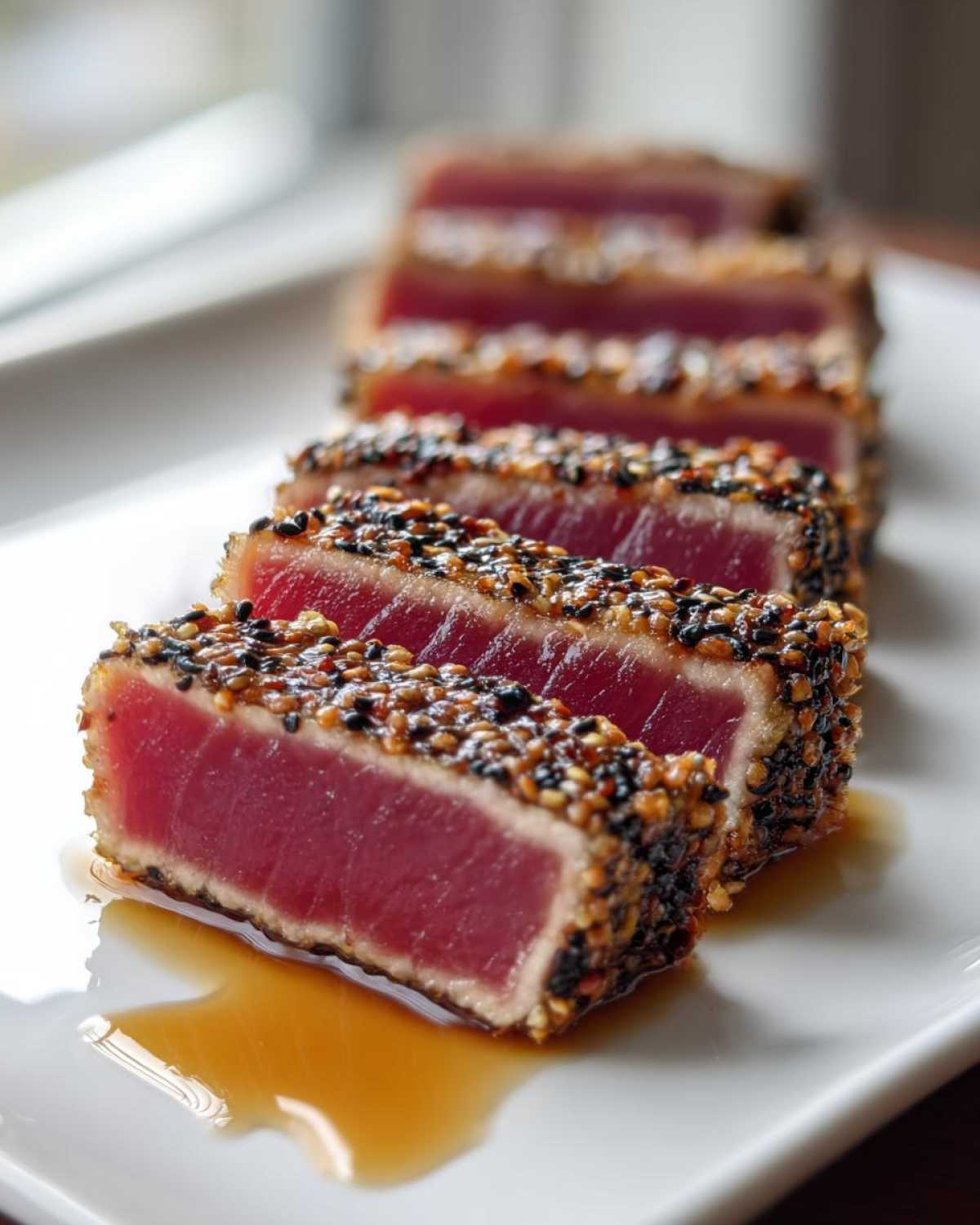
Alright, your perfectly seared and chilled tuna is ready to be transformed into show-stopping tuna tataki! The way you slice this fish makes a huge difference in how it feels in your mouth. You absolutely have to slice it thinly against the grain. If you don’t slice against the grain, that lovely tuna loin will be chewy and tough, and nobody wants that when eating a luxurious appetizer.
I aim for about a quarter-inch thickness—around 1/4 inch is that sweet spot. It’s thick enough to show off that gorgeous pink center framed by the dark sesame crust, but thin enough that it melts when you eat it. Seriously, use your sharpest knife here; a dull blade will just crush those beautiful sesame seeds!
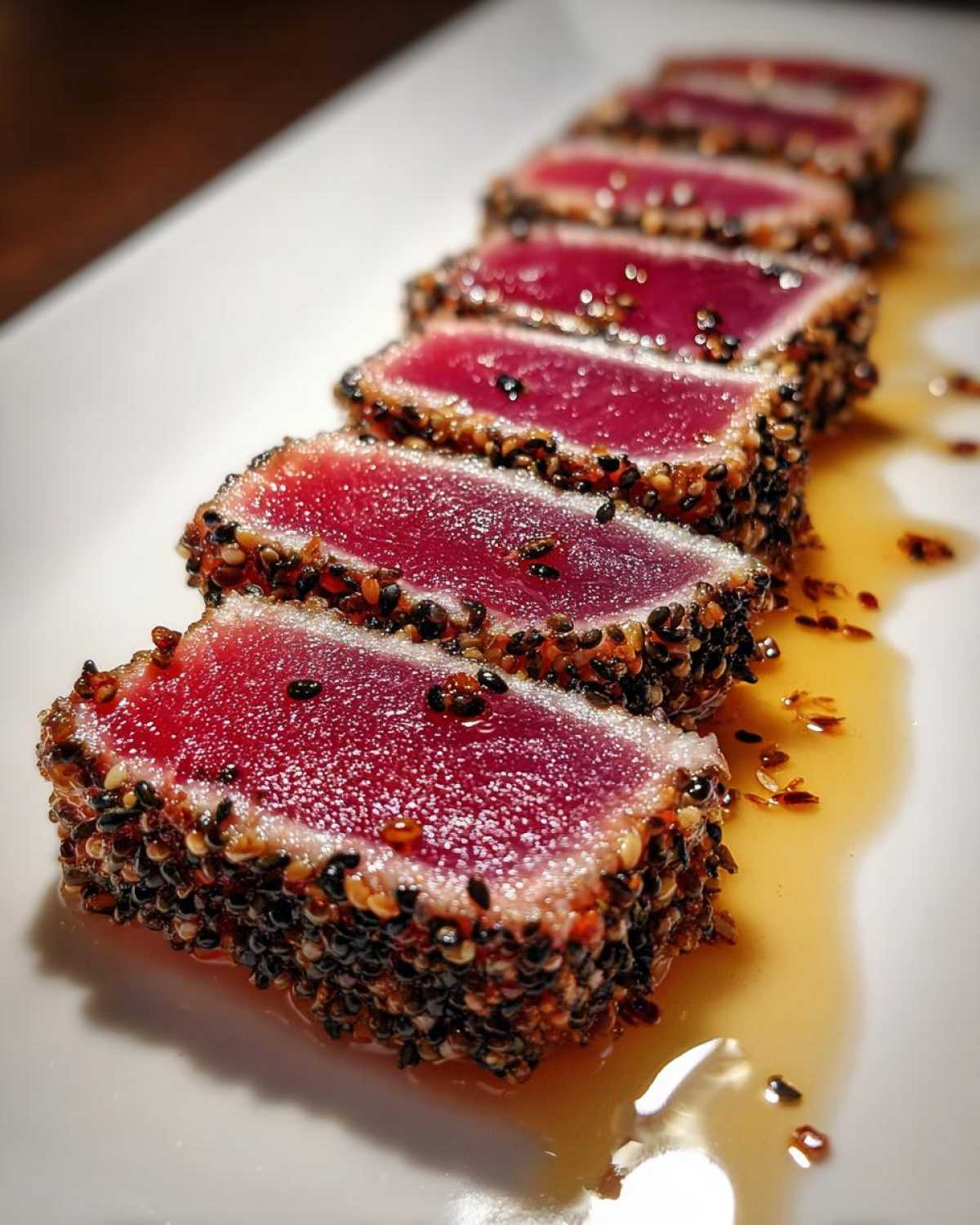
When you plate it, make it look intentional! I always arrange the slices slightly overlapping in a delicate line or a slight curve on a clean white plate. Then, just before serving, drizzle that ginger-ponzu sauce lightly over the top. Less is more with the dressing so people can really see that gorgeous sear. A tiny sprinkle of thinly sliced green onion on top adds a nice professional touch. It’s so simple, but the presentation is everything!
Serving Suggestions for This Japanese Appetizer
This beautiful **sesame crusted tuna** really sings when paired with simple, fresh flavors. Because this is such a light, flavor-packed **Japanese appetizer**, you don’t want to weigh it down! I love serving it alongside a simple Asian slaw that has a light vinegar dressing, or even just some pickled ginger.
For drinks, a crisp, cold sake or even just sparkling water with a slice of cucumber makes the perfect accompaniment. And the best part? If you make a big enough batch of this tuna, it transitions perfectly into a fantastic, high-protein **low carb dinner**. Just serve a larger portion over some shredded lettuce instead of rice, and you’re good to go. Check out how I pair fresh ingredients over on my avocado toast recipe for more light ideas!
Storage and Reheating Instructions for Seared Tuna Tataki
Because this dish relies so heavily on that beautiful temperature contrast—the cold interior and the quick-seared crust—you really want to eat it right away. That’s when it tastes best!
If you have extras, you need to seal them tightly in an airtight container immediately and pop them into the fridge. They’ll keep okay for maybe a day, but the texture changes, you know? The sesame crust starts to soften a bit, and honestly, the magic is mostly gone.
Now, about reheating? Please don’t! Seriously, put the leftovers straight into the fridge and enjoy them cold the next day as a nice snack. Zapping this in the microwave or trying to sear it again will just cook that beautiful rare center, and then it’s just ordinary leftover fish. Eat it fresh!
Frequently Asked Questions About Tuna Tataki
I always get so many questions when people first try making **tuna tataki** at home, which is totally fair because it feels fancy! Don’t feel shy about asking—I want you to succeed! Here are some of the most common things folks ask me when they’re getting ready to rock their **ponzu tuna** night.
Can I use regular canned tuna instead of sashimi grade tuna tataki?
Oh, bless your heart, no! Please, please do not use canned tuna here. Canned tuna is cooked and flaky; it won’t give you that beautiful texture we are aiming for in **sashimi grade tuna tataki**. For any dish where you are intentionally eating the fish raw in the center, you need that top-tier, safe-to-eat fish. Regular steaks are generally not safe for raw consumption, so stick to the sushi or sashimi label!
What if my skillet isn’t hot enough for the quick seared tuna?
If your skillet isn’t hot enough when you start your **quick seared tuna**, you won’t get a crust; you’ll end up steaming the fish, which gives you that sad, pale grey ring around the outside. That’s the kiss of death for tataki! How do you check readiness? Drop a tiny bit of water onto the surface; if it sizzles and evaporates instantly, you’re good to go. If it just sits there looking sad, wait another minute!
How do I make the ponzu tuna sauce tangier?
That’s an easy fix if you love a serious “pucker” factor! The tanginess in the ponzu tuna sauce comes from the lemon juice and vinegar, right? If you want it tangier, try adding an extra half-tablespoon of lemon juice to the batch. Alternatively, a splash of grapefruit juice also works beautifully with soy sauce and adds a complex citrus note without changing the texture at all. You can reach out to me through my contact page if you need more specific substitutions!
Nutritional Estimates for Sesame Crusted Tuna Tataki
I know sometimes people look at elegant dishes like this **sesame crusted tuna** and worry they are packing on the calories, but for a light appetizer, this is actually a fantastic choice! Since it’s mostly pure protein and healthy fats, it keeps you satisfied without weighing you down. Remember, this dish is already pretty low-carb, which is great if you’re watching the carbs!
I want to stress that these numbers are just estimates I put together based on averages; they are not guaranteed science, especially since where you buy your tuna can change the fat content a bit. You can see the full breakdown below based on a single serving size of about 4 oz of tuna plus the sauce. Feel free to review the nutritional information when planning your meal!
- Serving Size: 4 oz tuna with sauce
- Calories: 250
- Sugar: 3g
- Sodium: 650mg (That soy sauce gets us here!)
- Fat: 12g
- Saturated Fat: 2g
- Unsaturated Fat: 10g
- Trans Fat: 0g
- Carbohydrates: 5g
- Fiber: 0g
- Protein: 30g
- Cholesterol: 60mg
Isn’t that protein count amazing? If you skip the sauce entirely, you drop that sodium way down too. It really shows how clean eating can still be delicious!
PrintSesame Crusted Tuna Tataki with Ponzu Sauce
Make quick-seared tuna tataki with a sesame crust, served with a simple ginger-ponzu dressing.
- Prep Time: 15 min
- Cook Time: 4 min
- Total Time: 19 min
- Yield: 4 servings
- Category: Appetizer
- Method: Searing
- Cuisine: Japanese
- Diet: Low Fat
Ingredients
- 1 pound sashimi grade tuna loin
- 1/4 cup white sesame seeds
- 1/4 cup black sesame seeds
- 1 tablespoon vegetable oil
- For the Ponzu Sauce:
- 1/4 cup soy sauce
- 2 tablespoons fresh lemon juice
- 1 tablespoon rice vinegar
- 1 teaspoon grated fresh ginger
- 1 teaspoon sugar
Instructions
- Combine white and black sesame seeds in a shallow dish.
- Pat the tuna loin dry with paper towels. Brush the entire surface lightly with vegetable oil.
- Press all sides of the tuna firmly into the sesame seed mixture until evenly coated.
- Heat a non-stick skillet over high heat until very hot.
- Sear the tuna for 30 to 45 seconds per side, turning carefully until all four long sides have a crust. The center should remain raw.
- Immediately remove the tuna from the heat and place it on a plate. Cover loosely with plastic wrap and chill in the refrigerator for 10 minutes.
- While the tuna chills, whisk together all ponzu sauce ingredients in a small bowl.
- Remove the tuna from the refrigerator and slice it thinly against the grain, about 1/4 inch thick.
- Arrange the slices on a serving platter. Drizzle the ponzu sauce over the tuna before serving.
Notes
- Use only tuna labeled as ‘sashimi grade’ or ‘sushi grade’ for safe raw consumption.
- For best results, chill the tuna briefly after searing to help it hold its shape when slicing.
- If you prefer a slightly more cooked edge, sear for 1 minute per side.
Nutrition
- Serving Size: 4 oz tuna with sauce
- Calories: 250
- Sugar: 3
- Sodium: 650
- Fat: 12
- Saturated Fat: 2
- Unsaturated Fat: 10
- Trans Fat: 0
- Carbohydrates: 5
- Fiber: 0
- Protein: 30
- Cholesterol: 60