

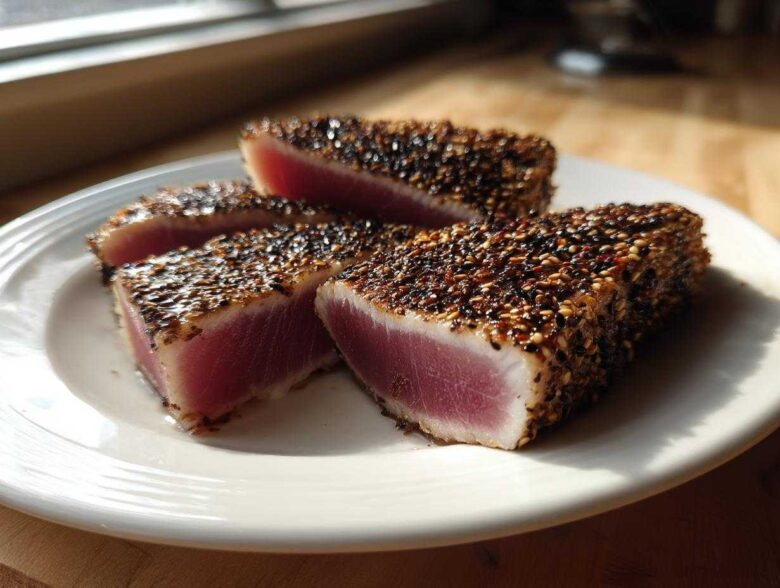
Ever stare at a menu and wish you could recreate that stunning, perfectly seared yellowfin tuna you get at those fancy spots? Trust me, I’ve had those same moments! That’s where Jessica—the visionary with the wild ideas—comes in, usually asking me, the detail-oriented one, to figure out how to make it happen on a Tuesday night. Well, friends, we cracked the code. This ultimate guide to making Seared Ahi Tuna is ridiculously fast, tastes totally gourmet, and gives you that beautiful, cool center. It proves that my need for organized steps and her flavor genius actually make Foodie Heaven happen. You can read more about our crazy kitchen dynamic over on our About Us page! Ready to wow yourself?
Why This Seared Ahi Tuna Recipe Delivers a Gourmet Tuna Experience
Lots of people get nervous about cooking seafood at home, but this process is so straightforward, your results will look like they came right out of a high-end restaurant. We are talking about the best way to treat beautiful yellowfin tuna! Because we’re cooking it so fast, you get that wonderful textural contrast that just screams gourmet. Honestly, it’s heaven!
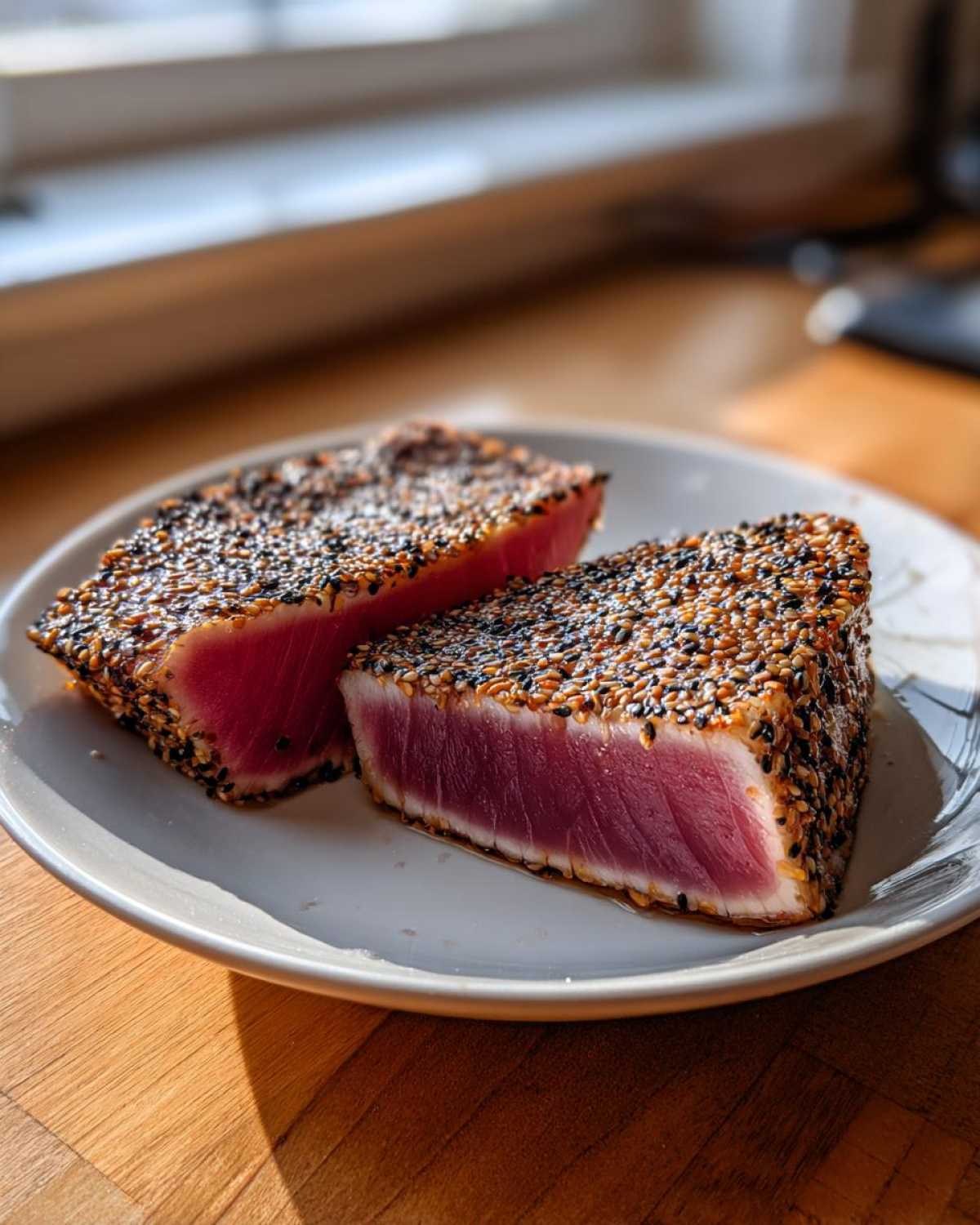
- It’s a lightning-fast quick seafood recipe—you’re looking at about three minutes total cook time!
- We guarantee that perfect, cool, rare center that’s so famously delicious.
- The crust locks in all that fresh flavor from the high-quality ingredients we use.
Key to Success: Sourcing Quality Sushi Grade Tuna
You just can’t cut corners here, folks. For this recipe to work—and, more importantly, to be safe—you absolutely must use real sushi grade tuna. This means it was handled and frozen properly to kill everything off. Don’t just grab any tuna steak from the regular fish counter!
When you’re at the fishmonger, look for fish that is firm to the touch, not mushy. The color should be a vibrant, deep red or purplish-red, not dull or brown around the edges. If it smells like the ocean, that’s good! If it smells strongly ‘fishy,’ run away fast. Getting this right is the foundational step for everything that follows!
Gathering Ingredients for Your Perfect Seared Ahi Tuna
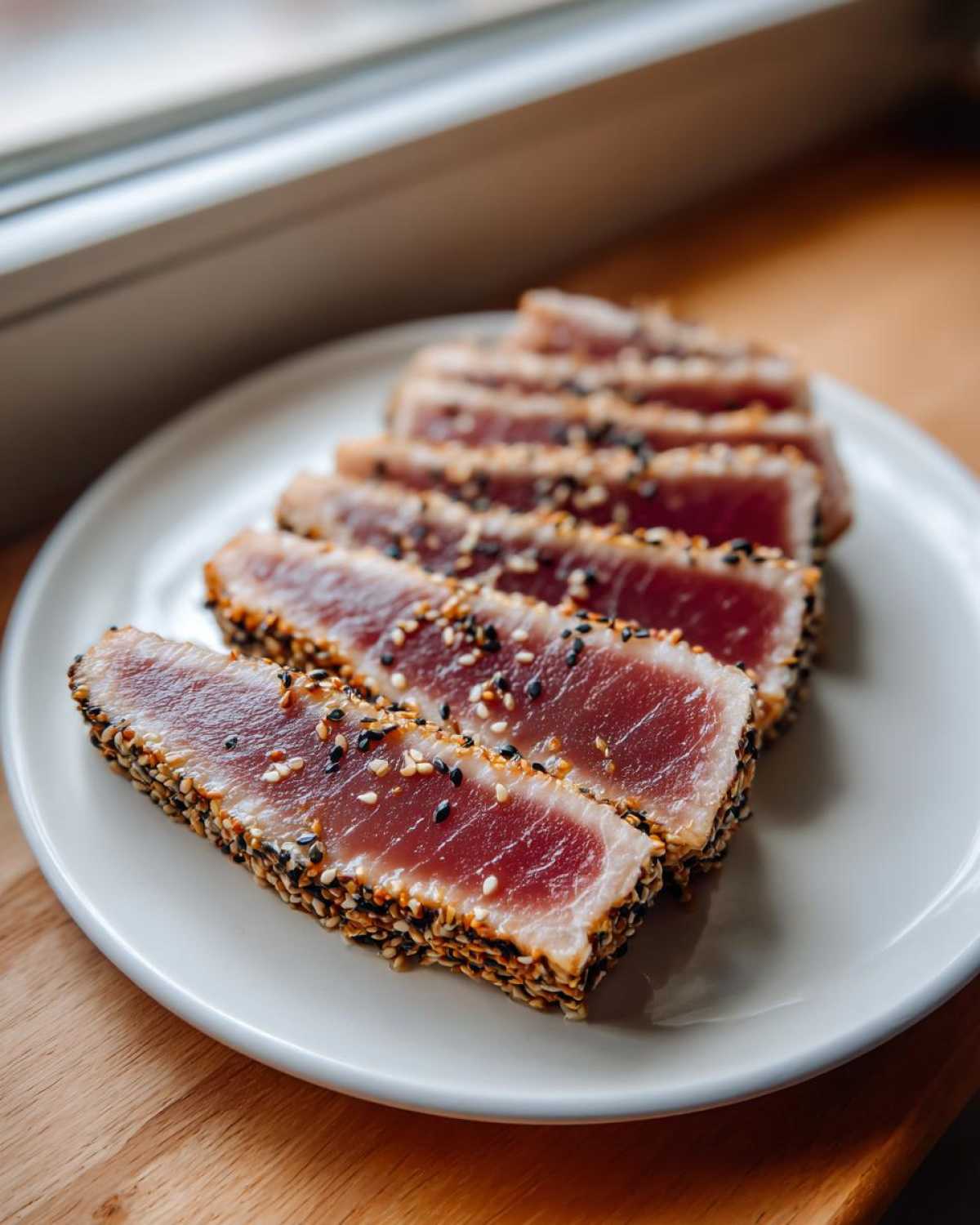
Okay, the beautiful thing about this recipe is how simple the ingredient list is! You don’t need a million things cluttering up the counter, which Laura absolutely loves about this process. We are focusing on two amazing tuna steaks and the mixture that creates that unforgettable crust. That crust—made of both black and white sesame seeds—is the signature element of this amazing Asian tuna recipe.
Here is everything you need, all ready to go:
- Two six-ounce steaks of sushi grade tuna.
- One big tablespoon of standard sesame oil.
- Yep, one tablespoon of olive oil too—we mix those fats together!
- One teaspoon each of black sesame seeds and white sesame seeds.
- A little sprinkle of coarse sea salt and some black pepper for seasoning.
Keep everything measured out, and we can move on to the gear that makes this happen!
Essential Equipment for Mastering Ahi Tuna at Home
Jessica always says that the right tools make the drama disappear in the kitchen. When we’re searing tuna this fast, the equipment needs to be ready to handle intense heat right away. If your pan isn’t up to speed, the outside won’t brown before the middle gets warm, and that’s a culinary tragedy we need to avoid! My role, of course, is making sure we have the right gear pulled out before the cooking even starts.
You truly only need three main things, which makes this a fantastic healthy dinner option even when you’re short on time or space. Forget pulling out that giant roasting pan; we just need these essentials:
- A Heavy-Bottomed Skillet: This is non-negotiable for me! Ideally, grab your cast iron skillet. It holds high heat like a champion, ensuring you get that immediate, beautiful crust on the outside without waiting around.
- Plenty of Paper Towels: Seriously, use way more than you think you need. The absolute number one key to a fantastic sear is making sure the tuna steaks are bone-dry before they even look at the pan. Don’t skimp here—grab a whole stack.
- A Really Sharp Knife and Cutting Board: Because you want to slice this beautiful fish right after resting it. Make sure your knife is sharp enough to cut cleanly against the grain without sawing through the delicate cooked edges.
That’s it! No fancy immersion circulators needed here. Just a screaming hot pan and dry fish. See? Totally achievable, even for a weeknight!
Step-by-Step Instructions for the Ultimate Seared Ahi Tuna
Alright, this is where Laura’s logistics training really shines! Because searing happens so fast, we need every step executed in order. If you follow these steps precisely, you’re going to get that perfect contrast between a crisp, flavorful crust and that cool, buttery center. Remember, 60 to 90 seconds is all we’re looking for on each side! If you want the full rundown on why timing matters in our general approach, check out our latest posts on the Foodie Blog!
Preparing the Tuna and Spice Crust
First things first: dry, dry, dry! Grab those paper towels—and I mean grab a whole handful—and press every bit of moisture off those beautiful tuna steaks. If they are damp at all, they will steam instead of sear, and we’ll cry sad tears. Next, press those steaks firmly into your seed and spice mixture. I mean *firmly*! You want a thick, even coat clinging to every side so that when it hits the pan, you get instant flavor and that gorgeous speckled look.
Achieving the Perfect Sear Temperature
Get that heavy skillet over medium-high heat. Mix your sesame oil and olive oil right in the pan. Wait until you see the oil just start to shimmer or move thinly across the pan surface—that’s your cue! Carefully lay the coated tuna down. If you’re rocking that perfect heat, you’ll hear an immediate, happy sizzle. This initial blast of high heat is what locks in that amazing texture on the outside.
Now, keep an eye on those sesame seeds! They cook way faster than the tuna. If they start looking dark brown after about 45 seconds, dial that heat down immediately! We want them toasted, not burnt, which keeps your beautiful Seared Ahi Tuna tasting nutty and fresh.
Resting and Slicing Your Seared Ahi Tuna
As soon as those steaks look perfectly crusted (about 90 seconds max per side for rare!), pull them out of the pan right away. Don’t let them sit in that hot pan for one second longer! Lay the tuna on a clean cutting board and let it rest for a full five minutes. This is crucial for juicy results! Finally, slice them against the grain into little half-inch pieces. That against-the-grain cut makes all the difference in how tender your Seared Ahi Tuna feels!
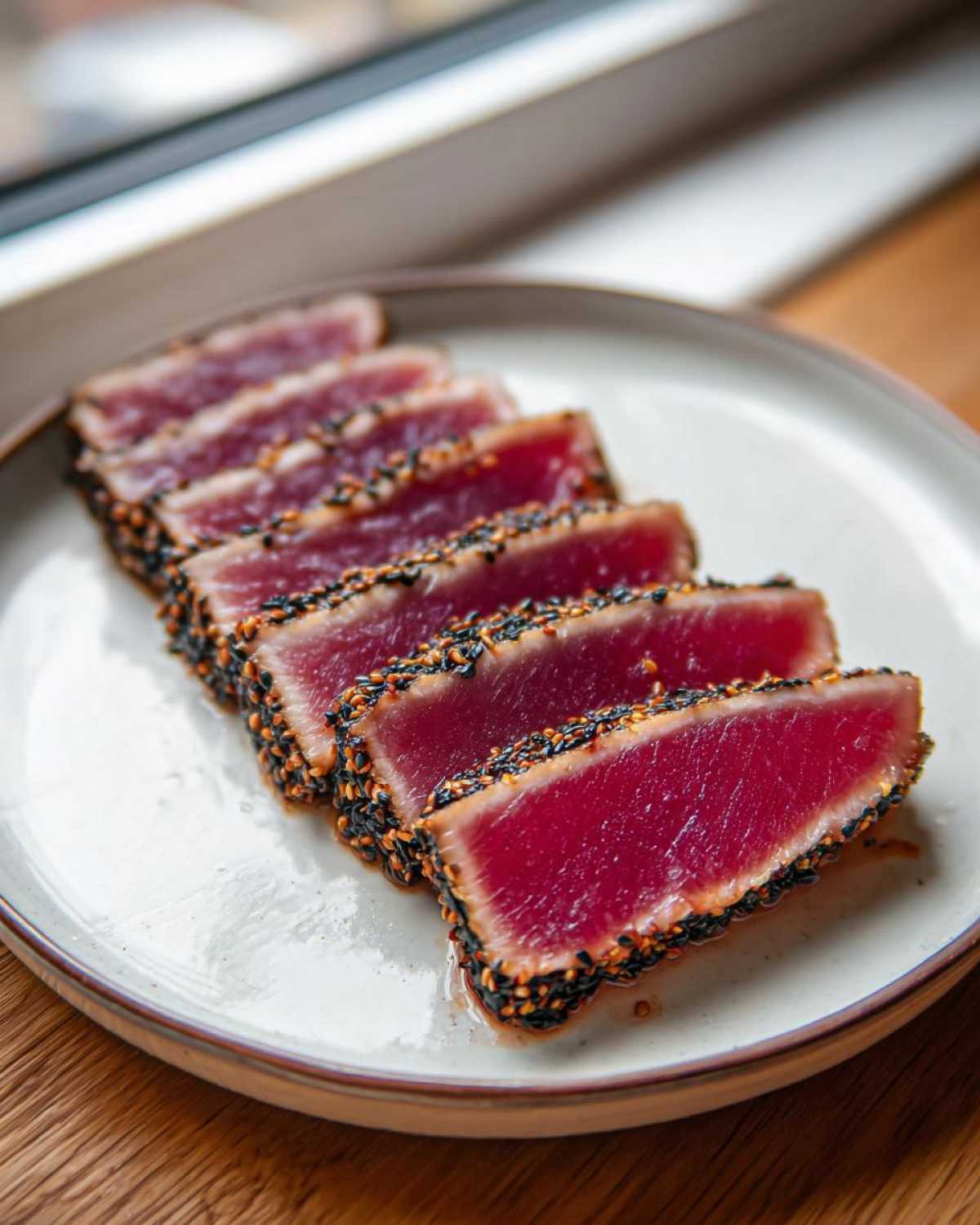
Flavor Variations for Your Asian Tuna Recipe
While the sesame seed crust provides a perfect, clean flavor profile, Jessica always insists on having a fun sauce situation! Since this dish is naturally so light and elegant, it pairs beautifully with bold Asian flavors. Don’t be afraid to get creative here; this is flavor exploration, after all!
If you want that classic, salty, zingy contrast to the rich tuna, we whipped up a super simple dipping sauce we often keep handy. It takes about two minutes, and it seriously elevates this quick seafood recipe into something unforgettable—soy sauce, fresh ginger grated until it’s practically paste, and a single clove of minced garlic. Whisk it up, and you are done!
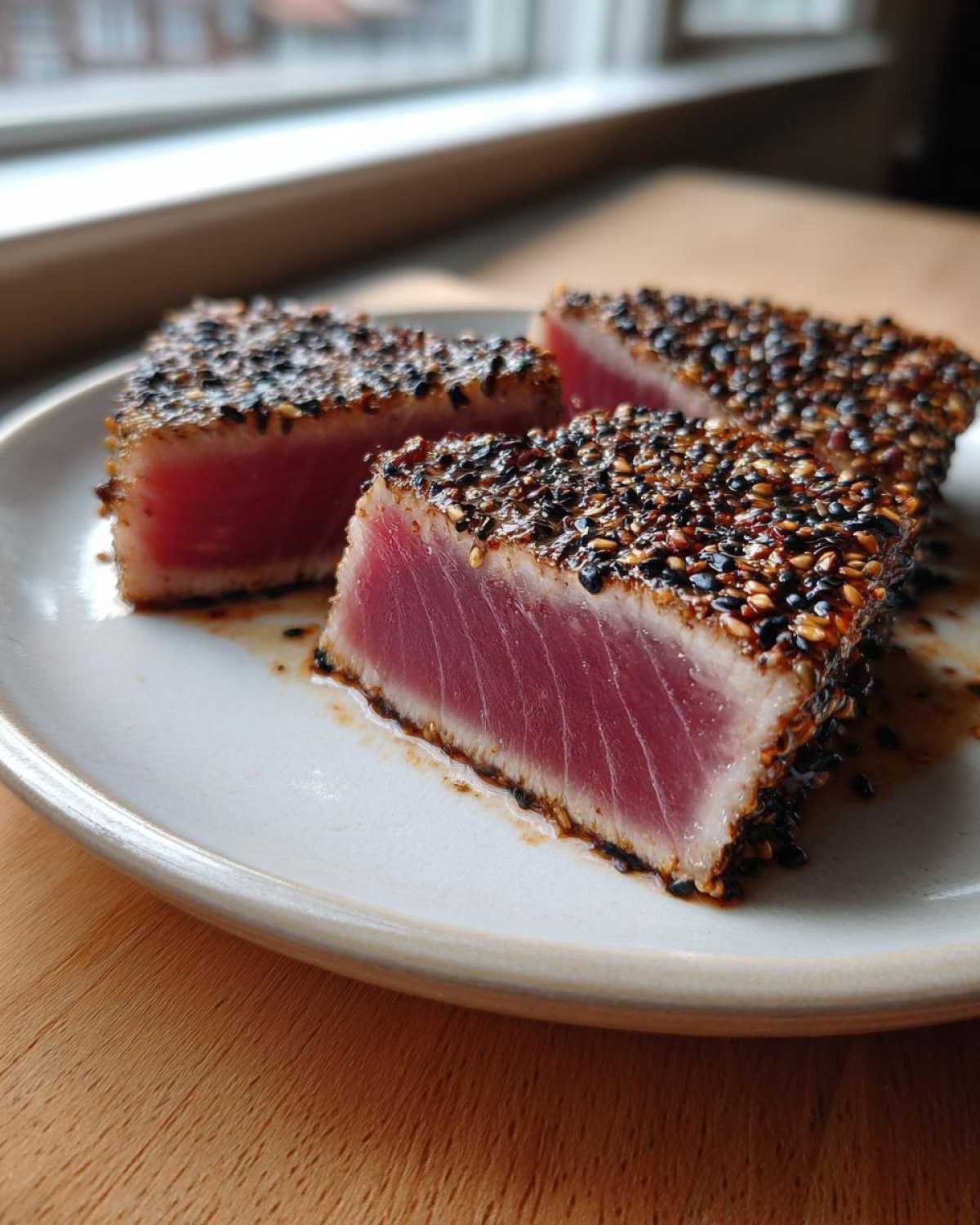
Honestly, this dish is such a fantastic, flexible healthy dinner. If you’re looking for other light, main-course inspiration that feels just as great after a chaotic day, you always find something wonderful in our main Dinner category. It’s amazing how a simple sear can lead to so many delicious paths!
Tips for a Healthy Dinner: Making Seared Ahi Tuna Work for You
One of the best parts about this recipe is that it’s incredibly good for you—truly a guilt-free, gourmet tuna moment! Since the tuna itself is naturally low in fat and packed with more protein than almost anything else on your plate, it’s the perfect anchor for a healthy dinner. Jessica always jokes that since we spend so little time cooking it, we save our energy for choosing amazing side dishes.
When I’m putting a plate together, I try to keep the rest of the meal just as light. Forget heavy sauces! We usually serve this over a bed of fluffy brown rice or some lightly steamed broccoli tossed with only a tiny splash of rice vinegar. You get all the volume and fiber you need to feel satisfied, but the star of the show remains that vibrant, lean protein. It’s a meal that leaves you feeling energized, not weighed down!
Storage and Reheating Instructions for Leftover Seared Ahi Tuna
Now, I’m going to be Laura for a second and give you the logistics reality check: Do not, under any circumstances, try to reheat this beautiful fish! Seriously, don’t even think about it. Because we aim for that lovely rare center by searing it for only a minute or two, any attempt to reheat it will turn your lovely yellowfin tuna into rubbery, gray hockey pucks. The delicious sear gets ruined!
The beauty of this quick seafood recipe is that the leftovers, eaten cold, are still fantastic, provided you store them correctly. Once the tuna has rested and you’ve sliced it, put those pieces into a truly airtight container.
I use my smallest glass containers because they don’t absorb odors, and I tuck them right into the back of the fridge. They should be good for about two days max. It’s really important to eat them fast!
How to Repurpose Cold Tuna (The Best Way to Use Leftovers)
Okay, so what do you do with those beautifully crusted, cold slices? You don’t reheat them; you reinvent them! This is where the fish shines as a fantastic source of protein for a light lunch the next day. Think salads entirely!
You can chop those slices up and toss them straight into a big, crunchy green salad—maybe something with sharp peppers and a light vinaigrette. Or, if you want an amazing sandwich or wrap, use the cold slices instead of deli meat. My favorite way is to pile them onto thick slices of toasted sourdough with a little bit of sriracha mayo spread on—wow! It keeps the texture interesting because you’re mixing the firmer, cold tuna with something soft and crunchy.
Just remember: Cold equals success for leftovers. Hot equals sad, overcooked fish. That’s the rule Jessica and I firmly agree on!
Frequently Asked Questions About Making Seared Ahi Tuna
I know you might still have a few nagging doubts—I certainly did when Jessica first brought this idea home! Cooking sushi grade tuna perfectly can feel intimidating, but honestly, once you understand the high-heat rule, you’re golden. Check out these common questions that come up when people try to make this for a healthy dinner!
What is the safest way to buy sushi grade tuna?
This is the most important question, and Laura insists we get this right for all of you! The safest yellowfin tuna you can buy is often labeled as “previously frozen for sashimi/sushi” by a reputable fishmonger. Why? Because true sushi-grade standards require the fish to be flash-frozen extremely quickly to extremely low temperatures to ensure any potential parasites are eliminated.
Don’t trust flimsy packaging! Go to a place where the staff seems knowledgeable, and ask them directly where the fish came from and how it was handled. If they hesitate or look confused, move on. Getting this right means you can relax and enjoy this gourmet tuna without worry.
Can I use a regular frying pan instead of cast iron for this quick seafood recipe?
Yes, you totally can, but I have to give you fair warning—it requires more attention! A regular stainless steel pan won’t hold the extreme heat that cast iron does. Remember, we need a screaming hot pan to sear in 60 seconds. If you use a thinner pan, you must let it heat up longer, maybe even a little past the shimmering point, or you risk the pan losing heat the second the fish hits it.
If you use a standard pan, watch those sesame seeds like a hawk! That’s the trade-off: Less heat consistency means the beautiful outer crust on your Seared Ahi Tuna might not be as uniformly perfect as with cast iron. But hey, if it tastes good, we’re happy!
Do I have to use both black and white sesame seeds?
Oh, Jessica says yes, every time! While you could technically use just one color, the blend of black and white seeds isn’t just for looks, even though it makes for a gorgeous presentation. The black seeds tend to have a slightly deeper, nuttier flavor profile when toasted quickly, whereas the white ones are a bit milder. Using both gives you that complex, balanced crunch that makes this specific Asian tuna recipe so memorable. Don’t skip the visual impact; it makes it feel extra special!
Estimating the Nutrition for This Gourmet Tuna Dish
Now, while Jessica is focused on flavor explosions, I’m busy making sure this incredible dish still aligns with our goals for a healthy dinner! Since this recipe is mostly pure protein, seasoned beautifully, the numbers are fantastic. Keep in mind these are just estimates based on using the standard measurements and aiming for that perfect rare cook, but they give you a great idea.
For one serving of this gourmet tuna (which is one full steak, by the way!), here’s what you’re looking at:
- Calories: About 250
- Protein Power: A whopping 33 grams!
- Fat Content: Mostly healthy unsaturated fats, sitting around 12 grams total.
- Sugar: Zero! That’s the magic of keeping it savory.
It’s proof that eating like royalty on a Tuesday night doesn’t have to derail your healthy habits. See? Flavor and function—we got both!
PrintPerfectly Seared Ahi Tuna Steaks
Learn how to sear sushi grade yellowfin tuna perfectly every time for a quick, healthy, and gourmet seafood dinner.
- Prep Time: 5 min
- Cook Time: 3 min
- Total Time: 13 min
- Yield: 2 servings
- Category: Dinner
- Method: Pan-Searing
- Cuisine: Asian-Inspired
- Diet: Low Fat
Ingredients
- 2 (6 ounce) sushi grade ahi tuna steaks
- 1 tablespoon sesame oil
- 1 tablespoon olive oil
- 1 teaspoon black sesame seeds
- 1 teaspoon white sesame seeds
- 1/2 teaspoon coarse sea salt
- 1/4 teaspoon black pepper
Instructions
- Pat the ahi tuna steaks completely dry using paper towels. This step is key for a good sear.
- In a small bowl, mix together the black sesame seeds, white sesame seeds, sea salt, and black pepper.
- Press all sides of the tuna steaks firmly into the seed and spice mixture until they are evenly coated.
- Heat the sesame oil and olive oil in a heavy-bottomed skillet, such as cast iron, over medium-high heat until the oil shimmers.
- Carefully place the coated tuna steaks into the hot skillet.
- Sear for 60 to 90 seconds per side for rare to medium-rare. Adjust time based on your preference for doneness.
- Remove the tuna from the pan immediately.
- Let the tuna rest on a cutting board for 5 minutes before slicing against the grain into half-inch thick pieces.
Notes
- For an Asian tuna recipe flavor boost, you can whisk together 2 tablespoons soy sauce, 1 teaspoon grated fresh ginger, and 1 clove minced garlic to use as a dipping sauce.
- If you prefer your tuna cooked longer, reduce the heat slightly after the initial sear to prevent burning the sesame seeds.
- Always buy the highest quality sushi grade tuna you can find for the best texture and flavor.
Nutrition
- Serving Size: 1 steak
- Calories: 250
- Sugar: 0
- Sodium: 350
- Fat: 12
- Saturated Fat: 2
- Unsaturated Fat: 10
- Trans Fat: 0
- Carbohydrates: 1
- Fiber: 0
- Protein: 33
- Cholesterol: 75