

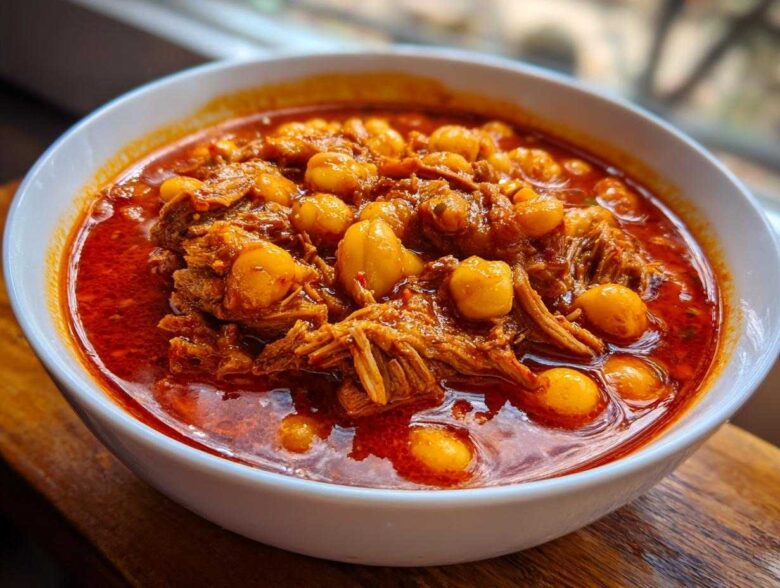
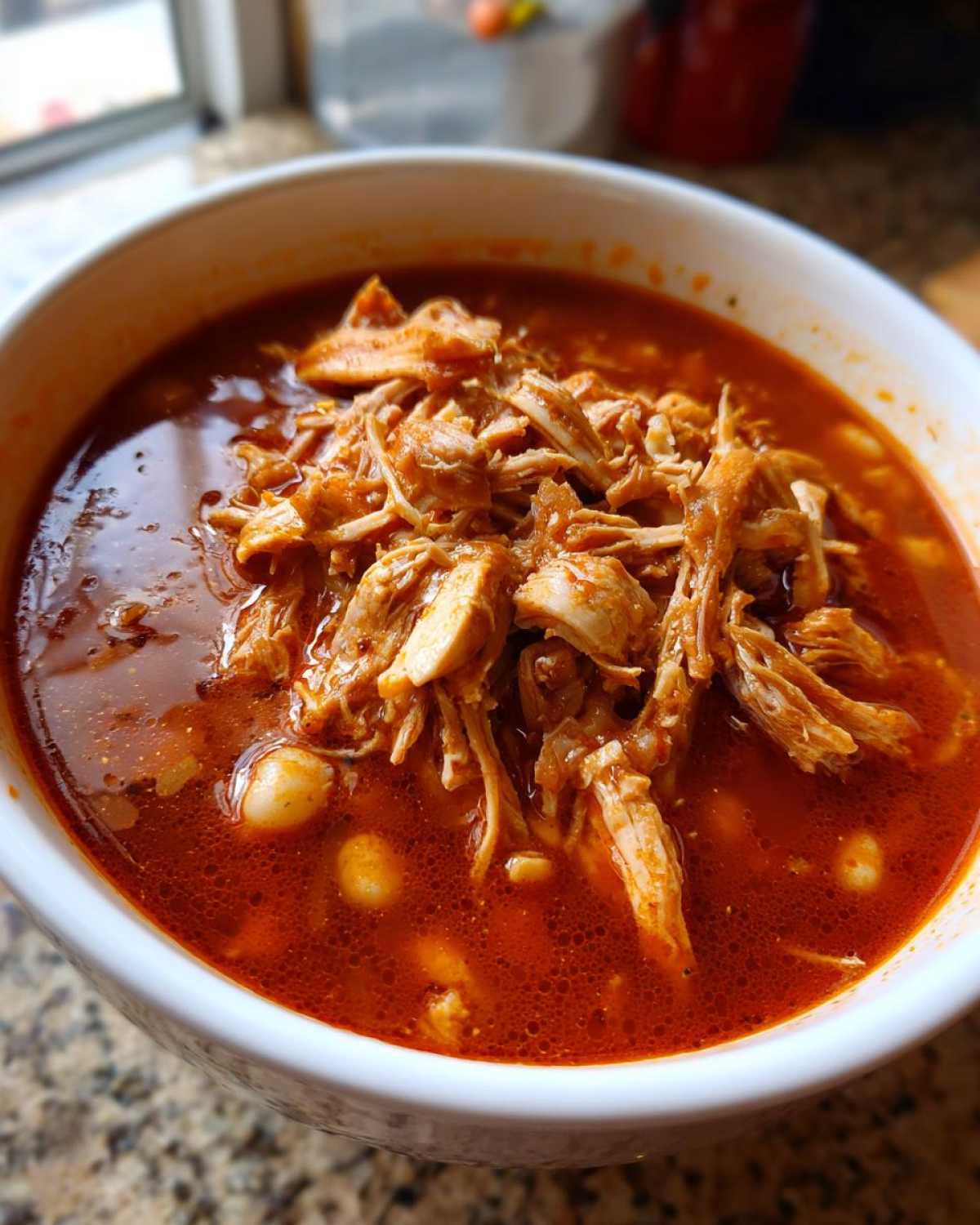
Oh, I simply adore making food for celebrations! There’s nothing quite like filling the house with a warm, deep, comforting scent when everyone is gathered together. If you’re looking for the ultimate festive centerpiece, forget the tiny appetizers—you need a big, soul-satisfying pot of Pozole rojo simmering away. This isn’t just soup; it’s history in a bowl, deeply rooted in Mexican tradition, especially for Christmas Eve.
When that rich, red broth, tender pork, and bursting hominy hit the table, it just feels right. Trust me, getting that robust flavor right connects you straight back to generations of cooks who made this Mexican hominy stew for community and good luck in the New Year. I’m showing you my absolute favorite way to make it!
If you want to see what else I’ve been cooking up lately, check out my main recipe index right here!
Why This Pozole Rojo Recipe Delivers Authentic Flavor
When people ask me how to nail the color and taste in a great pozole rojo recipe, I always tell them it comes down to respecting the chiles. If you want that vibrant, almost glowing red color that screams celebration, you can’t skimp here. This stew has to taste deep, earthy, and just slightly smoky—that’s the magic!
Here’s what sets this traditional pork and red chile soup apart from anything you’ll get out of a can:
- The texture is unbelievably satisfying; it’s chunky yet everything melts together beautifully.
- The resulting broth isn’t just spicy; it’s layered with those rich, dried pepper notes.
- It’s the definition of comfort food, perfect for feeding a big crowd on a cold evening.
Key Elements of Traditional Pozole Rojo
The secret to that signature red broth is mixing the Guajillo and the Ancho chiles. Honestly, they do all the heavy lifting! The Guajillo gives you that fantastic, bright red hue you’re looking for, while the Ancho brings in a deeper, almost raisin-like sweetness. We soak them until they’re soft as velvet, then blend them into a smooth powerhouse that flavors the entire pot. No fake coloring needed here, just pure dried pepper magic!
Gathering Ingredients for Your Pozole Rojo
Okay, let’s talk shopping! Getting the right ingredients is half the battle won when making a spectacular Mexican hominy stew like this. Everything needs to be prepped right before we start simmering, so have your cutting board ready. We’re aiming for a proper pork and red chile soup foundation, so grab good quality stuff!
Here is what you need to gather for a crowd-pleasing batch:
- About 3 pounds of pork shoulder—don’t try to use lean cuts! Shoulder has the fat and connective tissue that breaks down beautifully during the long simmer, making the broth rich.
- One big can of hominy—make sure you rinse and drain that well before it goes in—it’s the star of the show!
- A big white onion, garlic cloves, dried oregano, cumin seeds, and one bay leaf go in with the pork to start building the background flavors.
- For the sauce, we need 12 dried Guajillo chiles and 4 dried Anchos. Remember to de-stem and de-seed these; that’s non-negotiable for a clean flavor!
- And don’t forget your garnishes later—they turn this stew into a whole experience!
Ingredient Notes and Substitutions for Pork and Red Chile Soup
I really want to stress the pork shoulder point again. If you use pork loin, you’ll end up with dry meat floating in broth, and we absolutely can’t have that! The slow cooking of the shoulder melts that collagen, making the meat incredibly tender and infusing the cooking liquid with richness—that’s the backbone of this entire pork and red chile soup.
When you’re buying your dried chiles, always check them for holes or dust; we want perfect ones for the purest flavor. If you ever can’t find Ancho, you can bump up the number of Guajillos a little, but you might lose a tiny bit of that deep, molasses-like background note. Stick to the recipe with the pork shoulder, and that authentic flavor is practically guaranteed!
Mastering the Chile Sauce for Perfect Pozole Rojo
Okay, buckle up, because this part is where we stop making good stew and start making legendary Mexican hominy stew. The chile sauce is the absolute heart of this Pozole rojo, and it takes a few steps, but trust me, it’s worth every second.
First, we need to wake those dried chiles up! I always take a few minutes to toss them, stems and seeds removed, into a dry, hot skillet over medium heat. You just want to hear them start smelling earthy and slightly toasty—maybe 30 seconds per side if you’re quick. Be careful! If those babies burn, your whole pot will taste bitter. That little toast, taught to me by an old neighbor, really wakes up their color and flavor profile before they even touch water.
Once they smell amazing, toss them into a little pot, cover them with fresh water, and let them simmer for about 15 minutes until they are super pliable. They should feel like soft leather when you poke them. Drain them, keeping that soaking water handy, because that liquid gold is going into the blender with half an onion, some garlic, your cumin, and oregano.
Blend it all until it’s as smooth as silk. If your blender is struggling, add just a splash of that reserved chile soaking water until it forms a thick, dark red paste. If you feel like checking out some of my favorite kitchen gear that makes blending much easier, you can peek at my About Me page!
The Art of Straining the Chile Puree
And now the step that separates the serious pozole cooks from everyone else: you must strain this puree! Seriously, do not skip this. Once you pour that blended mixture through a fine-mesh sieve over a clean bowl, you need to grab a wooden spoon or a spatula and press *hard* on those solids.
We aren’t looking for just the liquid to pass through; we want all the intense flavor trapped in the pepper skins and seeds to be squeezed out into the broth. Toss the gritty solids left in the sieve—they’ve officially given up all their goodness. Straining ensures your final bowl of pozole rojo is smooth, professional, and won’t leave you chewing any tough pepper bits. It makes such a difference in the final texture!
Step-by-Step Instructions for Tender Pork and Hominy
Now that our gorgeous red chile sauce is ready, it’s time to bring the main event—the pork and the hominy—into the pot. Remember, this is your chance to build that deep, hearty flavor that makes a good Christmas Eve pozole so memorable. We’re going to take this slowly because rushing the pork will ruin the tenderness we worked so hard to achieve with the chiles!
Achieving Tender Pork for Your Pozole Rojo
Go grab your big Dutch oven again. Toss the chunks of pork shoulder right into the pot. Cover it completely with water—and I mean completely, an inch or two over the meat. This is where we add our flavor starters: half that onion, two cloves of garlic, a bay leaf, and a good teaspoon of salt. Bring it up to a rolling boil first.
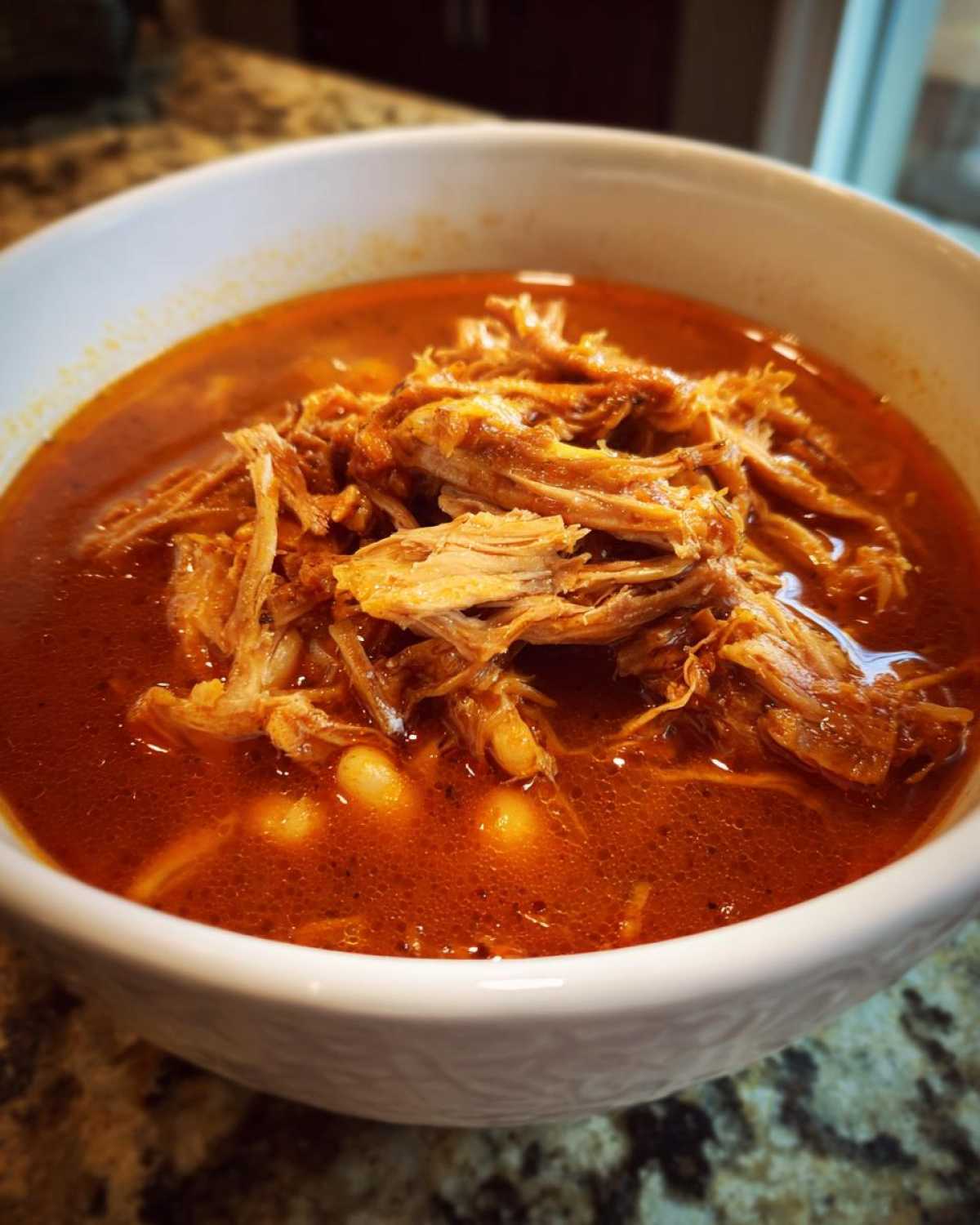
Then, you need to back that heat down immediately to a gentle simmer. Cover it up, but leave the lid just slightly cracked so steam can escape. Now, you wait. This needs 1.5 to 2 hours. Don’t peek too much! As it cooks, you’ll see some grey foam scum rise to the top. Skim that off with a shallow spoon immediately; that keeps your broth clean and beautiful. When the pork is so tender you can shred it easily with just a fork, it’s done with this step. Lift the pork out and set it aside to cool down a little. Strain whatever is left in that pot—that’s your beautiful, flavorful broth!
Simmering Time: Letting Flavors Meld in the Pozole Rojo
Once you’ve shredded all that pork goodness—discarding the boiled onion, garlic, and bay leaf—it’s time to bring everything together. Take 8 cups of that strained broth and put it back in the main pot. Whisk in your strained chile puree until the whole thing turns that gorgeous, deep red color we talked about. Taste it now and adjust the salt to your preference. If it tastes a little flat, it usually just needs more salt!
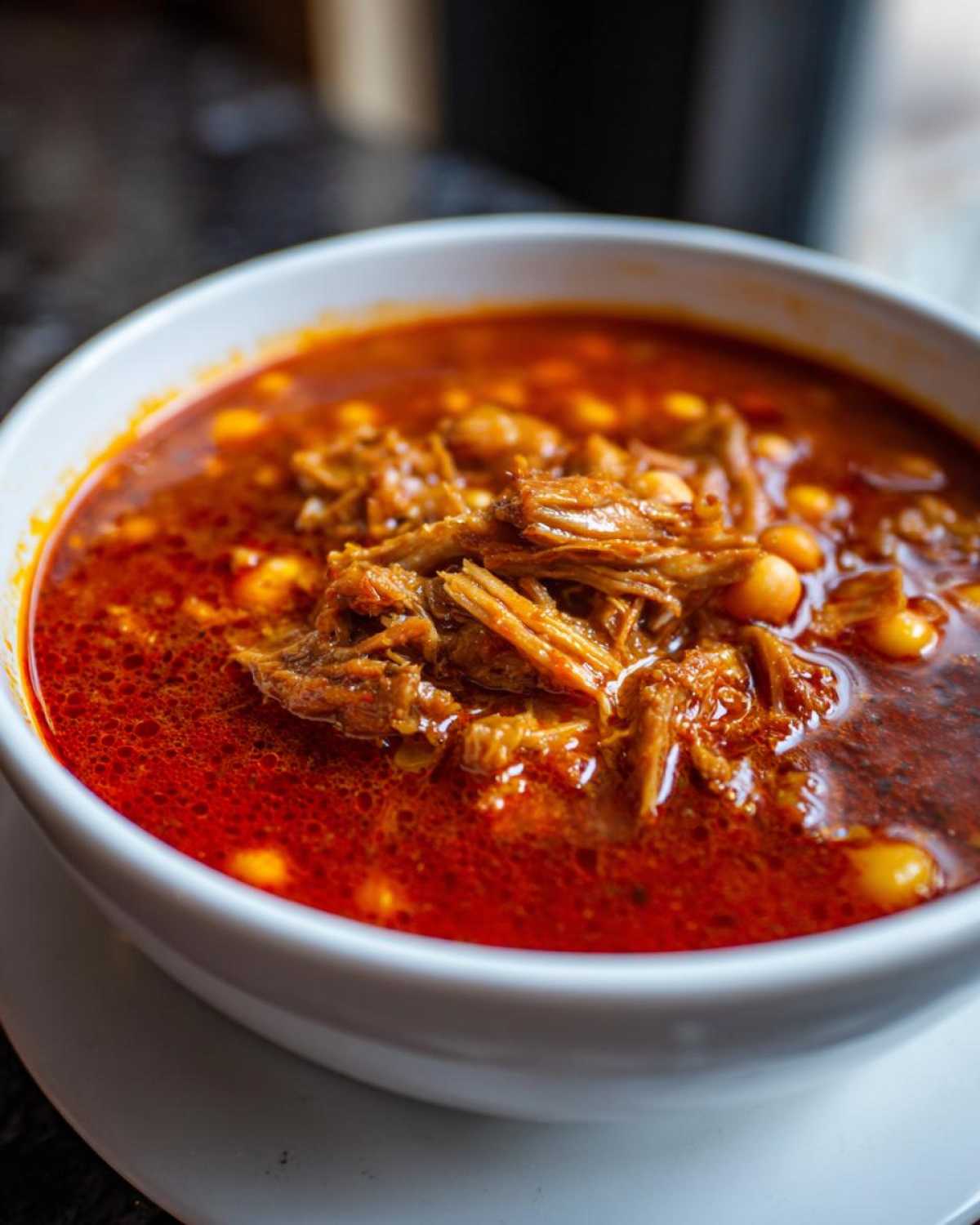
Next, drain and rinse your hominy and add it back to the broth. Finally, stir in all that shredded pork. Now, this is the crucial marrying time. Let the combined pozole rojo simmer gently, uncovered, for a solid 30 minutes. This short simmer allows the pork to soak up the chile flavor and the hominy to fully plump up in that rich liquid. Don’t stir too aggressively; you want the hominy kernels to stay intact!
Essential Garnishes for Serving Pozole Rojo
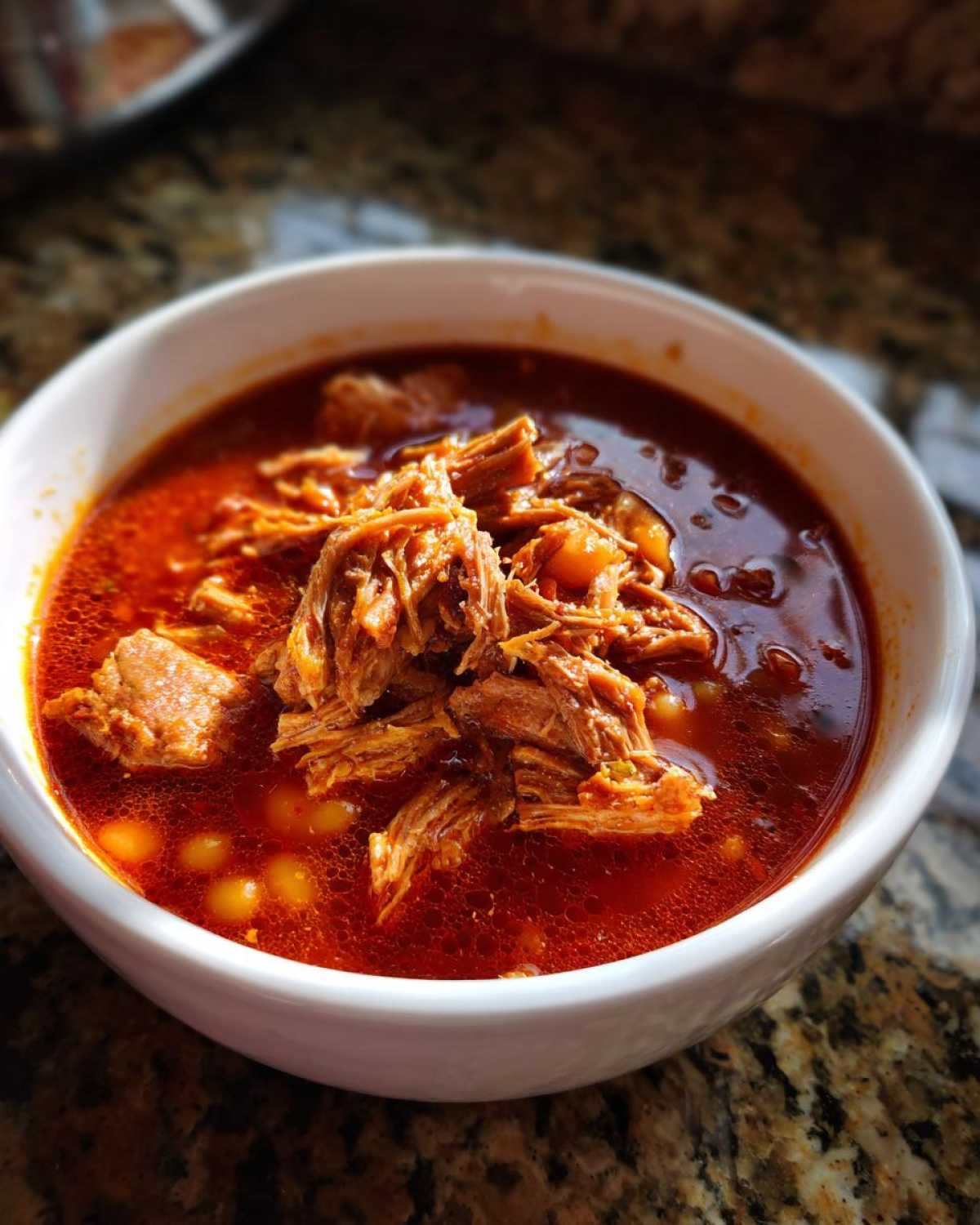
Honestly, the garnishes are almost as important as the simmering broth! Pozole rojo is traditionally served “build-your-own” style so everyone can customize their bowl. You can’t just leave it plain red soup—that would be a flavor crime!
We need things that cut through that deep chile richness. Make sure you have heaps of crunchy shredded cabbage or crisp lettuce ready to go in. That’s for the necessary texture contrast, you see.
Then, you need acid! Plenty of crisp lime wedges are absolutely mandatory; a good squeeze of fresh lime juice brightens up every single spoonful. Don’t forget thinly sliced radishes for that peppery pop, and maybe some chopped white onion for sharpness. A final dusting of dried Mexican oregano right at the end really seals the deal!
Tips for Success When Making Pozole Rojo
I’ve made this recipe so many times I know all the little hiccups that pop up along the way, so listen up! Making a huge pot of pozole rojo means you need to plan just a tiny bit ahead, but these tips will save you stress later on, especially if you’re planning this for a big gathering, maybe even for Noche Buena!
Here are a few crucial things I always do:
- Spice Level Control: If you taste your sauce and think, “You know what? That needs a serious kick,” don’t panic! You can easily add a couple of dried chiles de árbol when you’re soaking your main batch of Guajillos and Anchos. Just remember to blend them in with the rest, but pull them out if the spice gets too strong for your liking. They pack a punch, so start small!
- Make-Ahead Magic: This is my favorite tip for busy hosting days. You can absolutely make the pork and the chile sauce completely separate from the hominy and shredded pork ahead of time. Store that pork mixture in one container and the strained broth/chile base in another, both sealed tight in the fridge. It tastes even better the next day, honestly! When you’re ready to eat, just combine everything and simmer it all together for that final 30 minutes.
- Don’t Cook Hominy Too Early: While the pork base is great made ahead, I prefer adding the drained hominy right before the final simmer. If you cook the hominy for hours and hours before your guests arrive, sometimes it can get a little too soft or mushy. We want those kernels to have a satisfying, gentle bite to them.
Follow these little tricks, and your Mexican hominy stew will be the star of the party, guaranteed!
Storage and Reheating Instructions for Pozole Rojo
What’s the best part about making a giant pot of pozole rojo? The leftovers taste even better the next day! When you store it, always keep the garnishes completely separate. I put the shredded cabbage, onions, and radishes in little airtight containers in the fridge.
When you reheat the stew, do it gently on the stovetop over medium-low heat. Don’t blast it on high; we don’t want to break up the hominy or boil the flavor out. If it seems a little thick the next day—which it almost always is—just splash in a little extra water or even some chicken broth to get that perfect, comforting consistency back. You’ll be amazed!
Frequently Asked Questions About Pozole Rojo
I always get asked the same few things when people finally decide to make their first big pot of pozole rojo, and that’s a great sign! It means you’re ready to take the plunge into this incredible tradition. Don’t stress if you can’t find every single niche ingredient; we can troubleshoot together. I put together the most common questions I hear so you can bake (or stew!) with confidence.
Need to check out privacy details before you keep browsing the site? You can read my full policy here.
Can I substitute the pork in this Pozole Rojo recipe?
Oh, absolutely, you can! While the slow-cooked pork shoulder is really what gives the broth that deep, traditional savoriness that you just can’t beat in a pork and red chile soup, substitutions work fine in a pinch. If you want to go lighter, use bone-in, skin-on chicken thighs and cook them until they shred easily. It will still be delicious, but the broth won’t have that same richness.
For a vegetarian approach—which still makes a wonderful Mexican hominy stew—I love using hearty mushrooms like oyster or cremini, or sometimes even jackfruit! You’ll need to add a little extra vegetable bullion and maybe a touch of olive oil during the simmering phase to replace the fat rendered from the pork, but it really holds up beautifully to that chile sauce!
What is the difference between white and red hominy?
That’s a good question about the corn! Hominy is just corn that’s been treated with an alkali solution (nixtamalization) to make it puff up and get that signature chewy texture. For this recipe, you will almost always find canned white hominy, and honestly, that’s what I use every time. Why? Because it’s going straight into that vibrant red broth anyway!
Red hominy gets its color from being cooked in a pot infused with red chiles already. If you can find it, go for it! But if you grab the standard white canned hominy, there is no difference in texture or flavor once it’s simmering merrily away in your lovely pozole rojo base. Don’t sweat it too much; focus on that broth!
Estimated Nutritional Data for This Pozole Rojo
Now, I have to be super upfront here. When you’re making a huge, slow-simmered pot of pozole rojo like this, and you’re adding tons of flavor from dried chiles and pork shoulder, the exact math gets a little fuzzy! This information is a best guess, based on the ingredients listed, so please consider this an estimate based on Option A of our standard serving size calculation. It’s just a guide, not a strict dietary measurement!
While you’re looking this over, remember that this dish is packed with protein from that pork shoulder, which is fantastic for keeping you full after enjoying your Mexican hominy stew.
Keep in mind that garnishes hugely affect the final tally, especially if you load up on the lard-free additions! You can always check out my full site disclaimer if you need more specifics on how I calculate this stuff.
- Serving Size: About 1.5 cups of the stew base (without excessive garnishes)
- Calories: Roughly 450 calories per serving
- Protein: Fantastic! We are looking at about 40 grams in this serving.
- Fat: Around 18 grams total fat per bowl.
- Carbohydrates: That comes mainly from the hominy, around 35 grams.
- Sodium: This will vary based on how much salt you add during simmering, but we estimate about 650 mg.
See? Great protein, manageable fat content when you aren’t adding extra toppings. It’s a hearty, soul-warming meal that truly celebrates the Mexican kitchen tradition!
PrintAuthentic Pozole Rojo with Pork

A traditional Mexican hominy stew featuring tender pork in a rich, deep red chile broth, perfect for celebrations.
- Prep Time: 30 min
- Cook Time: 2 hr 30 min
- Total Time: 3 hr 0 min
- Yield: 8 servings
- Category: Soup
- Method: Simmering
- Cuisine: Mexican
- Diet: Low Fat
Ingredients
- 3 lbs pork shoulder, cut into 2-inch chunks
- 1 (28 ounce) can hominy, drained and rinsed
- 1 large white onion, halved
- 4 cloves garlic, peeled
- 1 tablespoon dried oregano
- 1 teaspoon cumin seeds
- 1 bay leaf
- Salt to taste
- 12 dried guajillo chiles, stemmed and seeded
- 4 dried ancho chiles, stemmed and seeded
- 4 cups water, for soaking chiles
- 1/2 cup reserved pork cooking liquid
- Garnishes: shredded cabbage or lettuce, sliced radishes, lime wedges, chopped white onion, dried Mexican oregano
Instructions
- Place the pork shoulder in a large pot or Dutch oven. Cover with water, add half of the onion, 2 cloves of garlic, 1 teaspoon of salt, and the bay leaf. Bring to a boil, then reduce heat, cover, and simmer until the pork is very tender, about 1.5 to 2 hours. Skim off any foam that rises.
- Remove the pork from the broth and set aside. Strain the broth and reserve 8 cups of the cooking liquid. Shred the pork using two forks and set aside. Discard the boiled onion, garlic, and bay leaf.
- While the pork cooks, prepare the chile sauce. Place the dried guajillo and ancho chiles in a saucepan and cover with 4 cups of fresh water. Bring to a simmer and cook for 15 minutes until soft.
- Drain the chiles, reserving the soaking liquid. Place the softened chiles in a blender with the remaining half onion, 2 cloves of garlic, oregano, cumin seeds, and 1/2 cup of the reserved pork cooking liquid. Blend until completely smooth, adding a little more soaking liquid if needed to create a thick paste.
- Strain the chile mixture through a fine-mesh sieve into a clean bowl, pressing down on the solids to extract all the liquid. Discard the solids.
- Return the 8 cups of reserved pork broth to the large pot. Bring to a simmer. Whisk the strained chile puree into the simmering broth until fully incorporated. Taste and add salt as needed.
- Add the drained hominy and the shredded pork back into the pot. Simmer gently for 30 minutes, allowing the flavors to combine.
- Serve the pozole hot in bowls. Provide garnishes on the side for each person to add to their preference.
Notes
- For a deeper flavor, lightly toast the dried chiles in a dry skillet for 30 seconds per side before soaking them. Do not burn them.
- If you prefer a spicier pozole, add 1-2 dried chiles de árbol to the soaking chiles.
- You can prepare the pork and chile sauce a day ahead of time. Store them separately in the refrigerator.
Nutrition
- Serving Size: 1.5 cups
- Calories: 450
- Sugar: 5
- Sodium: 650
- Fat: 18
- Saturated Fat: 6
- Unsaturated Fat: 12
- Trans Fat: 0
- Carbohydrates: 35
- Fiber: 8
- Protein: 40
- Cholesterol: 100