

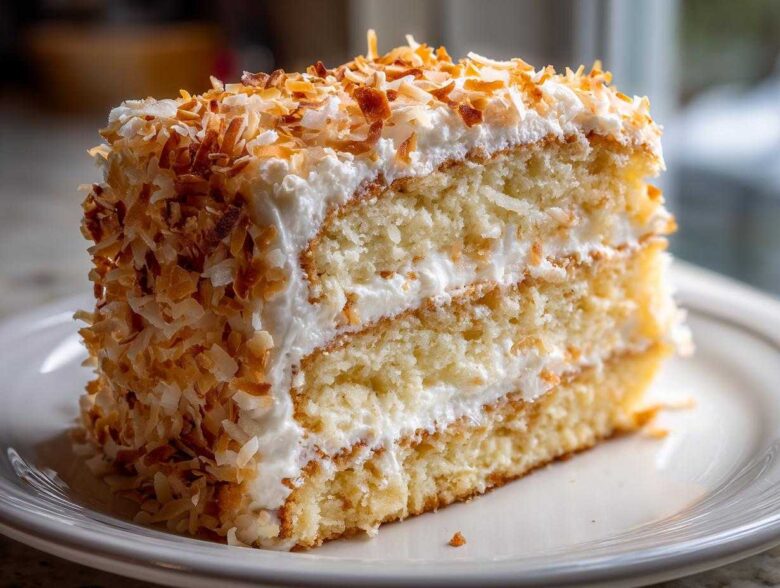
Oh, get ready, because we are diving headfirst into true Southern baking heaven today! When it comes to celebrations, you just can’t beat a cake that looks like a beautiful, slightly messy white cloud. This is the recipe I finally nailed down after Jessica had one of her *big* ideas about needing the absolute best moist & fluffy Southern coconut cream cake recipe in existence. I took her vision for intense tropical flavor, and bless my heart, I managed to structure it into something that tastes exactly like a high-end bakery made it. Forget those sad, dry cakes from childhood; this homemade coconut cake is pure, dreamy perfection, and I promise you, it’s ridiculously delicious!
Why This Southern Coconut Cake Recipe is Your New Favorite
I know, I know, everyone claims they have the *best* recipe. But seriously, Jessica and I went through three different versions before landing here. This just hits different. It has that deep, comforting Southern charm, but with a texture that rivals any fancy bakery down the street. You need this in your life, trust me.
- Unbelievably Moist Coconut Cake Recipe: We use a secret soak technique after baking—shhh!—that locks in moisture so deeply, it stays fresh for days. No dry crumbs here!
- Light and Fluffy Coconut Cake Layers: We nail the right balance of oil and just enough egg whites so that the crumb is tender and airy, not dense like a brick. It really is as light as a cloud.
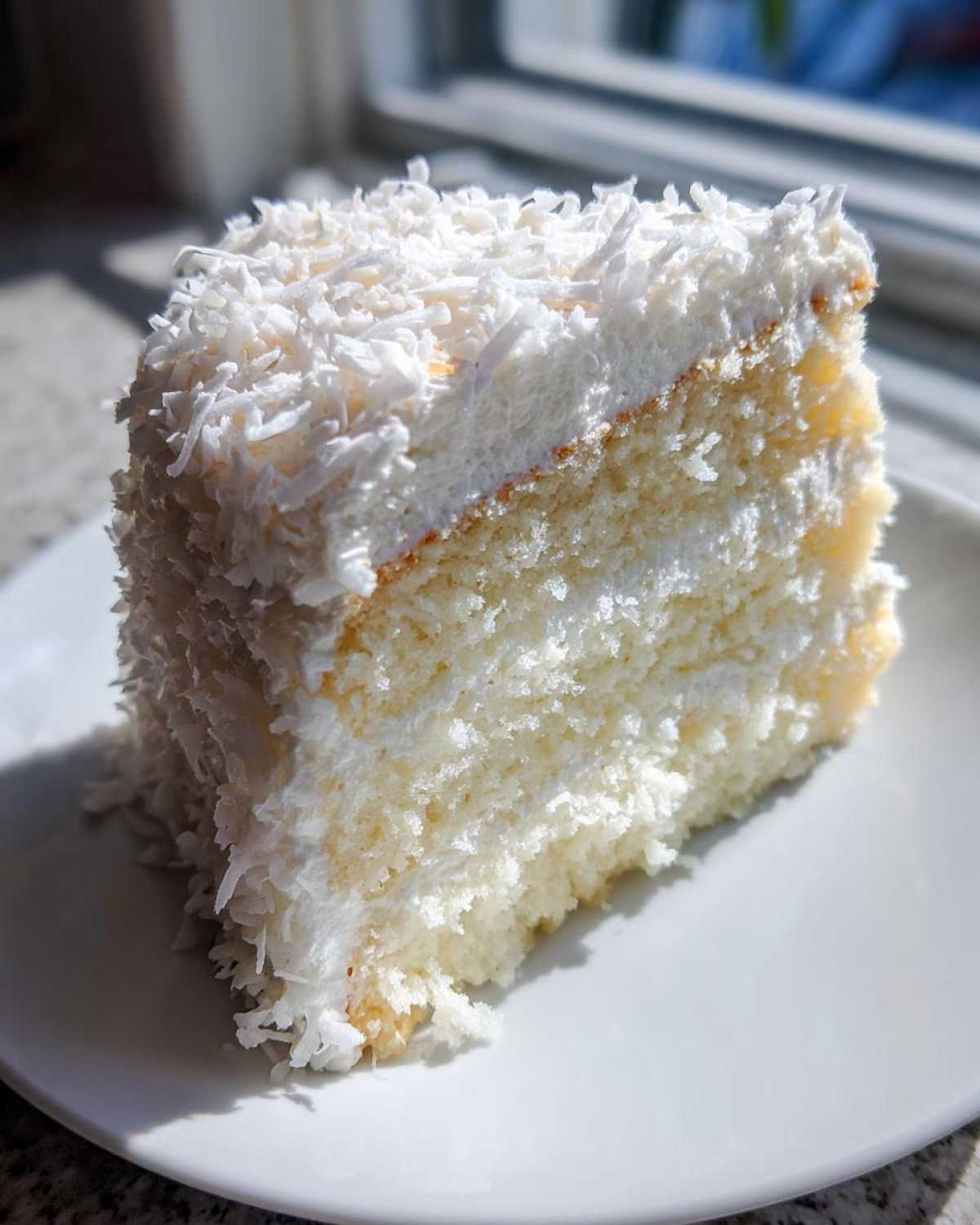
- Bakery Style Coconut Cake Experience: Everything about this, from the way the frosting feels to the mountain of fragrant toasted coconut on top, screams ‘special occasion cake.’ It looks intimidating, but I promise, the steps are totally manageable.
- The Creamy Frosting That Holds Up: Unlike those flimsy powdered sugar dustings, our coconut cream frosting is sturdy enough to handle being stacked high, but it tastes rich, sweet, and tropical all at once.
If you are looking for that show-stopping dessert that feels both nostalgic and brand new, we landed on the perfect formula. You can read more about our development process on our team page, but honestly, seeing this beauty come out of the oven is all the proof you need!
Gathering Ingredients for Your Moist Coconut Cake Recipe
Okay, the first thing I learned from Jessica when we started baking together is that you can’t fake flavor in baking. If you want that genuinely moist coconut cake recipe that people dream about afterward, you have to start with the right stuff. Don’t start mixing until everything is measured out and ready to go, or things get chaotic fast—and trust me, I’m the one who cleans up the chaos!
We break this down into two main groups—the layers themselves, which need to be light and fluffy, and then the glorious frosting and soak that makes this Southern coconut cake truly heavenly. Make sure you follow the prep notes for the coconut flakes right at the top!
For the Light Fluffy Cake Layers
These ingredients are what build that amazing, slightly delicate base. The full-fat coconut milk is absolutely essential here; using the skinny stuff just won’t give us that rich, tropical background flavor we need to make this a truly bakery style coconut cake!
- 1 3/4 cups all-purpose flour
- 1 3/4 cups granulated sugar
- 1 tablespoon baking powder
- 1/2 teaspoon salt
- 1 cup unsweetened coconut milk (full fat, please!)
- 1/2 cup vegetable oil
- 4 large egg whites, room temperature (this is important for height!)
- 1 teaspoon vanilla extract
- 1/2 cup sweetened condensed milk (for the soak later!)
- 1/2 cup cream of coconut (like Coco Lopez) (also for the soak!)
For the Dreamy Coconut Cream Frosting and Assembly
This is where that fluffy coconut frosting shines! Quick heads-up: the shredded coconut for the cake layers needs to be drained after being soaked in boiling water, and the coconut for the outside garnish needs to be toasted. Don’t skip the toasting—it amps up the flavor so much!
- 1 cup unsweetened shredded coconut, prepared (soaked in boiling water and drained well) for mixing into the frosting
- 1 cup unsweetened shredded coconut, toasted, for garnish
- 1 cup (2 sticks) unsalted butter, softened (must be soft!)
- 4 cups powdered sugar, sifted (sift it, or you’ll get lumps!)
- 1/4 cup heavy cream
- 1 teaspoon coconut extract
Step-by-Step Instructions for the Best Coconut Cake
Now for the part where Jessica’s vision meets my need for structural integrity! We are making the **best coconut cake** ever, but it requires just a little patience between the baking and the final assembly. I like to get the frosting made while the layers cool, and then we hit them with the moisture soak right before we frost. It seems like three steps, but it moves quickly if you stay organized!
Baking the Tender Coconut Cake Layers
First things first, let’s get these beauties in the oven! Preheat your oven to 350°F (175°C). Don’t skip that preheat—we need it hot and ready. You need to grease and flour two 9-inch round cake pans. I always trace the bottom and cut out parchment circles for the base; it’s just extra insurance that nothing sticks! In your big mixing bowl, whisk together the dry stuff: flour, sugar, baking powder, and salt. Just get them acquainted.
In a separate bowl, mix up your wet ingredients: that wonderful full-fat coconut milk, the oil, and your room-temperature egg whites, plus the vanilla. Pour the wet into the dry and mix *only* on low speed until they just barely come together. I mean it—stop mixing when you see those last flour streaks. Overmixing is the enemy of fluffy cake! Gently fold in that 1/2 cup of prepared, drained shredded coconut. Divide that lovely batter between your two pans and pop them in for 30 to 35 minutes. When a toothpick comes out clean, they are done! Let them cool in the pans for about 10 minutes before you flip them onto a wire rack to cool completely. We can’t frost hot cakes, or we’ll have soup!
Creating the Fluffy Coconut Frosting Homemade
Once those layers are safely cooling, we jump right into the **coconut frosting homemade**. This is what gives it that dreamy look! Start by beating your softened butter in a stand mixer until it’s nice and creamy—no lumps allowed! Then, start adding that sifted powdered sugar slowly, alternating with the heavy cream. If you dump it all in at once, you’ll be wearing sugar dust for a week, trust me. It’s going to look thick at first, but keep beating. Add your coconut extract and the other 1/2 cup of prepared (drained) shredded coconut. Beat it on medium-high until it’s truly light and fluffy. It shouldn’t taste dusty; it should taste like sweet, tropical air! If you need more tips on getting those perfect layers, check out the detailed tutorial Julie Marie shared—it really helps!
Assembling Your Southern Coconut Cake
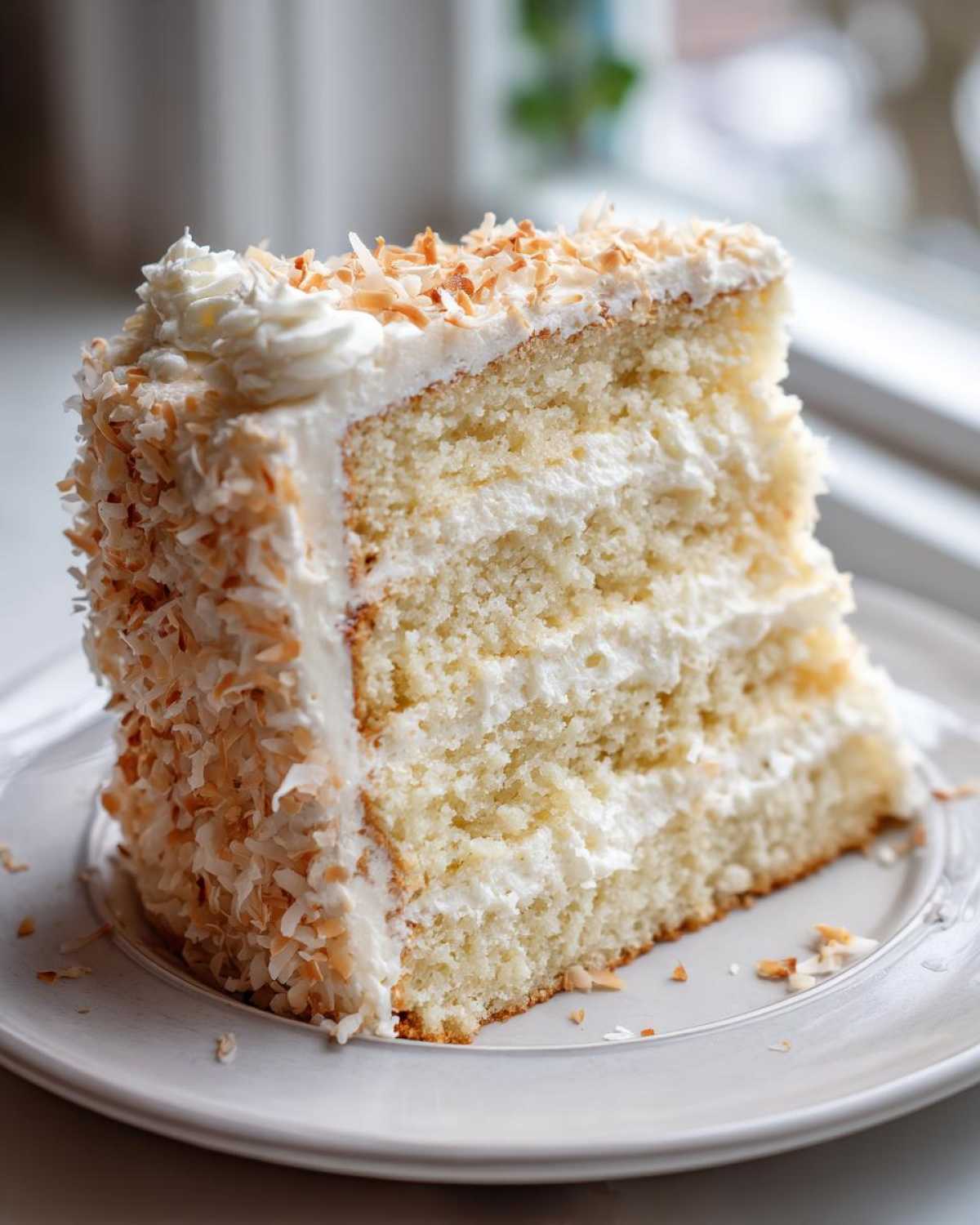
Now for the part that takes this from good to legendary: the soak! Once the cake layers are totally cooled—and I mean totally—take your sweetened condensed milk and your cream of coconut. Using a pastry brush, coat the top of the first layer generously with the condensed milk, then follow that up with a light, even glaze of the cream of coconut. This proprietary soak is the moisture insurance policy for our **Southern coconut cake**! Pop the first layer on your stand. Spread a healthy layer of that fluffy coconut frosting over the top.
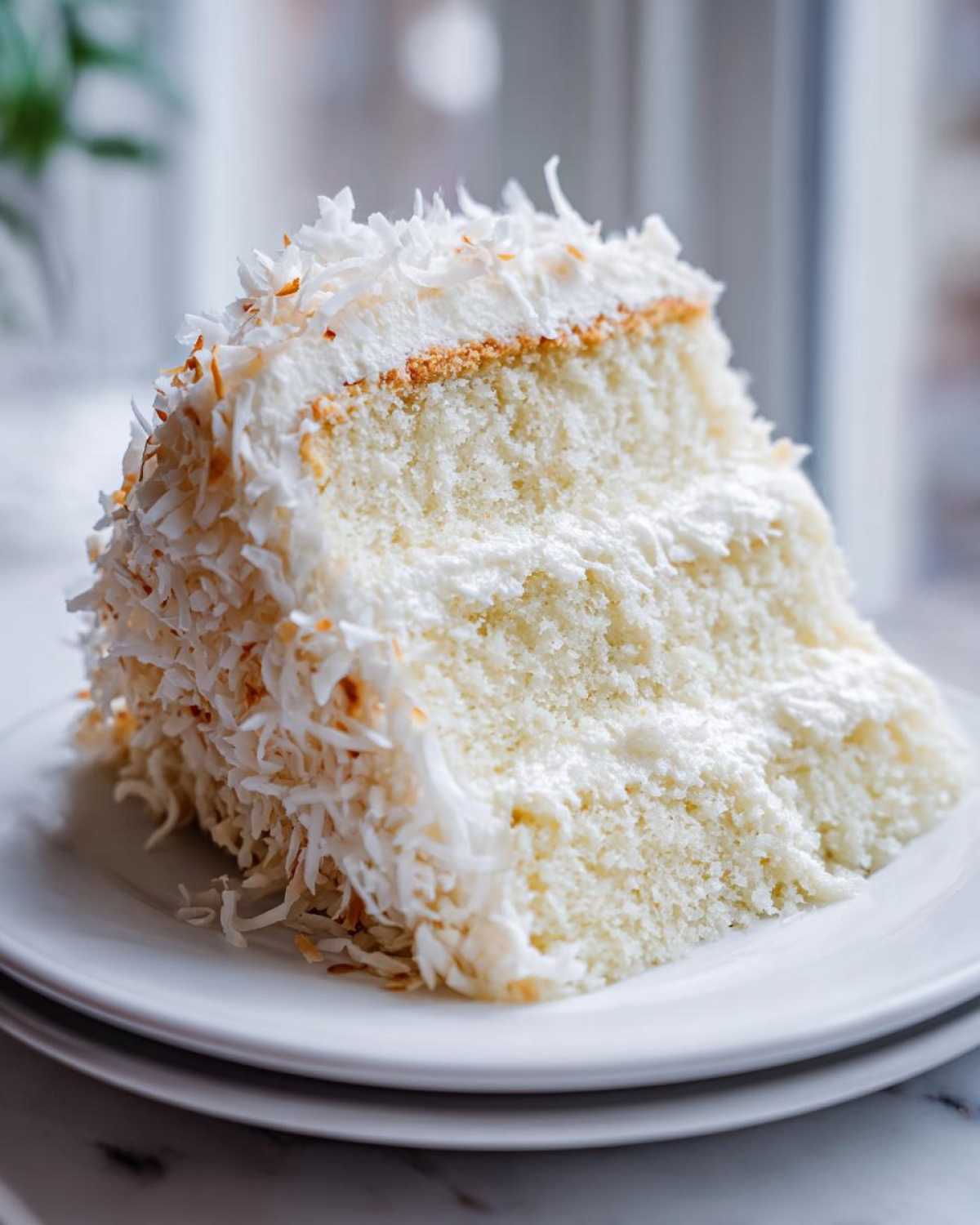
Place the second layer on top, and then it’s time to frost the whole thing—top and sides! Don’t strive for perfection here; a little rustic look is totally the charm. Finally, take that toasted, shredded coconut garnish you prepared earlier and gently press it all over the sides and top. Don’t just sprinkle it; really press it in so it sticks beautifully. And that’s it, your stunning cake is officially ready to impress!
Tips for a Perfect Coconut Layer Cake Every Time
Jessica and I learned a lot of hard lessons making cakes over the years—mostly messes we had to clean up! But those failures taught us the golden rules. For this beautiful coconut layer cake, a few small details make the difference between good and absolutely incredible, the kind of cake people ask about for years. These aren’t complicated steps, just things you have to remember to do, which is why I write them down every time!
If you follow these little tips, you’ll nail that soft, fluffy texture every single time. It’s all in the prep work before the mixing even starts.
- Always Toast the Garnish Coconut: Honestly, this is non-negotiable for me now. Those beautiful flakes on the outside? They need a quick trip to the oven—like 5 to 8 minutes at 350°F—but you cannot walk away! They go from golden brown to burnt charcoal in about thirty seconds. Keep them moving on the baking sheet. That deeper, nutty flavor is miles better than raw flakes.
- Eggs Must Be At Room Temperature: When we whip up the egg whites, if they are straight from the fridge, they just won’t incorporate correctly into the batter. They won’t whip up as high, and that ruins the lift in the layers. Pull them out at least 30 minutes before you start assembling your wet ingredients. It’s a small extra step that pays off big time in fluffiness.
- The Milk Substitute Rule: If you run out of full-fat coconut milk, don’t panic entirely, but know you are making a slight trade-off. You can thin out canned *shredded* coconut cream—not the sweetened stuff—with a bit of water to match the liquid consistency. Just remember that the full-fat version provides fat and deep flavor that substitutes struggle to replicate perfectly. If you’re really struggling, you can use regular whole milk, but I hope you don’t have to!
- Don’t Overmix the Batter Under Any Circumstance: I learned this the hard way when I was trying to rush a batch and the mixer was on ‘jet engine’ speed. Once the wet and dry ingredients meet, mix on low until *just* combined, then fold in your coconut by hand. Overmixing develops gluten, and gluten turns your lovely fluffy cake into something chewy. You want it tender, like the beautiful cakes that inspired us, like the one Amy shared!
Variations for Your Tropical Coconut Dessert
You know me—even when we have a winner recipe like this incredible **coconut cake**, I can’t just leave it alone! Jessica is always pushing boundaries, and even I like to mix things up if I’m making this for a different occasion. This base recipe is so strong, it handles tweaks like a champ. It’s all about leaning into that tropical coconut dessert vibe even harder, or maybe making it easier for a weeknight.
The first thing you could play with is the batter. If you find yourself needing a little extra punch of that coconut flavor alongside the milk, try adding about a teaspoon of coconut extract right along with your vanilla when you mix the wet ingredients. It really deepens the flavor profile, making it feel extra luxurious! Just don’t go overboard; extract is powerful stuff.
Now, let’s talk about the frosting. While the cream frosting is dreamy, sometimes you want a little tang, especially if you are making this for a holiday dessert! Remember the note about swapping out some heavy cream for cream cheese? That’s the secret to a great Coconut Cream Cheese Frosting. It cuts the sweetness just enough while still tasting rich. If you prefer something a little zestier, I highly recommend whipping in the zest of one small lime when you start beating the butter. Lime and coconut are best friends, honestly!
And what if you aren’t up for making a whole layer cake? We totally get it; sometimes you just want something simpler for your tropical coconut dessert, but still impressive. This batter is fantastic as a **coconut bundt cake**. Since Bundt pans are deeper, you’ll need to add about 10 to 15 minutes onto the baking time, so keep an eye on it around the 45-minute mark. When it looks done, give it the toothpick test! You can skip soaking the layers for a Bundt, but drizzle the whole cooled thing with a simple glaze made from powdered sugar and some of that leftover cream of coconut—you get great coconut flavor with half the assembly time. You can find some fun ideas for pairing drinks with your coconut creation over on our post about the Pink Drink Copycat, too!
Storing and Keeping Your Homemade Coconut Cake Fresh
Listen, this lovely **coconut cake** is rich enough that you’ll probably have leftovers, even if Jessica claims she can eat three pieces in one sitting. The key here is making sure it stays just as moist on day three as it does straight out of assembly. Since this cake has that beautiful coconut cream frosting we worked so hard on—which uses butter and cream—we have to be smart about storage.
For short-term storage, maybe just overnight or if you’re serving it the same day, leaving it loosely covered on the counter at room temperature is actually my preferred method. The cold from the fridge can sometimes dull the flavor and make the cake layers feel a little firm. If your kitchen is cool (under 70°F), just cover it loosely with a cake dome or even loosely puffed plastic wrap—don’t seal it tightly, or the moisture will sweat and make the pretty coconut garnish go soggy!
If we are talking about longer storage, like three or four days, then the fridge becomes necessary to keep that beautiful cream frosting safe. In that case, I still suggest placing it under a loose dome first. Once you slice into the cake, things change a little. If you have exposed cake edges where layers meet, you need to protect those precious moist spots!
Here’s my trick for cut cakes: Take a small dollop of leftover frosting and gently spread it over any exposed cut surface of the remaining cake. It acts like a little sealant against the dry air in the fridge. Store those pieces with plastic wrap lightly pressed against the cut sides. When you’re ready to serve the leftovers, pull the cake out about an hour before eating. That gives everything time to warm up slightly, bringing back that incredible fluffy texture and flavor profile again!
Serving Suggestions for This Classic Coconut Dessert
Okay, we’ve baked the showstopper, we’ve frosted it to perfection, and now it’s time to eat this glorious **coconut cake**! Presentation matters, especially when this cake is the star of a birthday party or a big holiday spread. Honestly, this cake speaks for itself—it’s snowy white, tall, and totally screams celebration. Because the flavor is so intensely tropical and sweet, we want to pair it with things that are light and refreshing, not heavy!
For beverages, skip the heavy red wines or super sugary sodas. I love pairing this **classic coconut dessert** with something crisp. A really good iced black tea with maybe a sliver of lemon is just perfect; the slight tartness cuts right through the frosting. If you’re looking for something fun, a chilled glass of sparkling water with a splash of pineapple or lime juice is fantastic. It makes everything feel lighter!
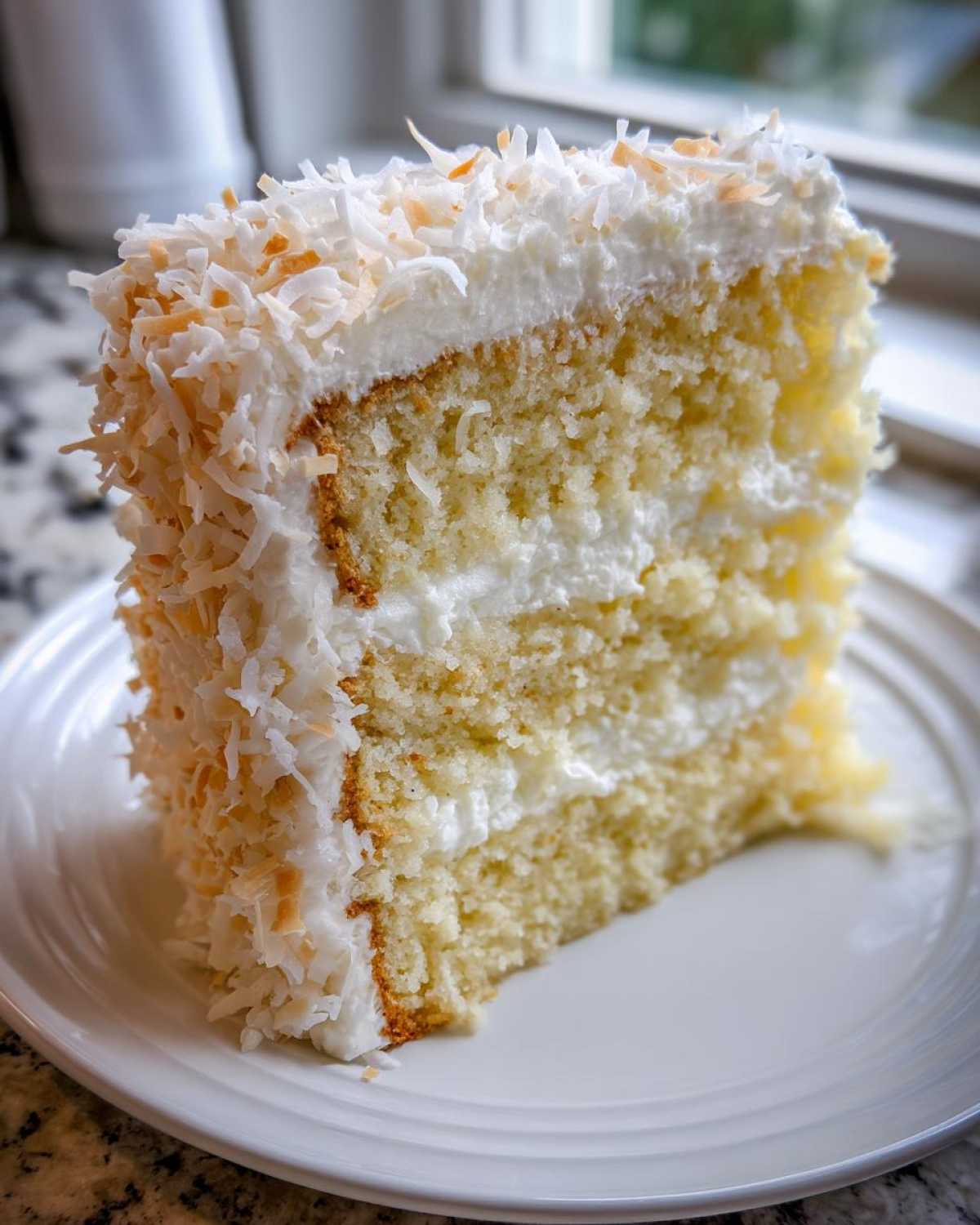
When it comes to accompaniments, keep it simple. This cake doesn’t need anything else on the plate, but if you’re making it for a big dinner, a small side of fresh, beautifully diced tropical fruit—think mango, pineapple chunks, or even fresh raspberries—adds a bright color contrast. A little bit of fresh fruit sprinkled around the plate makes the whole thing look instantly more elegant and bakery-style. It’s all about letting that fluffy cake shine! If you need more inspiration for making your celebrations special, you can check out our ideas for coconut birthday cake ideas, or see how others have styled their final pieces over on this fluffy cake recipe link!
Frequently Asked Questions About Making Coconut Cake
Jessica and I get so many questions flooding our inbox after readers see pictures of this cake! Since we want everyone to have success with their **coconut cake**, I pulled together the three questions we hear the most often. If you followed the steps above, you should be set, but these little clarifications can really save the day if you are rushing or substituting ingredients!
Can I substitute the coconut milk in this moist coconut cake recipe?
That’s a great question, especially if you don’t always keep canned coconut milk on hand! The full-fat coconut milk is crucial because it brings both fat content (which adds richness and moistness) and that distinct tropical flavor right into the crumb. If you absolutely must substitute it for your **moist coconut cake recipe**, the closest thing I’d try is a mixture of 3/4 cup of whole milk mixed with 1/4 cup of coconut cream (the thick part from skimming a can of full-fat coconut milk, or from the top of a can of Coconut Cream—not the sweetened stuff). If you use regular 2% or skim milk, the texture will definitely be lighter, and you’ll lose some of that dreamy tropical feel, so tread lightly there!
What is the secret to achieving light fluffy cake layers?
Oh, this is where my attention to detail really has to shine, because Jessica always wants them light! There are two main secret weapons here, though neither involves special equipment. First, make sure those four egg whites are truly at room temperature before you start whipping them into the wet mixture. Room temperature whites hold air much better than cold ones. Second, and this is probably more important, **do not overmix** once you add the flour mixture in! Stop, stop, stop mixing as soon as the flour disappears. If you feel like you should mix it just a bit longer ‘to be sure,’ don’t! That small bit of extra mixing develops gluten and weighs down those beautiful **light fluffy cake layers** into something denser. Gentle folding is your friend here.
How do I make the coconut frosting homemade without it being too sweet?
I totally get it; this frosting is sweet because it uses powdered sugar and condensed milk elsewhere in the recipe gives it richness, but it shouldn’t taste like you’re eating pure sugar. If you find it too sweet after you whip it up, you have a couple of options to balance it out. The best hack is to add a pinch—like a small quarter teaspoon—of fine sea salt to the frosting. Salt is an amazing flavor enhancer and will immediately cut through that overwhelming sweetness. If you want to shift the flavor profile, adding the zest of half a lime, just like I mentioned earlier, adds a lovely tang that balances the sugar beautifully in the **coconut frosting homemade**. Try that next time!
If you want more tips on balancing flavor in layer cakes in general, I broke down some of my favorite ways to keep things interesting in my guide to easy layer cake recipes!
Nutritional Estimate for This Coconut Cake
We always believe in transparency, even if baking is more about love than macro tracking! Keep in mind these numbers are just estimates based on the ingredients listed and how large we cut our slices. Since this is a rich **coconut cake**, it definitely qualifies as a treat! Here is the breakdown based on a single serving size of one slice:
- Serving Size: 1 slice
- Calories: 480
- Fat: 25g (mostly from butter and oil)
- Carbohydrates: 62g (hello, sugar!)
- Protein: 5g
For the full, detailed nutritional breakdown and our standard recipe disclaimer, you can check out the official page here. Enjoy every bite; you totally earned it!
Share Your Experience Baking This Fluffy Coconut Cake
Now it’s your turn! I sincerely hope you make this **fluffy coconut cake** soon. When you do, please, please come back here and drop a rating—we are aiming for five stars, because this recipe truly deserves it! I love hearing about when you bake it for birthdays or holidays. Did you use fresh lime zest in the frosting? Did your family devour the whole thing in one afternoon?
Don’t be shy! Drop your stories, any questions that popped up while you were baking, or pictures of your beautiful snowy cake in the comments below. We read every single one, and it truly makes our day to know we helped you find your own little slice of Foodie Heaven. Happy baking, friends, and I can’t wait to see your creations on the Foodie Heavens blog!
PrintThe Best Moist & Fluffy Southern Coconut Cream Cake Recipe
Bake a show-stopping Southern Coconut Cream Cake that is incredibly moist, fluffy, and loaded with tropical coconut flavor. This bakery-style layer cake features tender layers and a dreamy coconut cream frosting, making it perfect for birthdays and holidays.
- Prep Time: 30 min
- Cook Time: 35 min
- Total Time: 65 min
- Yield: 10 servings
- Category: Dessert
- Method: Baking
- Cuisine: American
- Diet: Vegetarian
Ingredients
- 1 3/4 cups all-purpose flour
- 1 3/4 cups granulated sugar
- 1 tablespoon baking powder
- 1/2 teaspoon salt
- 1 cup unsweetened coconut milk (full fat)
- 1/2 cup vegetable oil
- 4 large egg whites, room temperature
- 1 teaspoon vanilla extract
- 1/2 cup unsweetened shredded coconut, sweetened with boiling water and drained for frosting
- 1 cup unsweetened shredded coconut, toasted, for garnish
- 1/2 cup sweetened condensed milk (for cake layers)
- 1/2 cup cream of coconut (like Coco Lopez) (for cake layers)
- 1 cup (2 sticks) unsalted butter, softened (for frosting)
- 4 cups powdered sugar, sifted (for frosting)
- 1/4 cup heavy cream (for frosting)
- 1 teaspoon coconut extract (for frosting)
Instructions
- Preheat your oven to 350°F (175°C). Grease and flour two 9-inch round cake pans. Line the bottoms with parchment paper.
- In a large bowl, whisk together the flour, sugar, baking powder, and salt.
- In a separate bowl, whisk together the coconut milk, vegetable oil, egg whites, and vanilla extract until combined.
- Pour the wet ingredients into the dry ingredients and mix on low speed until just combined. Do not overmix.
- Gently fold in the 1/2 cup of prepared, drained shredded coconut.
- Divide the batter evenly between the prepared cake pans.
- Bake for 30 to 35 minutes, or until a toothpick inserted into the center comes out clean.
- Let the cakes cool in the pans for 10 minutes before inverting them onto a wire rack to cool completely.
- While the cakes cool, prepare the coconut cream frosting. Beat the softened butter in a large bowl until creamy.
- Gradually add the sifted powdered sugar, alternating with the heavy cream, beating until smooth.
- Mix in the coconut extract and the 1/2 cup of prepared, drained shredded coconut. Beat until light and fluffy.
- Once the cake layers are completely cool, brush the tops of each layer with the sweetened condensed milk, followed by the cream of coconut. This adds extra moisture.
- Place one cake layer on your serving plate. Spread a generous layer of frosting over the top.
- Top with the second cake layer. Frost the top and sides of the entire cake with the remaining coconut cream frosting.
- Press the toasted shredded coconut evenly onto the top and sides of the cake for a beautiful finish.
Notes
- Toasting the coconut for garnish adds a deeper flavor and better texture to your finished cake. Spread it on a baking sheet and bake at 350°F for 5-8 minutes, watching closely to prevent burning.
- For extra moist coconut cake layers, use full-fat coconut milk and ensure your egg whites are at room temperature before mixing.
- If you want a slightly tangier frosting, substitute 2 tablespoons of the heavy cream with cream cheese.
Nutrition
- Serving Size: 1 slice
- Calories: 480
- Sugar: 55g
- Sodium: 210mg
- Fat: 25g
- Saturated Fat: 15g
- Unsaturated Fat: 10g
- Trans Fat: 0g
- Carbohydrates: 62g
- Fiber: 1g
- Protein: 5g
- Cholesterol: 45mg