

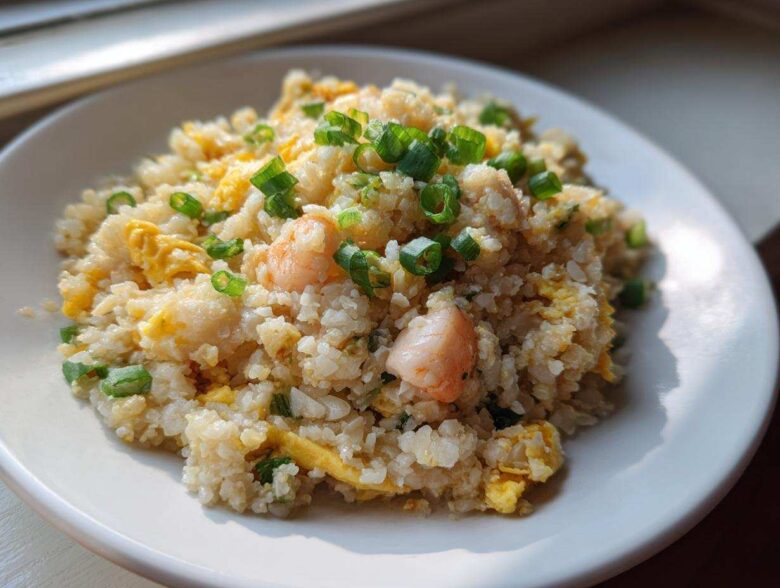
Oh, you know that feeling, right? You’ve had a long day, you’re scrolling through those delivery apps, dreaming of that salty, savory, perfectly textured takeout fried rice… but then you remember the carb load afterwards? No thank you! I’ve been there a million times, which is why I spent so much time getting this right.
Forget ordering out when you can whip up The Ultimate 20-Minute Keto Cauliflower Fried Rice (Better Than Takeout!) faster than the delivery driver can even get your address! This recipe is a game-changer for anyone trying to eat healthier or stick to low-carb living, but honestly, even my rice-loving husband couldn’t stop eating it.
After years of perfecting quick weeknight meals, I found this method delivers authentic flavor that rivals any restaurant version. It’s fast, packed with flavor, and it’s the absolute best cauliflower fried rice you’ll ever make at home, trust me on this one.
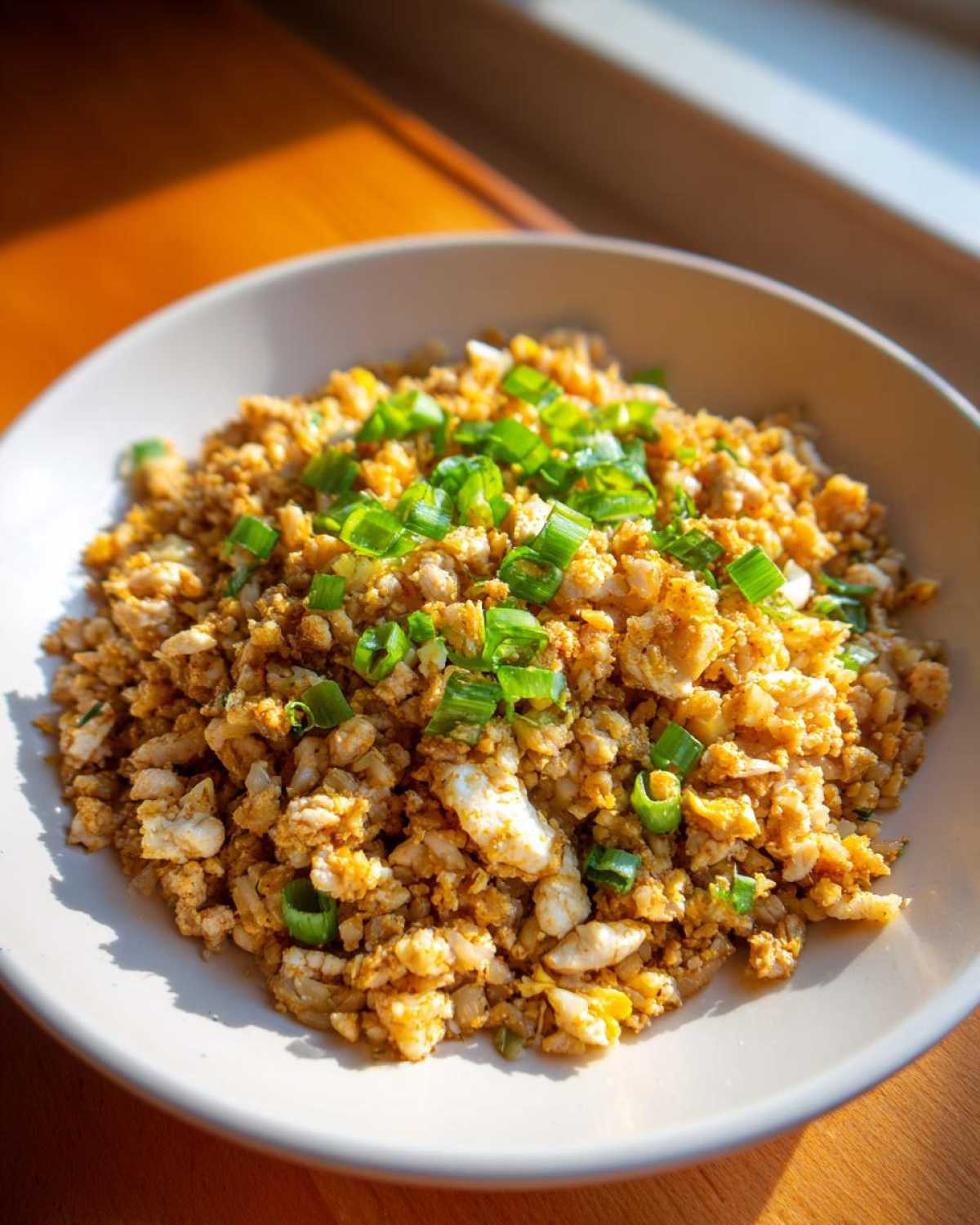
Why This Cauliflower Fried Rice is Your New Go-To Healthy Takeout Replacement
When I tell you this recipe is fast, I mean it! We are talking about a complete, satisfying dinner on the table in under 20 minutes total. That speed is what makes this healthy cauliflower fried rice my absolute favorite for those chaotic evenings when I’m too tired to cook but still want something good.
This isn’t just about cutting calories; it’s about sticking to your goals without feeling deprived. This version satisfies every craving you get when you want that salty goodness from the Chinese place, making it the perfect healthy takeout replacement. It’s naturally low-carb and keto-friendly, which is just a bonus for how incredible it tastes!
Speed and Simplicity: Making Cauliflower Fried Rice in Under 20 Minutes
Seriously, ten minutes of prep and just ten minutes of cooking. That’s it! The secret to hitting that 20-minute mark is making sure you have your protein ready to go. If you batch cook some chicken or shrimp ahead of time, this truly becomes a five-minute reheat and toss situation. This is the definition of a quick weeknight cauliflower rice win, right there.
If you’re making my shrimp version, make sure you’re using tiny shrimp or chopping larger ones down. They cook up so fast they practically vanish if you aren’t careful! If you want to see more quick tips like this for meal planning, check out my general batch cooking guide here!
Essential Ingredients for Flavorful Cauliflower Fried Rice
Okay, let’s talk food! The success of this cauliflower fried rice hinges entirely on two things: the quality of your initial ingredients and using a seriously hot pan. If your skillet isn’t screaming hot, you’ll steam the cauliflower instead of frying it, and nobody wants soggy rice.
Look at the ingredients list and pay close attention to how I describe things. We need garlic *minced* and ginger *grated*—no big chunks allowed! Eggs are to be *lightly beaten* before they hit the pan. These little details are non-negotiable if you want that authentic texture we’re aiming for. I use avocado oil because it has a high smoke point, perfect for this fast, hot cooking method.
Protein Options for Your Cauliflower Fried Rice
This recipe is so flexible, which is a huge win for me. You can use whatever protein floats your boat! The recipe calls for one cup—that’s how much cooked stuff you need. I frequently rotate between diced chicken, shelled shrimp, or firm tofu cubes. If you’re making cauliflower fried rice with chicken, make sure that chicken is already cooked through so you’re just warming it when it goes back in the wok.
If you’re planning ahead for the week, go ahead and cook a huge batch of your chosen protein. Having that ready is the biggest time saver for making cauliflower fried rice with shrimp or chicken on a busy Tuesday night. It makes the final assembly lightning fast!
The Best Cauliflower Fried Rice Seasoning Blend
This is where the flavor magic happens! Traditional fried rice relies on soy sauce, but for our low-carb version, we’re leaning hard on tamari or a certified gluten-free soy sauce. It gives us that deep, salty umami flavor we crave. Don’t skip the toasted sesame oil—it’s added right at the end, not cooked down too much, because that nutty aroma is everything.
And here’s a little secret: white pepper. It’s milder and sharper than black pepper, which is the key to achieving the best cauliflower fried rice seasoning without overpowering the delicate flavors of the ginger and garlic. These three simple components—tamari, sesame oil, and white pepper—create the perfect balance.
Step-by-Step Instructions for Perfect Cauliflower Fried Rice
Okay, grab your biggest skillet or your wok—we need maximum surface area for this to work correctly. Remember, we are stir-frying, not steaming! Get that pan screaming hot over medium-high heat before anything goes in. Seriously, don’t add the oil until you feel the pan is hot enough to sizzle immediately.
First, we heat the oil, then add your protein—just one minute to wake it up since it’s already cooked. Scoop it out and set it aside. Now the cauliflower gets its moment! Add the riced cauliflower and the frozen veggies. This is the most critical part of making a proper cauliflower fried rice skillet meal.
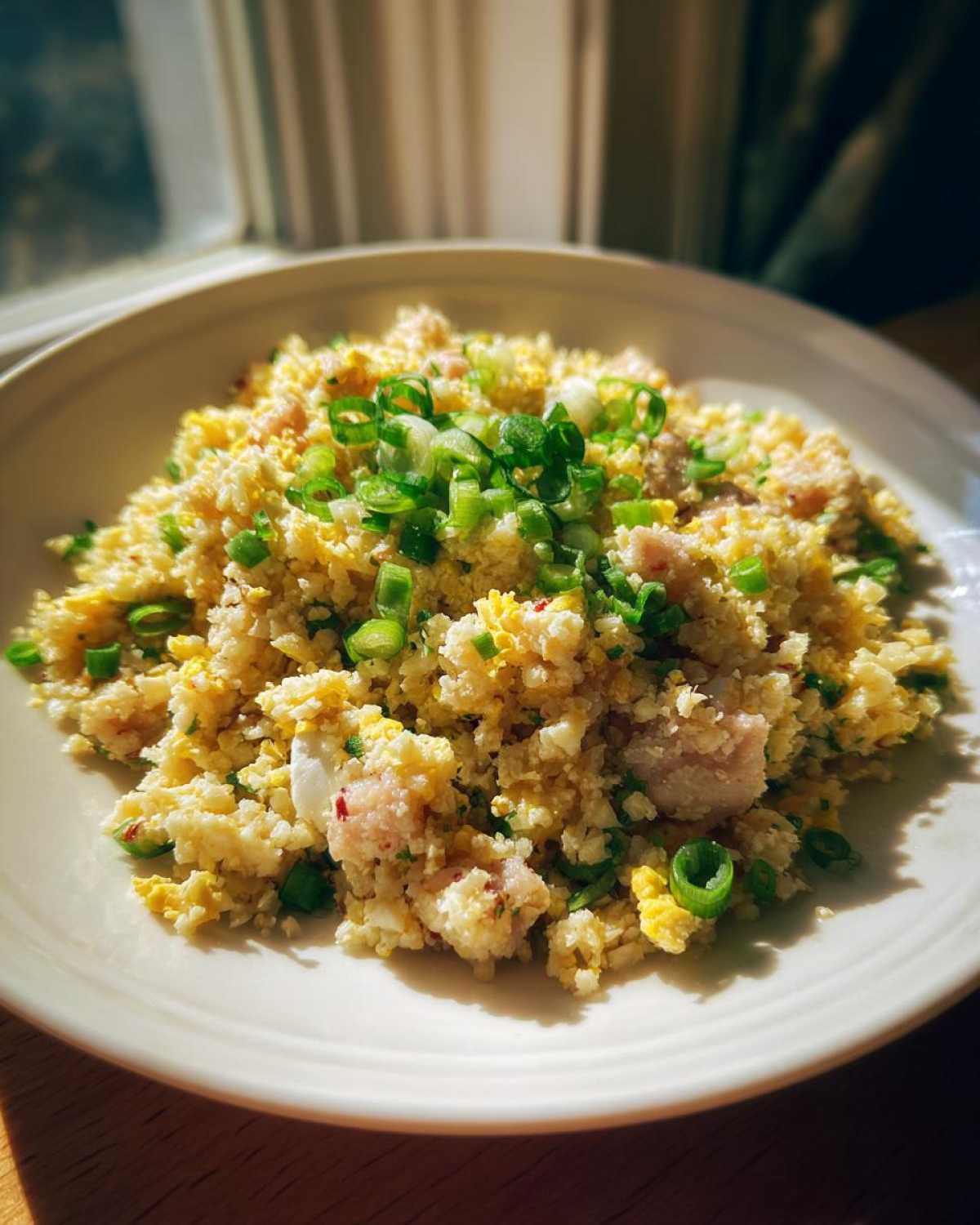
Cauliflower Rice Hacks: Preventing Watery Cauliflower Fried Rice
This is one of my best cauliflower rice hacks! You have to cook the cauliflower uncovered for a good five to seven minutes, stirring constantly, until all that scary-looking moisture has actually evaporated. If you skip this, you get mush, and we don’t want that!
Once the cauliflower bed looks dry, push all that lovely stuff to one side. Now, add your beaten eggs to the empty side of the pan. Let them set just for a moment—maybe a minute—then scramble them quickly into small pieces before mixing them into the cauliflower. Scrambling them separately means they cook perfectly without getting lost or overcooked under all that cauliflower.
After the eggs are incorporated, toss in the garlic and ginger. They only need about 30 seconds to get fragrant; you don’t want them to burn! If they burn, the whole dish tastes bitter, so watch them like a hawk.
Bringing It All Together: Finalizing Your Low Carb Fried Rice Alternative
Time for the flavor infusion! Put that cooked protein back into the skillet. Now, drizzle over the tamari and the toasted sesame oil. Sprinkle in that white pepper. Toss everything together really vigorously to coat every single piece. You want every vegetable and every bit of egg slicked with that savory sauce.
Let this final coating cook for just one more minute—that’s all you need to meld the flavors into a true low carb fried rice alternative. Any longer, and you risk losing that slightly crisp texture we worked so hard to achieve. Finish it off the heat, sprinkle those green onions on top, and serve it immediately! It tastes exponentially better fresh out of the wok.
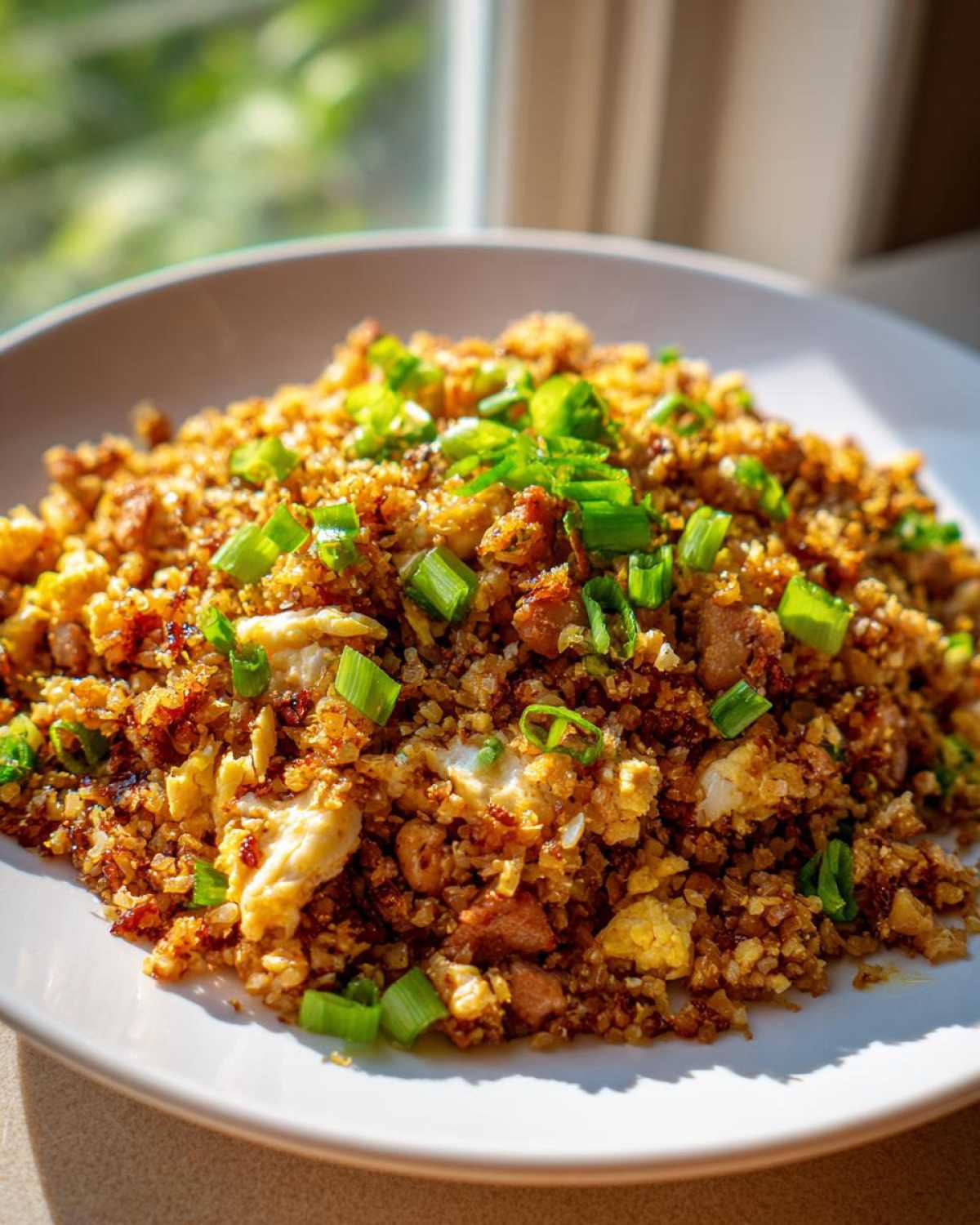
Making This Keto Cauliflower Rice Recipe Work for Your Diet
If you’re tracking macros or staying strict on keto, I want you to know this keto cauliflower rice recipe is your new best friend. That’s because we aren’t dealing with traditional white rice, which spikes blood sugar sky-high. Cauliflower is definitely the star, bringing down those net carbs way low!
When you look at the nutrition panel, you’ll see why this is perfect for those long, sustained energy days. It’s rich in protein and fiber, making it super satisfying, so you won’t be reaching for snacks an hour later. It’s honestly one of the easiest ways to whip up delicious easy low carb dinners when you’re tired of eating chicken and broccoli for the fifth night in a row!
Ingredient Notes and Substitutions for Cauliflower Fried Rice
I know every kitchen is a little different, so let’s talk about making sure the ingredients work perfectly for *your* needs. Being flexible is key, but knowing what you absolutely *can’t* swap is how you avoid disaster. This is where we build serious trust, because I want you making this cauliflower fried rice successfully every time!
First off, let’s resolve the fresh versus frozen rice debate. I give you permission to use frozen! Seriously. The trick is what the recipe notes mention: never thaw it first! Pop that frozen bag right into the hot skillet. Yes, it will look wetter for the first minute or two, but if your pan is hot enough, that moisture evaporates quickly, giving you a texture surprisingly close to fresh.
If you have dietary concerns, we need to cover those bases now. For example, if you need this to be officially gluten free fried rice, you must double-check your sauce. Standard soy sauce often contains wheat. That’s why I specifically call for tamari or a bottle that explicitly says certified GF soy sauce. Always read the label on that one!
Also, keep an eye on those fats. I love avocado oil for the high heat, but if you don’t have it, sesame oil works too, though you might want to use slightly less of the *toasted* sesame oil at the end since it’s so potent. Remember, we’re aiming for flavor balance here. Speaking of balance, make sure you check out my ingredient sourcing guidelines if you have any questions about substitutions I didn’t cover!
Storage and Meal Prep Cauliflower Rice Tips
I love that this cauliflower fried rice is fantastic for leftovers—it truly holds up better than regular fried rice, which can get sad and mushy overnight. Store your leftovers in an airtight container in the fridge for up to three days. When you reheat it, I highly recommend popping it into a skillet over medium heat with just a tiny splash of water or broth. This brings back the moisture without making it soggy!
This is why I always recommend this recipe for your meal prep cauliflower rice sessions. If you want to cook a giant batch for lunches, here’s my big tip: cook only the cauliflower and veggies, then set those aside to cool. Store your cooked protein (chicken, shrimp, whatever!) completely separate. When lunchtime rolls around, fry the cauliflower mixture quickly, then just throw the pre-cooked protein in to heat through at the very end. It keeps everything fresh! You can find more of my quick lunch ideas over here!
Frequently Asked Questions About Cauliflower Fried Rice
I figured you might have a few leftover questions swirling around after diving into this recipe headfirst! It’s completely normal; when you change up a classic takeout staple like this, you need to know the boundaries. I’ve rounded up the things I get asked most often about making the perfect cauliflower fried rice skillet meal.
If you have something else you need to know, please don’t hesitate to reach out and ask me! But for now, let’s tackle these common roadblocks so you can get cooking without worry.
Can I make this cauliflower fried rice with beef or turkey?
Absolutely, yes! Flexibility is gorgeous, isn’t it? Like I mentioned in the protein breakdown, we are looking for about one cup of cooked protein. If you prefer thinly sliced steak or ground turkey, go right ahead. Just remember the golden rule: since everything cooks so fast in a cauliflower egg fried rice situation, that beef or turkey *must* be fully cooked before you toss it into the skillet during the last minute of heating. It saves time and prevents you from overcooking everything else!
How do I make this a gluten free fried rice?
This is a super important detail, especially if you or someone you’re cooking for has sensitivities. Luckily, making this an official gluten free fried rice is easy, provided you swap out your seasoning. Regular soy sauce almost always contains wheat. You need to ensure your tamari or your soy sauce bottle explicitly says “Certified Gluten-Free” on the label. That small substitution is the only thing standing between you and perfectly safe, delicious flavor!
What if I want to add more vegetables?
Oh, I love a veggie-packed dish! You totally can add more, but you have to be smart about it, or you’ll end up with a very watery mess. If you want to add things like broccoli florets or sliced mushrooms, you need to treat them like the cauliflower—they need to be added early, while the cauliflower is cooking down its moisture. Things like shredded cabbage or spinach are better added right at the end with the sauces, as they just need to wilt, not cook through to softness.
Can I use fresh ginger or do I need grated?
For this specific recipe, where we are moving so quickly, I really, really push for grated fresh ginger. You only cook it for 30 seconds, and if you have big chunks of ginger, they will burn before the flavor infuses properly. If you absolutely cannot grate fresh, you can use about half a teaspoon of ginger paste, but fresh is definitely superior here for maximizing that earthy flavor in your easy vegetable fried rice that mimics takeout.
I only have regular white pepper after running out of white pepper. What should I do?
That’s a tricky one! White pepper is less harsh and has a really distinct earthiness that works so well with the tamari. If you only have black pepper, you can absolutely use it in a pinch to keep your low carb fried rice alternative going. Just cut the amount in half to start. Black pepper is much stronger, so you don’t want it to dominate the flavor profile. Add a tiny bit, toss, taste, and go from there!
Estimated Nutritional Data for This Cauliflower Fried Rice
Now, I have to give you the usual disclaimer here: since this cauliflower fried rice is so customizable—you might use chicken one day and tofu the next—these numbers are just an estimate. They are based on using the standard measurements listed in the recipe card, assuming a mix of protein where appropriate, and using the standard healthy oils.
This is based on one serving out of the two servings the recipe yields. It’s fantastic to see how low the sugar content is, which is a huge win for keeping things strict on keto!
Here’s the breakdown based on those standard measurements:
- Calories: 350
- Protein: 30g (Wow, that’s great protein for a veggie-heavy dish!)
- Fat: 18g (Mostly healthy fats from the oils we use)
- Carbohydrates: 18g
- Fiber: 6g (That fiber content really helps keep you full!)
- Sugar: 6g
- Sodium: 750mg (Remember this depends heavily on your soy sauce/tamari choice!)
This kind of nutrition profile helps prove this is a fantastic low carb fried rice alternative that keeps you full and on track with your eating goals without sacrificing that delicious takeout flavor!
Share Your Homemade Cauliflower Fried Rice Creation
Alright, my fellow food lovers, we’ve hit the finish line! Now that you’ve made this incredible, lightning-fast, totally satisfying cauliflower fried rice, I need to hear about it! Did you go classic with chicken? Were you daring and used tofu? Or maybe you tried a crazy substitution I didn’t even think of?
Don’t just eat it and forget it! We build this community meal by meal. I spend so much time perfecting these recipes, and seeing them come to life in your kitchens is truly the best part of my day. If you followed the instructions and found this to be the best healthy cauliflower fried rice you’ve ever made, do me a huge favor and hit that 5-star rating button right below here!
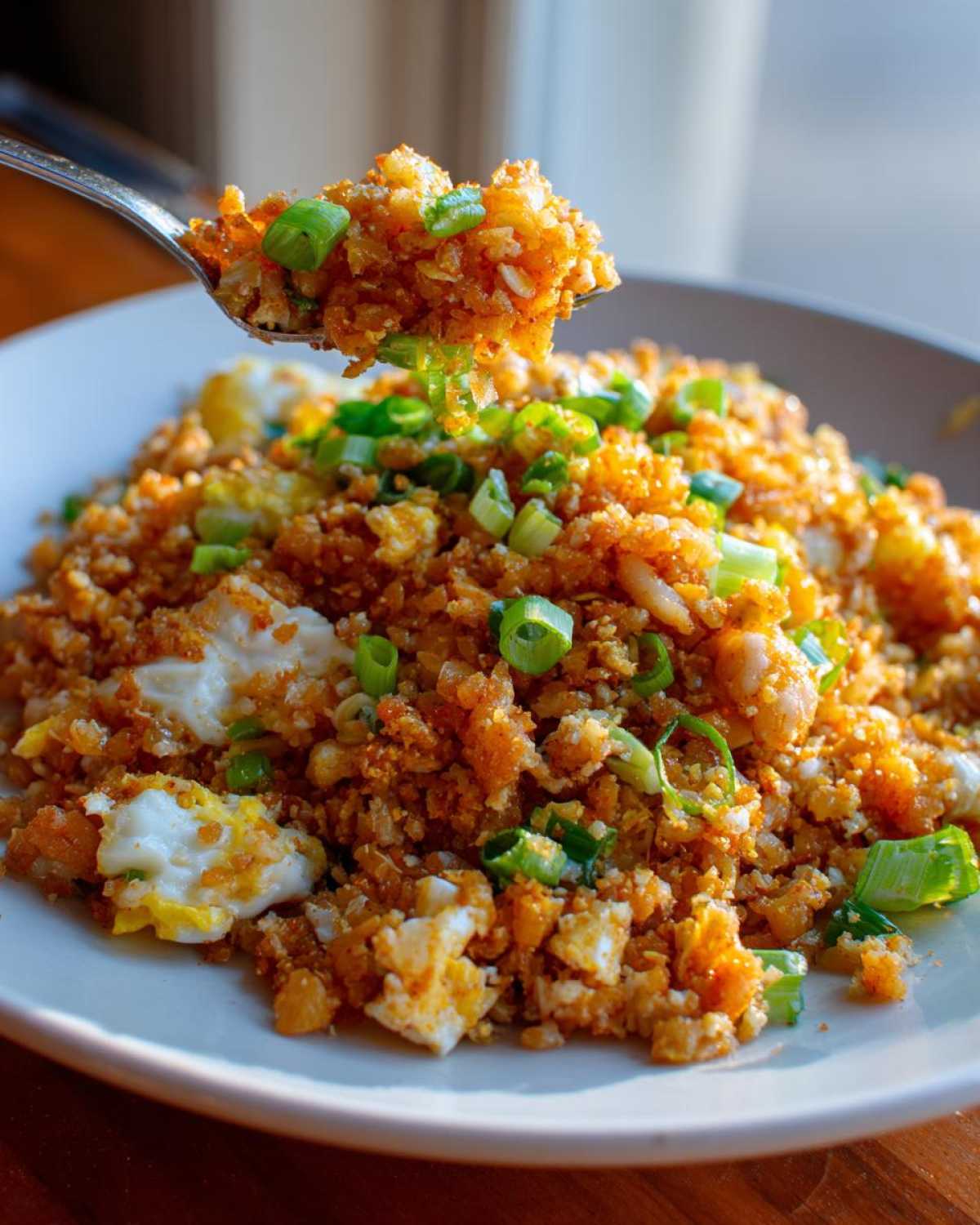
Leave a comment telling me the protein you used and if you ended up adding any extra veggies to your cauliflower fried rice skillet meal. Better yet, snap a picture! Tag me over on social media when you share your plate. I absolutely love seeing those gorgeous green onions sprinkled on top, ready to dive in. I promise I read every single comment and photo you send my way.
And hey, if you’re curious about my journey in the kitchen or want to know more about how I test these recipes, my About Me page has all the details on how I got started making these quick, healthy favorites. You can find more background on my kitchen philosophy right over here!
Thanks so much for cooking with me today. Happy eating, and I can’t wait to see your delicious low carb fried rice alternative creations!
PrintThe Ultimate 20-Minute Keto Cauliflower Fried Rice (Better Than Takeout!)

Make a quick, flavorful, low-carb fried rice alternative using cauliflower rice. This recipe is ready in under 20 minutes and works well for weeknight dinners or meal prep.
- Prep Time: 10 min
- Cook Time: 10 min
- Total Time: 20 min
- Yield: 2 servings
- Category: Dinner
- Method: Stir-Frying
- Cuisine: Asian-Inspired
- Diet: Low Fat
Ingredients
- 1 tablespoon avocado oil or sesame oil
- 1 cup cooked protein (diced chicken, shrimp, or tofu)
- 2 cups riced cauliflower (fresh or frozen)
- 1/2 cup mixed frozen vegetables (peas and carrots)
- 2 cloves garlic, minced
- 1 teaspoon fresh ginger, grated
- 2 large eggs, lightly beaten
- 2 tablespoons tamari or gluten-free soy sauce
- 1 teaspoon toasted sesame oil
- 1/2 teaspoon ground white pepper
- 2 green onions, sliced, for garnish
Instructions
- Heat the avocado or sesame oil in a large skillet or wok over medium-high heat.
- Add your cooked protein (chicken, shrimp, or tofu) and cook for 1 minute until heated through. Remove the protein from the skillet and set aside.
- Add the riced cauliflower and frozen mixed vegetables to the hot skillet. Cook, stirring frequently, for 5 to 7 minutes until the cauliflower is tender and any moisture has evaporated.
- Push the cauliflower mixture to one side of the skillet. Add the beaten eggs to the empty side and scramble until just set, about 1 minute. Break the eggs into small pieces and mix them with the cauliflower.
- Stir in the minced garlic and grated ginger. Cook for 30 seconds until fragrant.
- Return the cooked protein to the skillet. Pour the tamari and toasted sesame oil over everything. Add the white pepper. Toss well to coat all ingredients evenly.
- Cook for 1 more minute to heat everything through.
- Remove from heat. Garnish with sliced green onions before serving immediately.
Notes
- For a gluten-free version, confirm your soy sauce or tamari is certified gluten-free.
- If using frozen cauliflower rice, do not thaw it first; cook it directly from frozen to prevent sogginess.
- You can substitute ground turkey or thinly sliced beef for the protein options listed.
Nutrition
- Serving Size: 1 serving
- Calories: 350
- Sugar: 6
- Sodium: 750
- Fat: 18
- Saturated Fat: 3
- Unsaturated Fat: 15
- Trans Fat: 0
- Carbohydrates: 18
- Fiber: 6
- Protein: 30
- Cholesterol: 250