

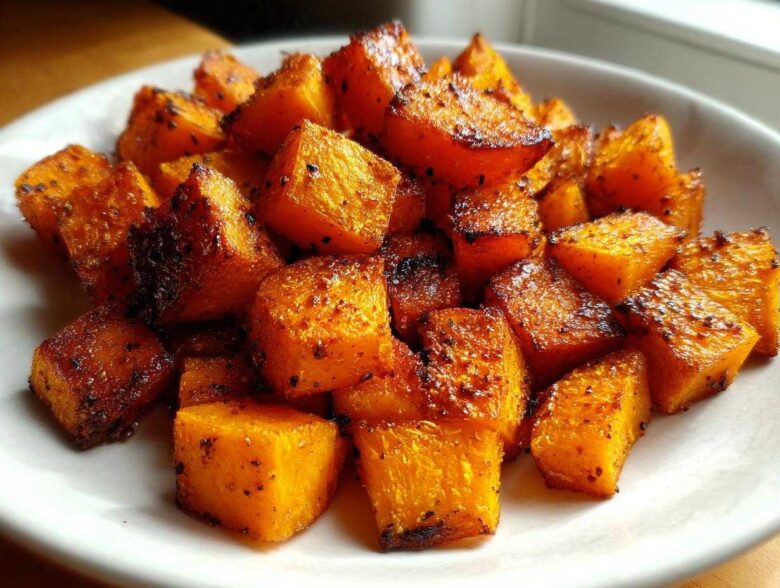
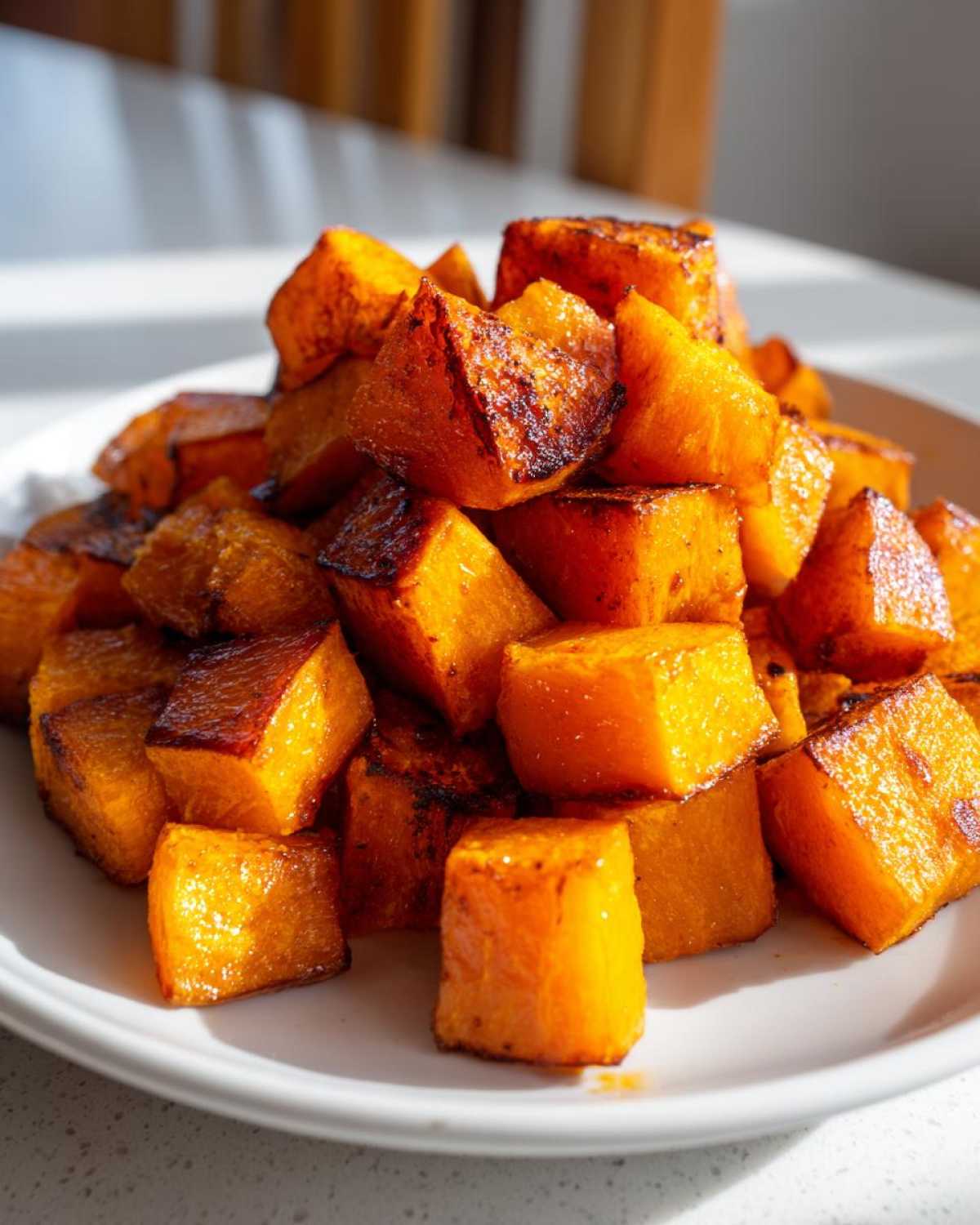
Oh, the beautiful butternut squash! Honestly, I used to dread tackling these things until I cracked the code. It’s not just about throwing cubes in the oven; it’s about that textural payoff. We’ve all had that dry, sad squash side dish, right? Well, never again! This is my ultimate, foolproof recipe for roasted butternut squash that delivers exactly what you want: a fully creamy, tender inside that melts in your mouth, contrasted by those sweet, dark, caramelized edges. Trust me, after years of testing different heat levels and obsessing over cube uniformity, I nailed both the temperature and the size needed for that perfect result. This simple method means you get a gourmet-tasting side dish with almost zero effort. You can check out more of my kitchen adventures over on my main cooking page, but first, let’s get this squash roasted!
Why This Is the Best Roasted Butternut Squash Recipe
When it comes to this easy butternut squash side, I promise you’re going to get results that look and taste like they took hours, not just minutes. We aren’t messing around with fussy herbs or complicated steps here; we’re focusing on pure, simple autumn flavor shining through fantastic texture.
- It’s lightning fast—ready in under 45 minutes total!
- It perfectly balances savory thyme with just a hint of maple sweetness.
- It’s incredibly versatile; use it for dinner tonight or save it for the holidays.
Achieving Creamy Inside Crispy Edges Squash Texture
That texture contrast is everything, isn’t it? The secret here is twofold: you must use the proper 400°F heat that really coaxes the sugars out of the squash, and you absolutely cannot crowd the pan! If you pile the cubes on top of each other, they steam instead of roast. We want crispy edges, which means heat circulation.
By keeping the cubes in a single layer, the direct heat from the oven gives you those beautiful, slightly charred spots we are aiming for. This simple trick is key to making your squash pieces look gourmet while using minimal effort.
Ingredients for Your Roasted Butternut Squash
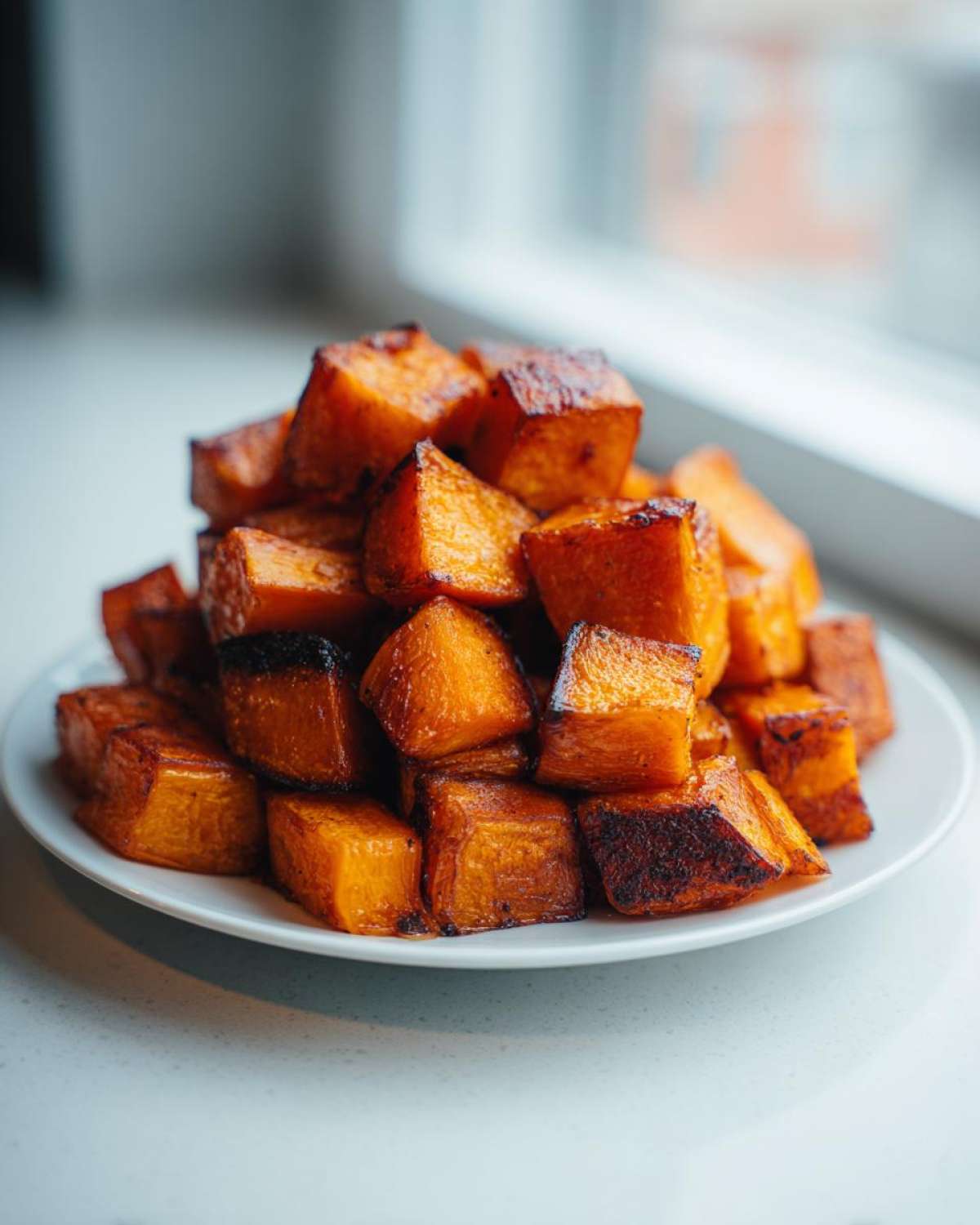
You won’t need a huge list for this, which is part of why it’s my go-to! We’re using just five main ingredients plus whatever seasoning magic you want to toss in. Remember, for the best results in this roasted butternut squash recipe, make sure you’re aiming for roughly 1-inch cubes when you get ready to prep.
Here’s exactly what you’ll need to pull this off:
- Two medium butternut squash
- 3 tablespoons of good quality olive oil
- 1 teaspoon of salt
- 1/2 teaspoon of fresh black pepper
- 1 teaspoon of dried thyme (or rosemary, if you prefer!)
- 1 tablespoon of maple syrup (This is optional, but I highly recommend it for that fantastic sweetness!)
How to Roast Butternut Squash: Step-by-Step Instructions
Okay, time for the magic! Getting this right ensures you get that deeply satisfying, caramelized butternut squash we talked about. First things first: the oven needs to be ripping hot! Preheat it to 400°F (200°C) immediately, and line a big sheet pan with parchment paper. Trust me, cleaning up sticky squash goo is ten times easier with paper!
The actual roasting time clocks in around 25 to 35 minutes total. You need to flip the cubes halfway through, which is where the twin-sided caramelization happens. Remember what I stressed before? Don’t pack them in! They need space to breathe and roast, so if your cubes are touching shoulder-to-shoulder, pull out a second sheet pan. You can find more quick recipes perfect for adding to your weeknight dinner rotation right here.
Prep Work: Peeling and Cubing for Even Roasted Butternut Squash
Peeling is sometimes the scariest part, but I have a trick! Slice off the top and foot end—just enough so it sits flat. Then, carefully stand the squash up and use a heavy vegetable peeler to work your way down the sides, following the curve. It’s much easier than wrestling a whole round squash.
Once peeled, slice it down the middle lengthwise and scoop out all those stringy seeds using a spoon. Then, just cut the flesh into roughly 1-inch cubes. Keeping them this uniform means every piece finishes baking at the exact same time, avoiding that dreaded mix of mushy and hard bits.
Seasoning for a Sweet and Savory Squash Flavor Profile
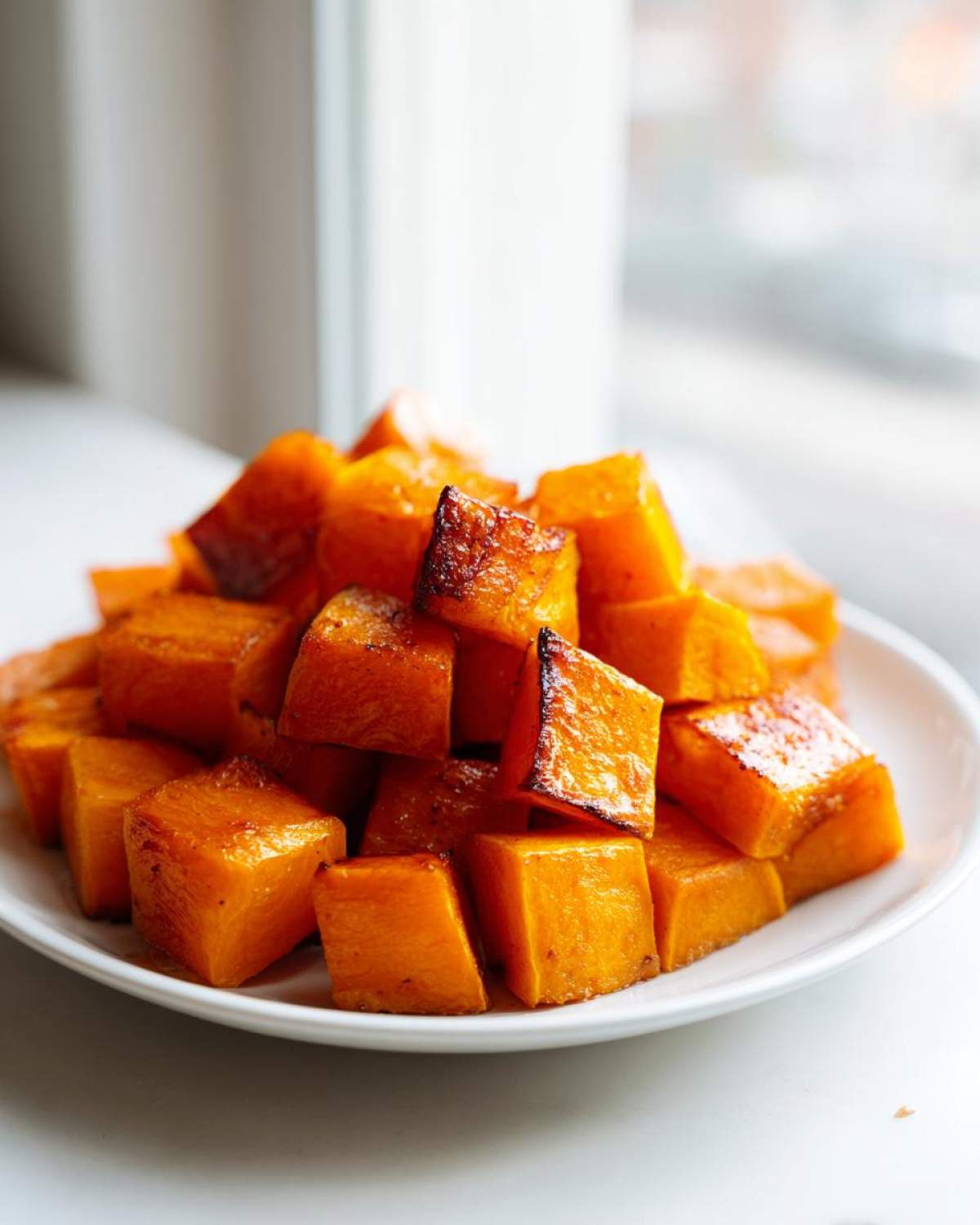
Once you have your perfect cubes, dump them into a big bowl! Drizzle on that olive oil and then hit it with the basics: salt, pepper, and the dried thyme. Thyme is just fantastic with the earthy sweetness of butternut—it warms everything up perfectly, making it feel like proper fall comfort food.
If you are going for that *sweet and savory squash* vibe, this is when you drizzle on the tablespoon of maple syrup. Toss it all until every cube has a nice, thin coat. Don’t drench it, just ensure everything is glistening before it hits the pan!
Tips for Perfect Oven Roasted Vegetables Every Time
Look, even with the best recipe, sometimes things go a little sideways, right? That’s why I always keep a few foolproof checks in my back pocket when I’m roasting up a big batch of this squash. First off, I rely heavily on the notes I made: if you want extra crispiness, you *have* to make absolutely sure that oven is truly up to 400°F before those sheets go in. Give it a good ten minutes after the bell dings to stabilize.
Also, don’t be afraid to swap out the sweet element! If you’re keeping it strictly savory, skip that maple syrup entirely and layer in about half a teaspoon of garlic powder with your thyme. It adds that pungent depth that works so well with roasted vegetables. Oh, and if you happen to have fresh rosemary lurking in the herb garden? Use that instead of the dried thyme. Fresh herbs always win, but dried is faster for a weeknight!
Serving Suggestions for Your Easy Butternut Squash Side
Honestly, this roasted butternut squash goes with *everything*. It’s absolutely stunning next to a simple roasted chicken for a weeknight meal, but it truly shines when you pile it onto your Thanksgiving or holiday plate. The subtle sweetness makes it an excellent counterpoint to salty main dishes, like glazed ham or a nice pork tenderloin. It’s also incredible layered over some wilted greens for a healthier lunch option—check out my favorite light salads over at my lunch ideas page!
My absolute favorite way to serve it is surprisingly simple: I toss the hot cubes with a tiny bit of crumbled feta cheese and chopped fresh parsley right before serving. That salty, creamy cheese paired with the sweet, perfectly roasted squash? It elevates this dish instantly, turning a simple vegetable side into something really special. People always ask for the recipe when I serve it that way!
Storage and Reheating Instructions for Leftover Roasted Butternut Squash
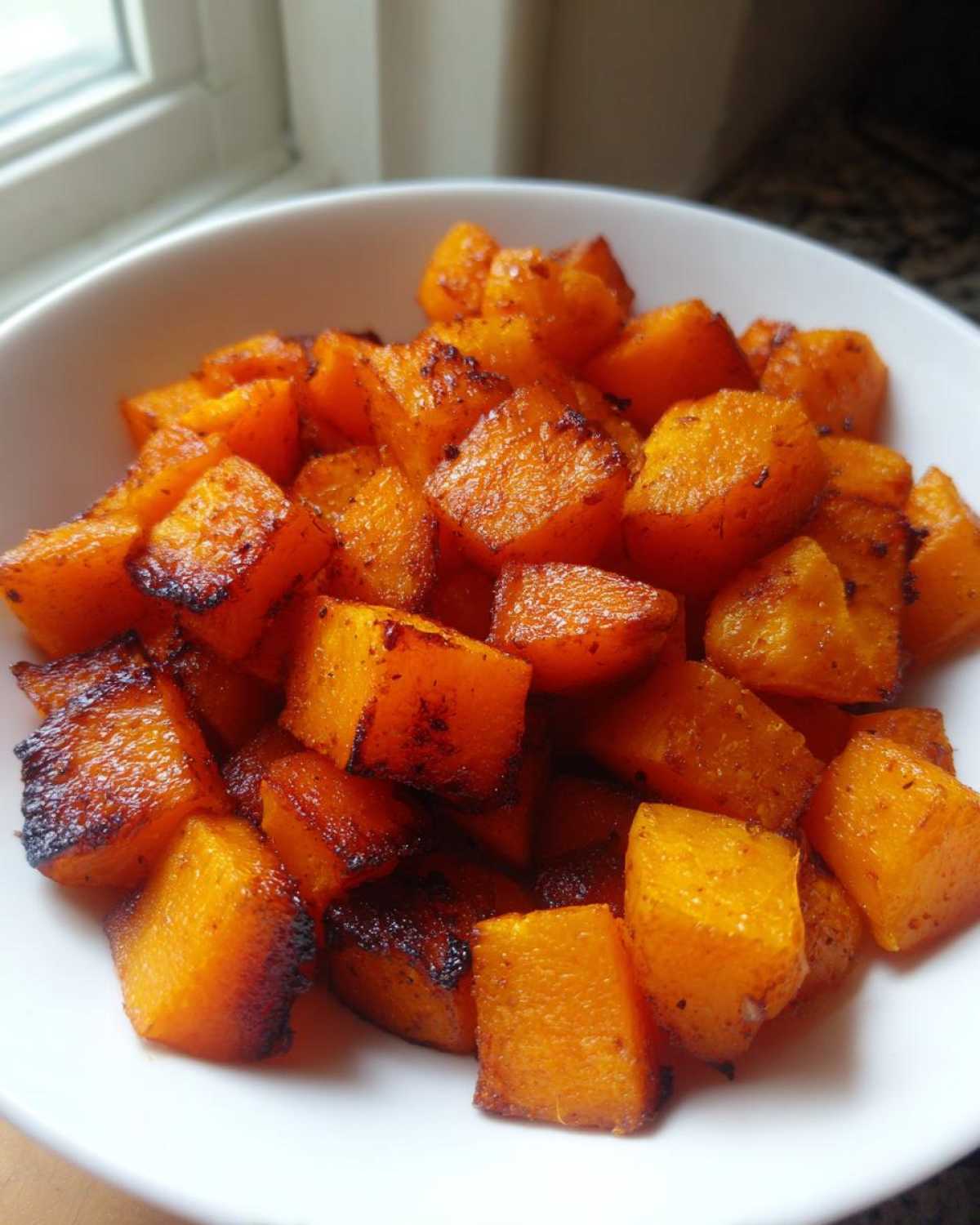
If you’re like me, you probably made a huge batch because it tastes too good to stop eating! Good news: This squash keeps well. Once completely cooled, toss those leftovers into an airtight container and pop them in the fridge. They should stay perfectly delicious for about four days. I always keep a container handy!
Now, reheating is important if you want to keep that beautiful texture. Please, please, avoid the microwave if you can! The microwave tends to steam the cubes, making them mushy instead of letting them stay creamy with crisp edges. Instead, spread the cold squash back out on a baking sheet and pop it in a 350°F oven for about 8 to 10 minutes. It brings those edges right back to life!
Frequently Asked Questions About Roasted Butternut Squash
Can I roast butternut squash without peeling it first?
You absolutely can! If you’re in a rush, you can roast smaller cubes with the skin on. However, I won’t lie—the skin gets a bit tough, and it won’t be as creamy inside. For the best experience and that gorgeous texture, peeling first is really worth the extra five minutes of effort.
What is the best way to cut butternut squash for roasting?
We’re aiming for uniformity, remember? I really stress cutting the squash into 1-inch cubes. Why? Because if some pieces are huge and others are tiny, the small ones burn while the big ones are still hard. Uniformity is the secret weapon for achieving that perfect set of creamy inside crispy edges squash.
Can I make this a healthy roasted squash recipe using less oil?
Yes, you can definitely slim down the fat content! While the 3 tablespoons of olive oil helps carry the flavor and promotes browning, you can swap that out for a light misting of cooking spray instead. Just toss it really well in the bowl so everything gets coated before you spread it on the pan for roasting.
Estimated Nutritional Data for This Butternut Squash for Dinner Side
I always get asked about the nutrition when this squash shows up at a gathering, because it tastes so rich people think it must be loaded with cream or a ton of butter. It’s actually pretty great for you, too! Here’s a quick snapshot of what you’re looking at per serving on this recipe. Just remember, because we’re using different maple syrups or oils sometimes, these figures are estimates, so you can read my full disclaimer right here.
- Calories: 180
- Fat: 8g
- Carbohydrates: 27g
- Protein: 3g
- Sugar: 8g
- Fiber: 6g
Share Your Perfect Roasted Butternut Squash Experience
Whew! Now that you’ve got the secrets to perfect roasted butternut squash, I really hope you give this a try, especially when company comes over! After you make it, swing back by and let me know how it went in the comments below. Did you stick with the thyme, or did you try a different herb?
I love seeing what you create in your own kitchen! Please snap a photo and tag me online—it makes my day! And if you found this incredibly easy side dish helpful, you can always reach out to me directly through my contact page. Happy roasting!
PrintSimple & Perfectly Caramelized Roasted Butternut Squash
This recipe gives you perfectly roasted butternut squash cubes with creamy insides and caramelized edges using simple seasoning.
- Prep Time: 15 min
- Cook Time: 30 min
- Total Time: 45 min
- Yield: 6 servings
- Category: Side Dish
- Method: Roasting
- Cuisine: American
- Diet: Vegetarian
Ingredients
- 2 medium butternut squash
- 3 tablespoons olive oil
- 1 teaspoon salt
- 1/2 teaspoon black pepper
- 1 teaspoon dried thyme
- 1 tablespoon maple syrup (optional, for sweetness)
Instructions
- Preheat your oven to 400°F (200°C). Line a large baking sheet with parchment paper for easy cleanup.
- Peel the butternut squash. Cut off the ends, slice the squash in half lengthwise, and scoop out the seeds.
- Cut the squash flesh into approximately 1-inch cubes. Try to keep the pieces uniform in size for even cooking.
- Place the squash cubes in a large bowl. Drizzle with olive oil.
- Add the salt, pepper, and dried thyme. If you want a sweet and savory flavor, add the maple syrup now.
- Toss everything together until the squash pieces are evenly coated.
- Spread the seasoned squash cubes in a single layer on the prepared baking sheet. Do not overcrowd the pan; use two sheets if necessary to promote caramelization.
- Roast for 25 to 35 minutes, flipping the cubes halfway through the cooking time. The squash is done when it is tender when pierced with a fork and has browned, caramelized edges.
- Remove from the oven and serve immediately as an easy dinner side or holiday dish.
Notes
- For extra crispiness, ensure your oven is fully preheated before placing the squash inside.
- If you prefer a more savory profile, omit the maple syrup and add 1/2 teaspoon of garlic powder with the other seasonings.
- You can substitute fresh rosemary for dried thyme if you have it available.
Nutrition
- Serving Size: 1 cup cooked
- Calories: 180
- Sugar: 8
- Sodium: 350
- Fat: 8
- Saturated Fat: 1
- Unsaturated Fat: 7
- Trans Fat: 0
- Carbohydrates: 27
- Fiber: 6
- Protein: 3
- Cholesterol: 0