

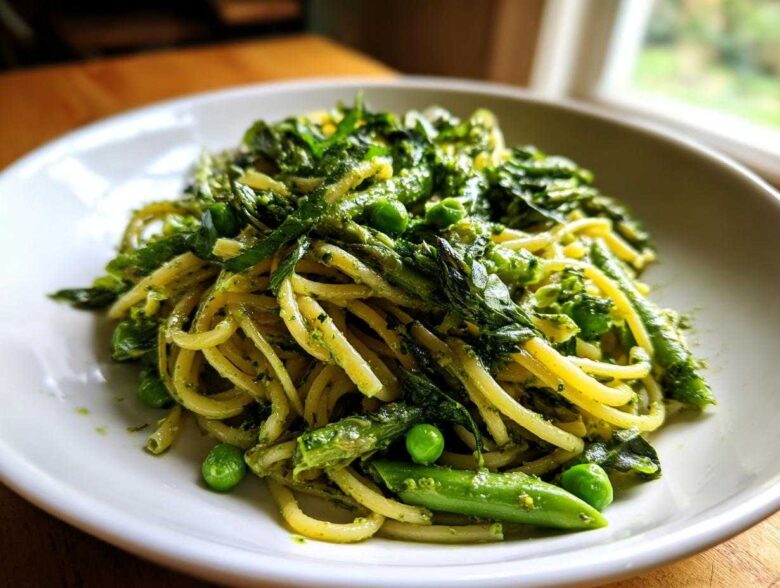
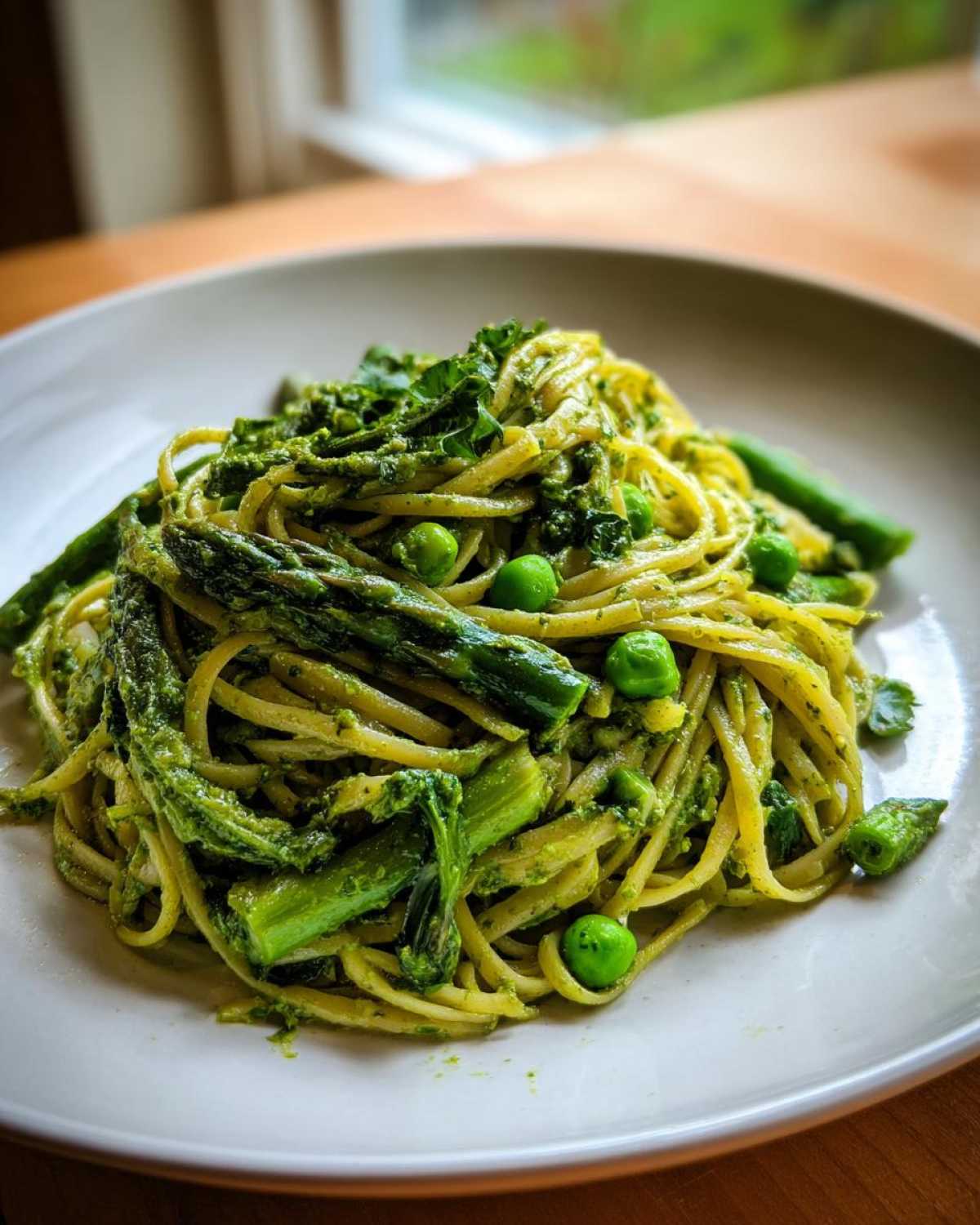
When Earth Day rolls around, I always feel this huge urge to cook something truly vibrant—something that screams “fresh” right off the plate! Forget heavy sauces; we want to celebrate the green things starting to pop up everywhere. That’s why my absolute favorite thing to make is this Pesto Primavera Pasta. Seriously, the color alone is reason enough to make it; it’s such a stunning Earth Day Dinner Pasta. Cooking with what’s naturally in season, like the asparagus and peas we use here, just tastes better, right? I feel so connected to the process when I’m using peak produce. Plus, keeping things seasonal is just a simple, delicious way to show the planet some love without having to overhaul your entire kitchen!
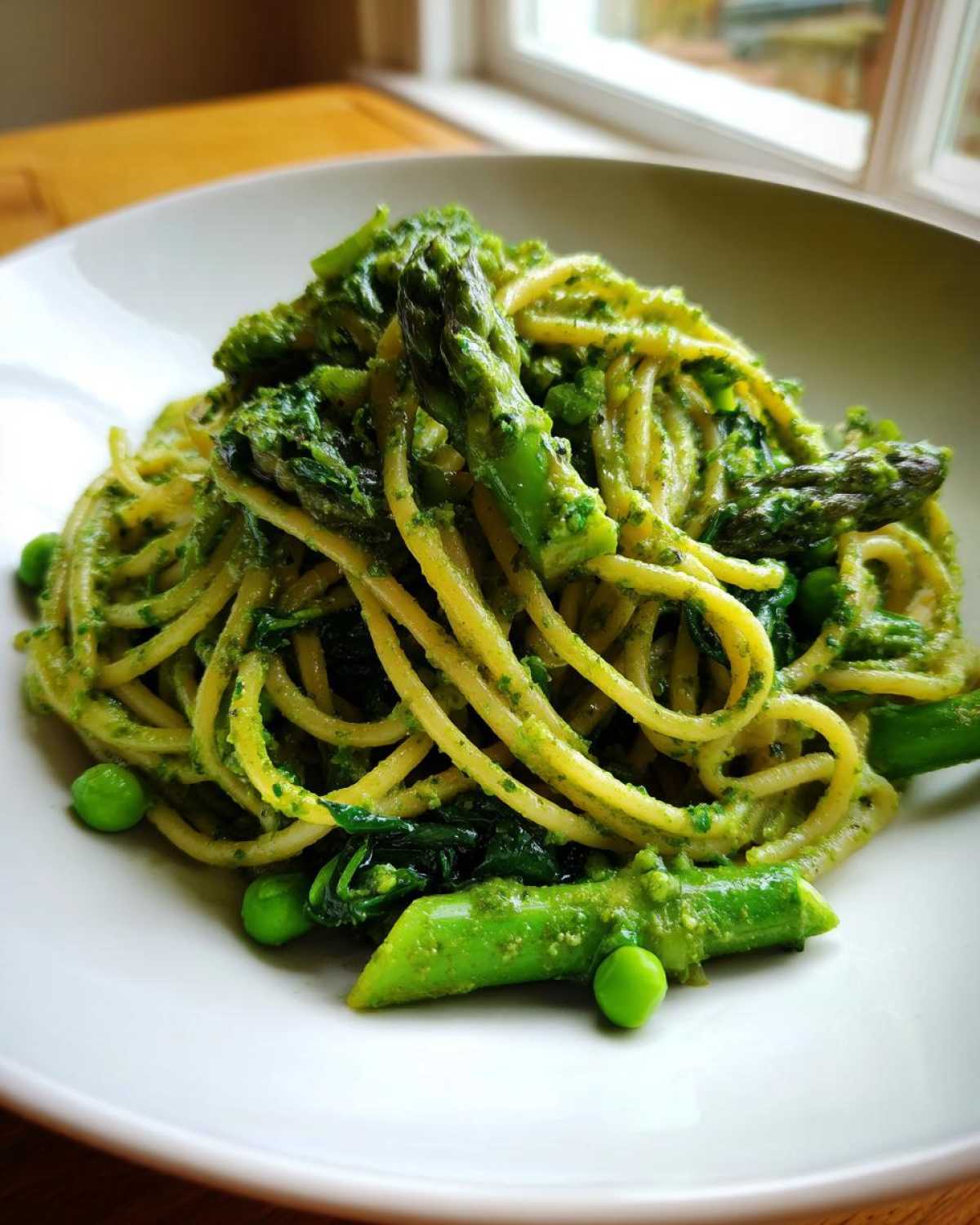
Why This Earth Day Dinner Pasta Celebrates Sustainability
This dish isn’t just pretty; it’s genuinely good for the environment, which is why I love serving it for Earth Day Dinner Pasta gatherings. When we cook sustainably, we’re choosing ingredients that didn’t need massive energy to truck across the country. I find that fact so rewarding.
- It’s packed with flavor because we’re using vegetables at their very peak.
- It’s naturally light and vibrant, making it one of my go-to Sustainable Meal Recipes.
- There’s zero meat here, which really helps lower the footprint of the meal.
These Spring Vegetable Pasta Dishes prove you don’t need heavy ingredients to feel completely satisfied.
Highlighting Seasonal Spring Vegetable Pasta Dishes
When you stick to seasonal produce, you’re tasting things exactly as nature intended. Think about fresh asparagus and sweet peas; they taste so much better than anything sitting in cold storage! I try to buy my herbs and veggies from local spots whenever I can, which cuts down on that transportation impact. It’s how we practice Earth Conscious Cooking around here.
Embracing Earth Day Dinner Pasta as a Plant Based Pasta Comfort Food
We all need comfort food, but it doesn’t always have to come with a side of heavy meat production. This pesto primavera is the ultimate Meatless Dinner Pasta option. It’s creamy from the olive oil and cheese, satisfying because of the pasta, and totally green. It’s proof that Plant Based Pasta Comfort Food can absolutely steal the show, even when you’re celebrating something big like Earth Day!
Gathering Ingredients for Your Earth Day Dinner Pasta
Okay, so getting the right stuff is probably 80% of the battle with any great pasta dish, especially one as intensely green as this! Because this Earth Day Dinner Pasta relies on everything being so fresh, I always shop with a plan. When you use high-quality ingredients, you don’t have to do much doctoring later on, which is the secret to keeping things quick for a weeknight meal. Trust me when I say using fresh basil for the Fresh Herb Pasta Sauce makes a canyon-sized difference compared to jarred stuff.
Here’s exactly what you need to pull this garden-fresh plate together:
- 1 pound pasta (linguine or fettuccine—I love how linguine holds the pesto!)
- 2 cups fresh basil leaves for that unbelievable green color
- 1/2 cup pine nuts (the classic choice!)
- 2 cloves garlic (don’t skimp here, but don’t go overboard either!)
- 1/2 cup grated Parmesan cheese (we’ll talk about swapping this below for vegan options)
- 1/2 cup olive oil (use the good stuff, you’ll taste it!)
- 1 cup fresh or frozen peas
- 1 bunch asparagus, trimmed and cut into 1-inch pieces
- 1 cup fresh spinach
- 1/4 cup vegetable broth (this is important for sautéing without burning the veggies!)
- Salt and black pepper to taste
Ingredient Notes and Substitutions for Fresh Herb Pasta Sauce
I always like to have backups, because sometimes the grocery store gods aren’t smiling on you! If you have a pine nut allergy, please don’t fret—you can easily use sunflower seeds or even pumpkin seeds instead. That makes the pesto totally nut-free, which is fantastic. Another great Zero Waste Pasta Cooking Tips note: if your basil bunch has tender stems, snap them off and toss them into whatever stock you’re making later in the week. Don’t waste the flavor!
When it comes to the Parmesan, if you’re looking for that perfect Eco Friendly Dinner Options switch, I highly recommend using a good quality nutritional yeast mixed with a little bit of finely ground cashews (if you aren’t avoiding nuts entirely) to mimic the cheesy texture. It works beautifully in the Green Pasta Recipes!
Step-by-Step Instructions for Quick Green Pasta Dinner
Now for the fun part: actually making this gorgeous Earth Day Dinner Pasta! Because we’re maximizing flavor and keeping things speedy, the timing is key. You want the pasta boiling while you whip up the pesto, and then use the residual heat to wilt those beautiful greens. This whole process flies by once you get into the rhythm. I still set a timer because I get so focused grinding basil that I forget about the water boiling over—oops!
Here are the straightforward steps we follow to get this dish on the table in under 35 minutes:
- First thing’s first: get your pasta water boiling! Cook the linguine or fettuccine according to what the package says. Right before you drain it, scoop out about a half-cup of that starchy water. I call this my liquid gold; it’s the trick to making any sauce cling perfectly. Drain the rest.
- While that pasta is doing its thing, let’s make that incredible Homemade Pesto.
- Toss the basil, pine nuts, garlic, and Parmesan into your food processor. Hit the pulse button a few times until everything is sort of chunky—don’t blend it completely yet!
- Now, with the machine running on low, slowly stream in that olive oil. Stream, stream, stream! It finally turns into that bright, rich sauce we love. Season it up with salt and pepper.
- Grab a big skillet. Put in your vegetable broth over medium heat—we’re just lightly cooking these veggies, not boiling them. Toss in the asparagus and peas and let them get tender-crisp, which takes about 3 or 4 minutes.
- Toss in the fresh spinach last. It cooks down so fast—seriously, only about 60 seconds until it’s just wilted. Any longer and it turns dark and sad!
- Now, put the drained pasta and all that gorgeous pesto right into the skillet with your vegetables. Stir everything together. If it looks a little thick, this is when you start adding that reserved pasta water, just spoon by spoon, until everything is glossy and coats the noodles nicely.
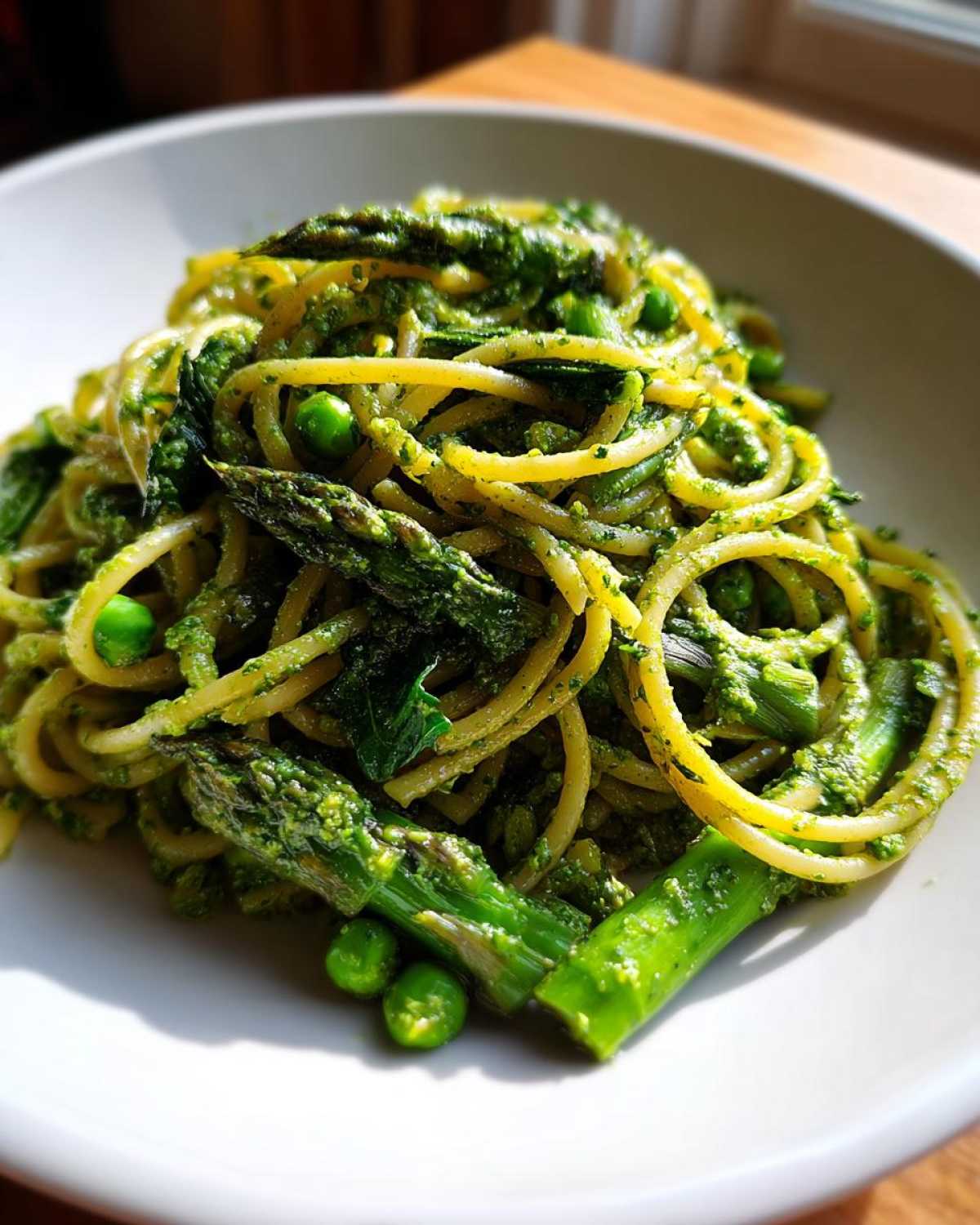
Mastering the Homemade Pesto for Your Earth Day Dinner Pasta
The secret to truly epic pesto? The layering within the machine! You always want to pulse the herbs, nuts, and hard cheese together first. This breaks them down into tiny particles so they can grab onto the oil properly. If you just dump the oil straight into the whole mess, you end up with pools of oil at the bottom of the bowl instead of that wonderful integrated sauce that perfectly dresses your Earth Day Dinner Pasta. It takes practice, but once you nail that slow oil drizzle, you’ve got the mastering technique down!
Combining Vegetables and Pasta for Vibrant Spring Pasta Dishes
Color is everything, especially for a dish celebrating the Earth! To make sure your spring veggies look as fresh as possible, remember that asparagus and peas need a little more time than the spinach. You want to cook them until they are just tender-crisp—a slight snap when you bite them. That spinach, though? It goes in at the absolute last second. That minimal heating keeps it bright green, making your final Vibrant Spring Pasta Salad (or dinner!) look incredible and tasting super fresh.
Tips for Success: Achieving the Best Earth Day Dinner Pasta Texture
You’ve got the ingredients and you’ve followed the steps, but now we need to talk about locking in that incredible texture for your Earth Day Dinner Pasta so it shines when you serve it. The absolute number one tip I have, and everyone knows this if they make pesto often, is that pasta water! Don’t feel shy about using it.
If your pesto looks too thick after you mix it with the pasta, just keep adding reserved water, a tablespoon at a time. That starchiness emulsifies with the olive oil, creating a glossy sauce that hugs every noodle, instead of just sliding off. This keeps the dish creamy even when it cools down slightly.
Also, remember that asparagus and peas need just a little wiggle room in the heat; overcooking makes them mushy, and we want that vibrant spring snap! When you toss everything together quickly, you ensure that wonderful contrast between the soft pasta and the crisp-tender vegetables. That’s the secret to a truly great Best Pasta for Spring Produce.
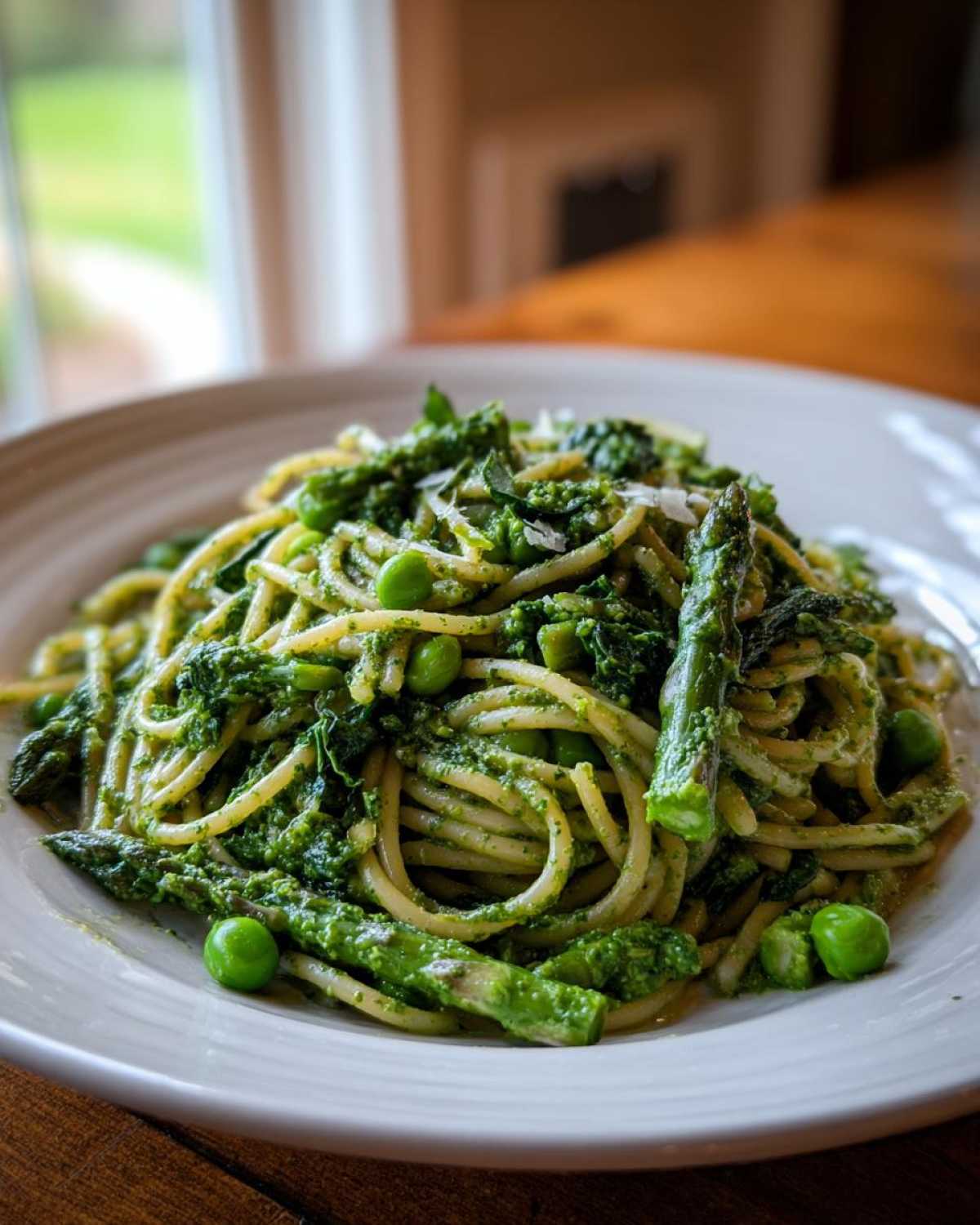
Making This Earth Day Dinner Pasta Ahead of Time
I get it, sometimes you need a head start, especially if you’re hosting a big Earth Day Dinner Pasta gang! The great news is that this recipe is totally make-ahead friendly, but you have to separate the components. You absolutely cannot mix everything and store it; by morning, those beautiful spring vegetables will have lost all their beautiful color. I learned that the hard way!
The pesto, however, is your best friend for prepping ahead. You can whip up that entire batch of Fresh Herb Pasta Sauce up to three days ahead. Store it tightly covered in the fridge—I usually pour a thin layer of olive oil right on top before I seal it; that stops it from oxidizing and turning that icky brownish-green color. It keeps that basil vibrant!
Assembling and Reheating Your Green Pasta Recipes
When it’s time to eat, cook your pasta and sauté your veggies right before dinner. Then, you just fold in the pre-made pesto. If the pesto seems stiff straight out of the fridge, let it sit on the counter for about 15 minutes while you start boiling the water. It loosens up perfectly.
If you have leftovers (ha! I wish!), the trick to reheating this Quick Green Pasta Dinner is adding a splash of fresh liquid. Don’t microwave it dry! Toss the leftovers with a tiny bit of fresh olive oil or a touch of broth when you warm it up on the stovetop. Keep the heat low and gentle. This brings back the silkiness that the colder temperatures suck right out of the sauce. It makes sure your leftovers still feel like fresh Easy Vegetarian Weeknight Meals!
Serving Suggestions for Garden Fresh Pasta Entrees
I think the best pairing for a dish this bright and flavorful, like our Earth Day Dinner Pasta, is often something simple that lets the fresh basil and spring vegetables really shine. You don’t want to hide all that beautiful green work you just did with something too heavy or overpowering!
When I serve this, I usually go for textures that contrast nicely. Since the pasta is soft and coated in a creamy sauce, something crunchy is perfect. We skip the heavy garlic bread here; instead, I stick to thin slices of lightly toasted sourdough or a rustic country loaf brushed with just a tiny bit of olive oil and maybe a sprinkle of sea salt. It’s perfect for mopping up any extra pesto left in the bottom of your bowl!
For a fuller meal that keeps that healthy vibe going, look toward the garden! A super light side salad is my first choice. Think simple mixed greens—maybe some peppery arugula—with a sharp lemon vinaigrette. The acidity cuts right through the richness of the Parmesan and olive oil in the pesto. It really brightens everything up. I love finding recipes for light sides that match that springtime feel; something zesty is always a winner.
If you happen to be looking for something fun and different to snack on beforehand—or maybe you just want two amazing Garden Fresh Pasta Entrees on the menu—consider adding some baked pita crisps with a light yogurt dip. But for this Pesto Primavera, honestly, a good loaf of bread and a simple green salad are all you need to make it a perfect Seasonal Italian Inspired Dishes experience!
Frequently Asked Questions About Earth Conscious Cooking
It’s natural to have questions when you try to give a classic dish a seasonal, Earth-friendly makeover! I certainly did when I first started experimenting with making my own Fresh Herb Pasta Sauce entirely vegetarian. We want this Earth Day Dinner Pasta to be perfect for everyone joining in, so let’s run through a few things that always pop up.
Here are the top things people ask me about making this recipe part of their Earth Conscious Cooking routine:
Can I add protein to this Earth Day Dinner Pasta?
Oh, absolutely! While this is a fantastic Meatless Dinner Pasta as written, if you need a little extra staying power, I have a few favorite ways to bulk it up. Grilled chicken or shrimp are always welcome additions, but if you want to keep it completely plant-focused, try stirring in some roasted chickpeas along with your veggies; they add a great crunch and tons of protein. Or, for something super simple, toss in about a cup of white beans (like cannellini) right at the end when you mix in the pesto. They absorb the sauce beautifully and make it a heartier Healthy Dinner Pasta Ideas.
What if I don’t have tons of fresh basil for the pesto?
This is tough, because basil is what makes pesto *pesto*, but if you’re short, don’t fret about the color of your final Green Pasta Recipes! You can totally blend what you have with other soft herbs. Try using half basil and half a mix of parsley and/or mint. The flavor profile shifts a bit—it becomes brighter, almost Moroccan—but it’s still delicious, and you’re still using what you have on hand. It’s a great way to get creative with your Seasonal Pasta Foraging!
How do I keep the pasta bright green after mixing?
This is the real battle, isn’t it? The key to keeping that vibrant color is twofold: first, don’t overcook your basil when making the pesto—the less time it spends near heat or blending, the better. Second, and this is crucial for leftovers: never reheat the fully mixed pasta on high heat! When you gently warm up your leftovers, only add a tiny drizzle of fresh olive oil or maybe a tablespoon of fresh lemon juice to wake the sauce up. Too much heat melts the chlorophyll and turns everything muddy. Keep it cool and gentle!
Can I make this Earth Day Dinner Pasta vegan?
Yes, you totally can! This is where we make sure those Eco Friendly Dinner Options work for everyone. The Parmesan cheese is the only roadblock, and it’s an easy fix. Skip the dairy completely and use two tablespoons of good quality nutritional yeast instead of the Parmesan in the pesto mixture. It gives you that same cheesy, umami depth without any actual cheese. Serve it with a Plant Based Pasta Comfort Food mindset, and honestly, you won’t miss a thing!
What are the Best Pasta for Spring Produce?
For this dish, I usually lean toward linguine or fettuccine because those longer strands do an amazing job of catching and holding onto the pesto sauce and the little bits of pea and asparagus. If you use something tubular, like penne, the sauce can sometimes slip right down inside without coating it enough. However, if you are planning on turning this into a chilled Vibrant Spring Pasta Salad, shells or rotini work wonderfully because they scoop up the dressing so well! It just depends on how saucy you want your Garden Fresh Pasta Entrees to be!
Can I make this recipe nut-free for an allergy?
That’s an important safety check! Yes, you absolutely can. Don’t worry about the pine nuts; you can swap them out for an equal amount of raw sunflower seeds or raw pumpkin seeds. They toast up beautifully in the food processor with the basil and garlic, giving you that necessary textural element for the Fresh Herb Pasta Sauce without any worries. Just make sure if you are purchasing pre-made pesto, you double-check the label!
Estimated Nutritional Data for Pesto Primavera Pasta
I always try to give you an idea of what you’re taking in when you make one of my recipes, even though I’m focused way more on flavor than counting calories! Since this Earth Day Dinner Pasta relies heavily on olive oil and cheese for richness, the fat content is higher, but it’s balanced out nicely by all the veggies and the protein from the pasta.
Here is the estimated nutritional breakdown for one serving of this Pesto Primavera Pasta, based on the measurements listed. Remember, this is just an estimate, so your numbers might vary depending on the exact brands you use!
- Serving Size: 1 serving
- Calories: 650
- Fat: 35g
- Saturated Fat: 7g
- Carbohydrates: 70g
- Fiber: 7g
- Protein: 20g
- Sodium: 450mg
Share Your Earth Day Dinner Pasta Creations
Now that you’ve got the secrets to making the most vibrant, sustainable Earth Day Dinner Pasta ever, I absolutely want to see what you do with it! Did you add mushrooms? Did you try the sunflower seed pesto? Let me know everything!
The best part of sharing recipes like this is hearing about your unique twists. Drop a comment down below and give this recipe a star rating if you loved it—it helps other home cooks find their next favorite Simple Earth Day Food Ideas. If you post a picture on social media, please tag me so I can see that gorgeous plate of green goodness! I love connecting with you all outside the kitchen, too; if you have general questions about how I cook or run this site, feel free to reach out via my Contact page!
PrintPesto Primavera Pasta with Spring Vegetables
A vibrant, meatless pasta dish featuring fresh spring vegetables tossed in a bright homemade pesto sauce, perfect for an Earth Day dinner.
- Prep Time: 15 min
- Cook Time: 20 min
- Total Time: 35 min
- Yield: 4 servings
- Category: Dinner
- Method: Stovetop
- Cuisine: Italian Inspired
- Diet: Vegetarian
Ingredients
- 1 pound pasta (linguine or fettuccine)
- 2 cups fresh basil leaves
- 1/2 cup pine nuts
- 2 cloves garlic
- 1/2 cup grated Parmesan cheese
- 1/2 cup olive oil
- 1 cup fresh or frozen peas
- 1 bunch asparagus, trimmed and cut into 1-inch pieces
- 1 cup fresh spinach
- 1/4 cup vegetable broth
- Salt and black pepper to taste
Instructions
- Cook pasta according to package directions. Reserve 1/2 cup of the pasta water before draining.
- While pasta cooks, prepare the pesto: Combine basil, pine nuts, garlic, and Parmesan cheese in a food processor. Pulse until coarsely chopped.
- Slowly stream in the olive oil while the processor runs until the pesto is smooth. Season with salt and pepper.
- In a large skillet, heat the vegetable broth over medium heat. Add the asparagus and peas. Cook for 3-4 minutes until tender-crisp.
- Add the spinach to the skillet and cook until just wilted, about 1 minute.
- Add the drained pasta and the pesto sauce to the skillet with the vegetables. Toss to coat everything evenly.
- If the sauce seems too thick, add the reserved pasta water, one tablespoon at a time, until the sauce reaches your desired consistency.
- Serve immediately.
Notes
- For a nut-free pesto, substitute sunflower seeds or pumpkin seeds for the pine nuts.
- Use whatever seasonal green vegetables you have available, such as green beans or broccoli florets.
- To reduce food waste, use the stems of the basil if they are tender, or save them for stock.
Nutrition
- Serving Size: 1 serving
- Calories: 650
- Sugar: 5
- Sodium: 450
- Fat: 35
- Saturated Fat: 7
- Unsaturated Fat: 28
- Trans Fat: 0
- Carbohydrates: 70
- Fiber: 7
- Protein: 20
- Cholesterol: 15