

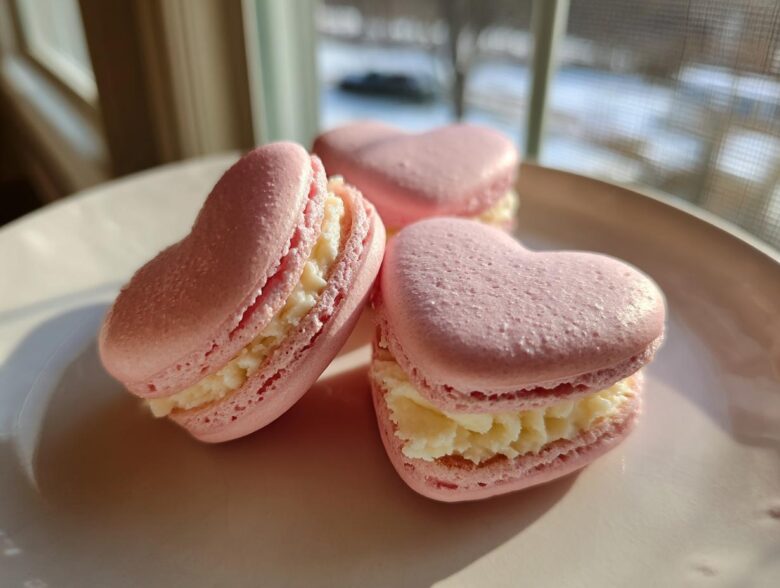
When you really need to knock someone’s socks off, you don’t just bake cookies; you create an experience! That’s why I saved this method for something truly special, like an anniversary or a big proposal. Trust me, making perfect little, delicate Heart-Shaped Macarons with Champagne Buttercream takes patience, but wow, the payoff is huge. I’ve spent years wrestling with French meringue, and I finally figured out how to get those flawless little ‘feet’ on a tricky shape like a heart.
This isn’t just about being cute; it’s about that sophisticated flavor punch from the real champagne reduction in the filling. If you’ve been intimidated by these little almond jewels before, I promise, if you follow my exact steps for macaronage and piping, you’re going to feel like a true pastry chef when you pull these out of the oven. Grab your scale; we’re making magic today!
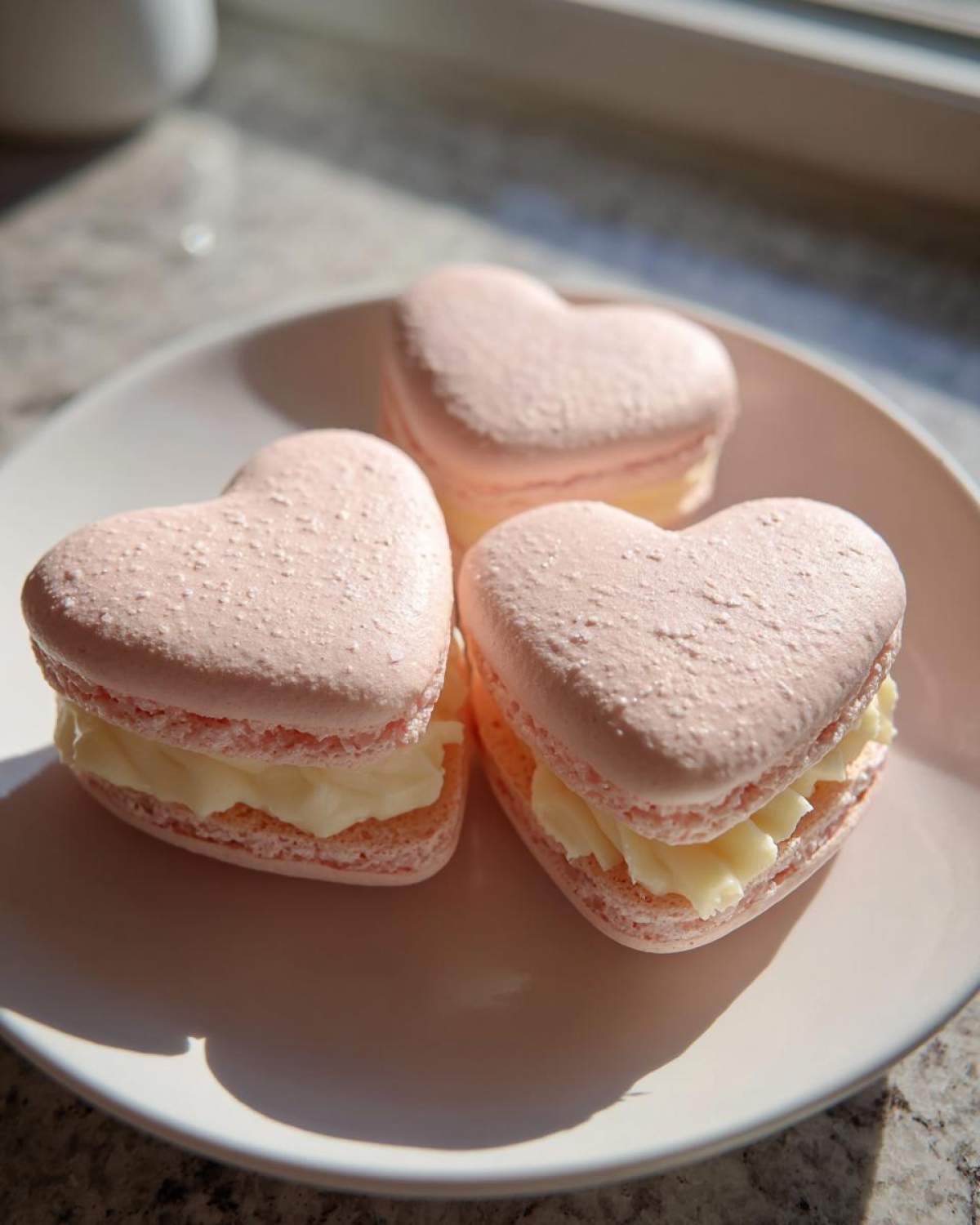
Why You Will Love These Heart-Shaped Macarons with Champagne Buttercream
Oh, there are so many reasons why these little beauties are absolute showstoppers! I keep pulling this recipe out whenever I need a dessert that feels extra fancy but still has that homemade warmth, you know?
- The Shape Factor: Let’s be honest, the heart shape makes these instantly special. They scream romance and effort, making them the perfect centerpiece for any Valentine’s Day baking project you can dream up.
- That Grown-Up Flavor: Forget basic vanilla! The champagne reduction we use in the buttercream gives these almond meringue cookies a subtle, crisp, bubbly kick. They are definitely one of my favorite examples of adult flavored macarons.
- Texture Perfection: When you nail the macaronage—and trust me, my method works—you get that thin, delicate, crisp edge that melts immediately, revealing a chewy interior. It’s the quintessential *delicate French pastry construction*.
- They Look Boutique, But Aren’t: Seriously, these look like they cost a fortune from a fancy French bakery. They elevate any table and scream high-end celebration desserts without you having to bend over backward for hours on end.
- The Buttercream is Dreamy: The *champagne buttercream frosting* is light enough so it doesn’t overpower the delicate shell, but rich enough to feel utterly decadent. It’s my go-to for any romantic dessert ideas.
If you’ve been wanting to tackle something genuinely impressive, this is your moment!
Essential Equipment for Perfect Heart-Shaped Macarons with Champagne Buttercream
Okay, so this is where we separate the casual bakers from the serious pastry people! Macarons, especially when trying to manage a specific shape like a heart, are all about precision. This isn’t the time to guess measurements. You absolutely must have the right gear ready before you even think about separating your eggs.
Think of this as setting up your little workstation for success. If you have these items ready, the actual mixing goes so much smoother, and we want to avoid any last-minute panic when the meringue starts looking too firm, right?
Here’s what you need to pull out of the cupboards:
- A Digital Kitchen Scale: Seriously, ditch the measuring cups for the flour and sugar. Macarons demand grams. If you don’t have one, go get one now—it’s the secret weapon in mastering *advanced pastry techniques*!
- A Stand Mixer: While you *can* use a hand mixer, keeping your sanity intact while whipping egg whites to those stiff, glossy peaks is so much easier with a powerful stand mixer.
- The Right Piping Tips: You’ll need a smooth, plain round tip—I usually grab a Wilton #12 for consistency—for the main body of the heart. For that delicate, pointed top of the heart, you might need a slightly smaller round tip, or just be super brave with pressure control on the #12.
- Parchment Paper or Silicone Mats: You must bake these on something non-stick. I use parchment paper because it’s easier to peel off once they cool, but Silpats are fantastic for even heat transfer for those *perfect macaron shells*.
- Fine Mesh Sifters: You’re going to sift your almond flour and powdered sugar multiple times. Don’t skip this! A cheap, fine sieve makes all the difference between a smooth shell and a lumpy mess.
Got all that gathered? Good! Now we can focus on the fun part—the meringue!
Ingredients for Heart-Shaped Macarons with Champagne Buttercream
Okay, time to talk details! When you are baking *delicate French pastry construction* like this, you can’t eyeball it. We need to be precise with our measurements, which is why your shiny kitchen scale needs to be handy right now. I’ve broken this down into the shells and the glorious filling so you can organize your mise en place perfectly.
Don’t be tempted to substitute anything here; every single part plays a role in achieving those signature feet and that luxurious flavor. Oh, and remember that champagne reduction we’re going to discuss next? Make that first, cool it down, and have it ready to go before you even start your meringue!
Shell Ingredients
For the shells, we want purity and finesse here. The secret to stable meringue, a hallmark of any good *French macarons tutorial*, starts with the eggs. You absolutely must use aged egg whites—I separate mine 48 hours ahead and let them sit covered loosely in the fridge so some moisture evaporates. It really helps the stability of the meringue!
- 150g almond flour, super finely ground
- 150g powdered sugar, sifted
- 55g aged egg whites (room temperature, remember that aging step!)
- 150g granulated sugar, fine grain is best
- 55g aged egg whites (the second batch, also room temperature)
- Pinch of cream of tartar – this is our insurance policy for stability!
- 1/4 tsp pink or red gel food coloring (if you want that beautiful blush color woven in)
Champagne Buttercream Frosting Ingredients
Now for the filling that makes these truly special—the *champagne buttercream frosting*! This is where we elevate these from regular almond cookies to something fit for a major celebration. The champagne reduction is key to getting that real flavor without breaking the frosting. This makes them the perfect *gourmet macaron fillings*.
- 225g unsalted butter, softened up to be truly pliable (not melty!)
- 450g powdered sugar, sifted well—we really don’t need lumps here, friends!
- 2 tbsp champagne reduction (I’ll show you how to make this amazing stuff in the next section)
- 1 tsp pure vanilla extract
- Pinch of salt to balance out all that sweetness
Mastering the Champagne Reduction for Gourmet Macaron Fillings
Okay, I know we’re talking about French macarons here, which are already complex, but this little step—creating the champagne reduction—is what takes us into serious gourmet territory. This isn’t just about adding a splash of bubbly to the frosting; that would make it too liquid and ruin the texture. We need concentrated, potent flavor, which is why we simmer it down.
This method truly nails the subtle *champagne flavor pairing in baking*. It’s intense, it’s perfect, and it concentrates all that wonderful celebratory taste into a syrup that your butter can handle. Do not use prosecco or cheap sparkling wine here; spring for something nice since you are reducing it!
The most important rule? You have to make this ahead of time! The reduction needs to be completely cooled before it even thinks about touching the buttercream. If it’s warm, it will melt your butter immediately, and we’ll end up with sweet, slightly boozy soup instead of frosting.
Here’s exactly how I do it every single time to get that perfect syrupy consistency:
- Pour and Preheat: Take about 1/4 cup of your dry champagne—yes, just a small amount is all you need—and pour it right into a tiny, heavy-bottomed saucepan. I use my smallest one because we want maximum surface area for evaporation.
- Gentle Simmer: Set your heat to medium-low. You don’t want a rolling boil; you want a gentle, slow bubble across the surface. Watch it carefully! This process concentrates the flavor, but if you boil it too hard, you start cooking off the delicate high notes of the wine.
- Watch for Syrup: You are looking for the liquid volume to reduce significantly—we want it to go from 1/4 cup down to only about 1 tablespoon of thick, glossy syrup. It should lightly coat the back of a spoon when you pull it out. This usually takes me about 8 to 10 minutes, depending on my stove heat.
- Cool Completely: Immediately pour the hot reduction into a tiny, clean glass bowl or ramekin. Cover it tightly—I just use a little piece of plastic wrap pressed right on the surface so no extra moisture gets in—and place it in the refrigerator.
Once that little bit of syrup is totally chilled, it’s ready to whip into the butter and sugar. It gives the *champagne buttercream frosting* that gorgeous, subtle champagne complexity that makes everyone ask, “What is that amazing flavor?!”
Step-by-Step Instructions for Heart-Shaped Macarons with Champagne Buttercream
Alright, deep breath! This is where we bring it all together. Don’t let the steps scare you; we just need to follow the process methodically. Macarons are unforgiving of haste, but they reward patience like no other cookie. We’ll tackle the shells first, get those beauties baked, and then whip up that gorgeous champagne frosting for the final act!
Preparing the Macaron Shells
First things first: we need that dry mix perfect. Take your sifted almond flour and powdered sugar and sift them together *twice* more into a bowl. You want it feather-light. Now, for the meringue! In your stand mixer bowl (make sure it’s spotless—grease is the enemy!), whip those pre-aged egg whites and the cream of tartar until they get foamy. Start lowering your speed and drizzle in the granulated sugar very slowly. You’re looking for stiff, glossy peaks. When you lift the whisk, the peak should stand straight up without flopping over. That stiffness is crucial for *delicate French pastry construction*!
Next is the magic—and the most nerve-wracking part—the macaronage. Gently fold your sifted dry ingredients into that meringue in three separate additions. My biggest tip here? Don’t use a spatula like a knife! Fold using a gentle J-scoop motion. Stop mixing when the batter flows off the edge of your spatula like slow, thick lava. If you lift the batter, it should ribbon over itself and disappear back into the bowl after about five seconds. Don’t overmix, or you’ll lose all that air we worked so hard to build!
Piping Heart Shapes and Baking
Time for the fun decorative part! Transfer that lava-like batter into a piping bag fitted with a clean, round tip—I use a standard size 12. On your parchment-lined baking sheet, start by piping a consistent circle. Right at the top edge of that circle, gently squeeze a little extra batter and pull the tip away quickly to form the little dip that makes it a heart. It takes practice, so maybe test a few on scrap paper first so you can see how much pressure you need for your *piping heart shapes pastry*!
Once piped, you must tap! Firmly tap the baking sheets straight down onto the counter about five or six times. This forces all those hidden air bubbles to rush to the surface—pop them with a toothpick if you see any. Let these sit out at room temperature until they form a dry skin. This resting time—usually 30 to 60 minutes—is non-negotiable for getting those beautiful ‘feet’ we obsess over for *perfect macaron shells*. When you can gently touch the surface and nothing sticks to your finger, they’re ready for the heat.
Preheat your oven to 150°C (300°F). Slide them in and bake for 12 to 15 minutes. I always give the tray a quick 180-degree turn halfway through to keep the heat even. They are done when the shells are set and don’t wobble when you gently nudge them. Let them cool completely on the tray before you try to peel them off—seriously, don’t rush this part!
To make the filling, make sure your butter is soft but cool. Beat it until fluffy, then slowly add your sifted powdered sugar until it’s smooth. Now, take that chilled champagne reduction you made earlier, drizzle it in along with the vanilla and salt. Whip it on high until it’s super light and creamy—this is the gorgeous *champagne buttercream frosting*!
Creating and Assembling the Champagne Buttercream Frosting
We already discussed getting the reduction ready, so assembly is smooth sailing! Once your shells are cool, you need to match them up. Look for pairs that are similar in size and flatness. If you have a couple of wonky hearts, don’t worry, they can be the testers!
Load the champagne buttercream into a piping bag—or just use a small offset spatula, which is faster—and place a generous dollop onto the flat side of one shell. Don’t be stingy; remember, this is a *gourmet macaron filling*! Gently sandwich the top shell on, applying light, even pressure until the filling just starts to peek out the edges. See? Easy! We’ll talk about maturation next because that’s the final, essential step for flavor melding. You can check out my contact page if any issues pop up during assembly!
Macaron Troubleshooting Guide for Heart-Shaped Macarons
Even with the perfect recipe, macarons are temperamental little things. I’ve had batches totally bomb on me, and honestly, that’s how you learn! Since we put in all this work shaping them like hearts and making that lovely champagne filling, you don’t want a baking failure. Think of this section as your emergency checklist—it’s my personal *macaron troubleshooting guide* that I keep handy.
Don’t panic if things look a little off during the baking stage. Usually, the issue is either under-mixed batter, not enough air tapped out, or uneven oven temperature. Here are the big three problems folks run into, and how we fix them:
- No Feet (or Tiny, Stubborn Feet): This is usually a *wetness* issue, my friend. If your shells didn’t develop that ruffled ‘foot’ edge, it means the shell didn’t dry enough during the resting period. If you live somewhere humid, you might need to let them rest longer, or even give them a quick blast under a barely-on fan. Alternatively, your meringue might have been slightly under-whipped, meaning it didn’t have enough internal structure to push outwards during baking.
- Cracked Tops: Ouch! Cracked tops usually mean two things: either you didn’t tap the air out enough (so trapped air exploded through the weak top layer), or your oven is running way too hot. If your shells crack immediately, turn your oven down by 10 degrees next time. If they look beautiful, but crack during the last few minutes, it’s usually trapped air from poor tapping or too much flour in the batter.
- Hollow Shells: This is the saddest problem, especially on a beautiful heart! Hollow shells usually mean the interior cooked faster than the exterior, or the meringue collapsed. Inadequate aging of the egg whites can cause this, or sometimes, it happens if you over-bake them slightly. Make sure you test for doneness early, and remember that 24-hour refrigeration period is mandatory to fix any microscopic internal discrepancies!
If you followed the macaronage rule—stop when it flows like lava—you’ve already dealt with 80% of potential problems. Keep these tips in mind, and you’ll be on your way to mastering those notoriously tricky almond meringue cookies!
Storage and Maturation for Heart-Shaped Macarons with Champagne Buttercream
Now, if you can manage the discipline—and trust me, this is the hardest part after piping all those tiny hearts—we have to talk about maturity. You absolutely, positively CANNOT eat these right away. I know, I know! They are freshly filled with glorious *champagne buttercream frosting*, and they smell incredible, but resist the temptation!
Macarons need time to mature. Think of it like letting a great wine breathe, only we’re letting the moisture from the filling seep into that crisp shell. If you bite into one immediately after assembling, the shell will be too brittle and the filling will feel separate. We want that perfect textural marriage!
I insist you put these beauties away for at least 24 hours. Yes, a full day sitting in the fridge inside a sealed, airtight container. This process lets the moisture wick perfectly, softening that hard outer shell just enough so that wonderful, chewy interior is revealed when you bite down. It turns your *advanced pastry techniques* into something truly supreme.
Once they’ve matured, they are ready to serve, but with one small caveat. Because they are refrigerated, the sugar in the buttercream can sometimes feel a little firm right out of the fridge. Don’t let them sit on the counter for hours, though! Just pull the container out about 20 to 30 minutes before you plan on serving them. This subtle warm-up softens the filling just enough so it squishes perfectly against the shell. They look perfect for any *celebration dessert* when presented this way!
If you happen to have leftovers (which is rare in my house!), they keep very well in that airtight container in the refrigerator for up to five days. The flavor of the champagne reduction actually deepens a little bit over those first couple of days, which is a fun bonus of patience!
Frequently Asked Questions About This Recipe
I know baking macarons can bring up a ton of questions, even for seasoned bakers! You want perfect little heart shapes, and you want that champagne flavor to shine, so let’s clear up any lingering doubts before you start sifting your almond flour. These little guys are tricky, but totally worth the effort!
Can I use sparkling wine instead of dry champagne?
That’s a great question, and the answer is yes, but you need to be mindful. Champagne is generally drier and has more complex yeast notes than most sparkling wines like Prosecco or Cava. If you use Prosecco, because it often has more residual sugar, you might need to simmer your reduction for a tiny bit longer to make sure it thickens up properly and doesn’t add too much sweetness to the *champagne buttercream frosting*. For the best flavor foundation, stick to a very dry, Brut champagne or Cava if you can find it. This is definitely a recipe where the quality of the alcohol counts for those *adult flavored macarons*!
How do I ensure my shells are perfectly smooth?
Smoothing out those shells is all about what happens *before* they bake. First, double-sift your dry ingredients—almond flour and powdered sugar—to get rid of any tiny lumps. Second, and this is huge for *how to make perfect macaron shells*, you absolutely must tap the baking sheet firmly 5 to 6 times after piping. If you see any little air bubbles poking through the top surface, pop them with the tip of a toothpick immediately. If you skip the tapping, the air gets trapped and busts through the top while baking, creating a bump or crack. Smooth tapping equals smooth shells, simple as that!
Is this recipe suitable for romantic dessert ideas?
Oh, absolutely! I wouldn’t have developed this tricky recipe if it wasn’t perfect for *romantic dessert ideas*! The heart shape immediately conveys special care and attention. Plus, the slightly sophisticated, bubbly flavor of the champagne buttercream is so much more grown-up and celebratory than standard chocolate or vanilla. They look incredibly elegant on a dessert platter, making all that effort worth it for an anniversary or Valentine’s Day!
Why does the recipe insist on ageing the egg whites?
This is a key part of mastering *advanced pastry techniques*! Raw egg whites contain too much moisture, and when you whip them into a meringue, that moisture can sometimes cause the meringue structure to collapse or become weak. By leaving the whites out, covered loosely, for 24 to 48 hours, some of that water evaporates. What you’re left with is an egg white that whips up into a far more stable, thicker, and glossier meringue. A stable meringue is what gives you those predictable, beautiful feet on your shells and helps prevent the dreaded hollow centers!
What is the best way to store the finished macarons?
Once you’ve assembled them, treat them like royalty! They need that 24-hour maturation time in the fridge inside an airtight container. Do not store them in plastic bags, as they can make the shells sticky once the moisture from the filling starts transferring. After that maturation period, they’re good refrigerated for about five days. Just remember to pull them out about 20 minutes before serving so the buttercream filling softens up a touch for the perfect bite!
If you have any other burning questions about making these elegant treats, don’t hesitate to check out our privacy policy details, or feel free to reach out!
Estimated Nutritional Data for Heart-Shaped Macarons
Okay, here’s the part where we talk about the numbers. Because these are made with almond flour, sugar, and that rich butter, they definitely qualify as a decadent treat! I always tell people that these Heart-Shaped Macarons with Champagne Buttercream are best enjoyed savoring every single bite!
I pulled these numbers together based on the standard measurements provided for a serving size of two assembled macarons. Please remember, just like with any scratch baking, these figures are estimates! If you use slightly different brands of butter or swap out some of the sugar for a substitute, the numbers will shift slightly. But hey, that’s why we bake from the heart, right?
For a serving of two finished macarons, here is what we are generally looking at:
- Serving Size: 2 macarons
- Calories: 250
- Fat: 13g
- Saturated Fat: 8g
- Trans Fat: 0g
- Cholesterol: 35mg
- Sodium: 80mg
- Carbohydrates: 32g
- Fiber: 1g
- Sugar: 30g (Yep, sugar is a big part of that gorgeous texture!)
- Protein: 3g
See? Totally worth it for that amazing champagne flavor and delicate heart shape! Just factor them into your day, have one or two with a nice cup of tea, and enjoy the results of your dedication to *advanced pastry techniques*!
PrintHeart-Shaped Macarons with Champagne Buttercream

A detailed recipe for making delicate, heart-shaped French macarons filled with a light buttercream flavored with real champagne.
- Prep Time: 60 min
- Cook Time: 15 min
- Total Time: 75 min
- Yield: About 20 assembled macarons
- Category: Dessert
- Method: Baking
- Cuisine: French
- Diet: Vegetarian
Ingredients
- 150g almond flour, finely ground
- 150g powdered sugar
- 55g aged egg whites (room temperature)
- 150g granulated sugar
- 55g aged egg whites (room temperature)
- Pinch of cream of tartar
- 1/4 tsp pink or red gel food coloring (optional)
- For the Champagne Buttercream:
- 225g unsalted butter, softened
- 450g powdered sugar, sifted
- 2 tbsp champagne reduction (see notes)
- 1 tsp vanilla extract
- Pinch of salt
Instructions
- Prepare the dry ingredients: Sift the almond flour and powdered sugar together twice into a medium bowl. Set aside.
- Make the meringue: In a clean, dry bowl, beat the first portion of egg whites with the cream of tartar until foamy. Gradually add the granulated sugar, beating until stiff, glossy peaks form (French meringue method). Beat in the gel coloring, if using.
- Macaronage: Gently fold the dry ingredients into the meringue in three additions, scraping the sides and bottom of the bowl until the batter flows slowly like lava. Stop mixing when the batter holds a ribbon shape for a few seconds.
- Pipe the shells: Transfer the batter to a piping bag fitted with a plain round tip. On parchment-lined baking sheets, pipe small, consistent circles, then carefully pipe a small line extending from the top center of the circle to form a heart shape. Tap the trays firmly several times to release air bubbles.
- Rest the shells: Let the piped macarons sit at room temperature until a skin forms and you can lightly touch the surface without batter sticking to your finger (about 30-60 minutes).
- Bake: Preheat your oven to 150°C (300°F). Bake for 12-15 minutes, rotating the trays halfway through. The feet should rise, and the shells should not wobble when gently touched. Cool completely on the tray before removing.
- Make the buttercream: Beat the softened butter until creamy. Gradually add the sifted powdered sugar, beating until smooth. Mix in the champagne reduction, vanilla extract, and salt until light and fluffy.
- Assemble: Pair shells of similar size. Pipe or spread a generous amount of champagne buttercream onto the flat side of one shell and gently sandwich it with another.
- Mature: Store the filled macarons in an airtight container in the refrigerator for 24 hours before serving to allow the flavors to meld.
Notes
- For the champagne reduction: Gently simmer 1/4 cup of dry champagne in a small saucepan until it reduces to about 1 tablespoon of syrup. Cool completely before adding to the buttercream.
- Use aged egg whites: Separate the egg whites 1-2 days ahead, cover loosely, and let them sit at room temperature to allow moisture to evaporate for better meringue stability.
- Piping hearts requires practice; aim for a consistent circle first, then practice the small top indentation.
Nutrition
- Serving Size: 2 macarons
- Calories: 250
- Sugar: 30
- Sodium: 80
- Fat: 13
- Saturated Fat: 8
- Unsaturated Fat: 5
- Trans Fat: 0
- Carbohydrates: 32
- Fiber: 1
- Protein: 3
- Cholesterol: 35